Brutalist Pipe Insert
Created 1 months ago
Description
A heavy-duty ventilation insert featuring an integrated square mesh. The single-ended flange acts as a firm stopping collar, while the dense internal grid blocks debris and insect ingress without severely choking airflow. Designed as a drop-in piece for 80 mm bulkheads or exhaust pipes.
Design Notes
- Mesh: 3x3 mm openings with 1.5 mm solid bars
- Interface: 80 mm main outer diameter with a 2 mm wall
- Collar: 5 mm thick flange to prevent over-insertion
- Printability: Single solid body, optimized for FDM without supports
Images
More like this
Explore more in Home & Fixtures →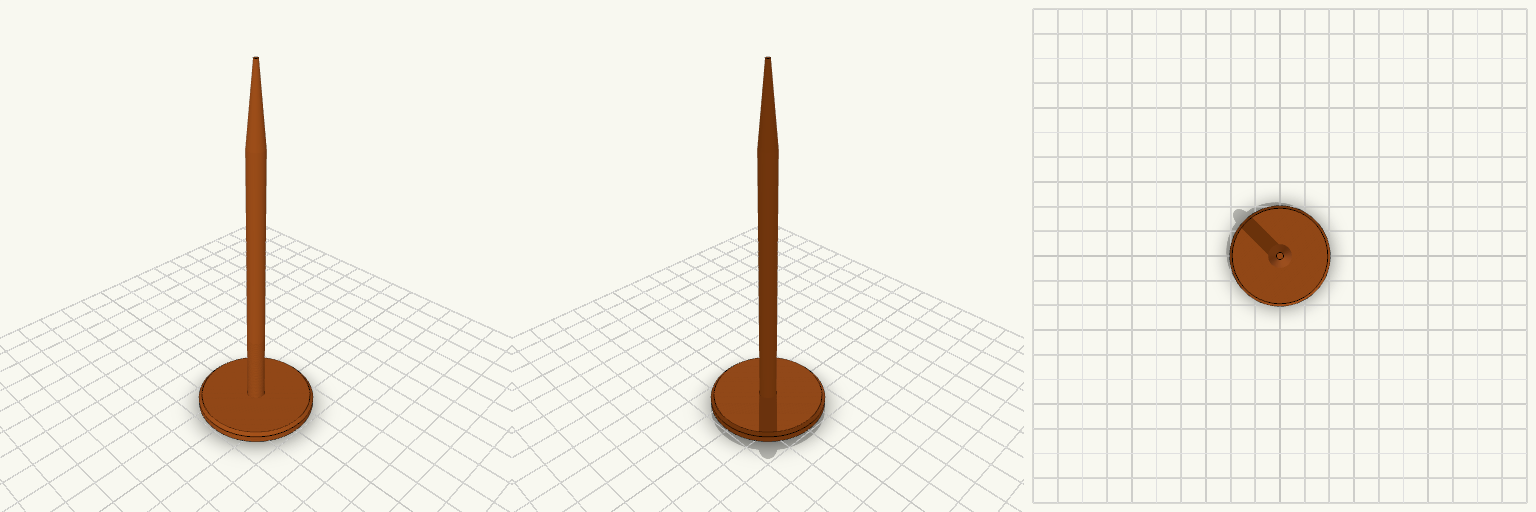
Charging Station Marker Nail
A ground marker nail for holding the position of a robot mower charging station while the charger is stored for the season. It is pushed into the soil where the charger's screw sits in summer. The nail has a wide, flat 40 mm head that stays visible at ground level, a slim 6 mm round shaft, and a tapered point for easy insertion. It prints head-down, so no supports are needed. Head: 40 mm diameter, 4 mm thick, chamfered edge Shaft: 6 mm diameter, about 90 mm long Tip: tapers to a point over 25 mm Overall length: about 119 mm Prints without supports
Eccentric Duct Adapter 125mm
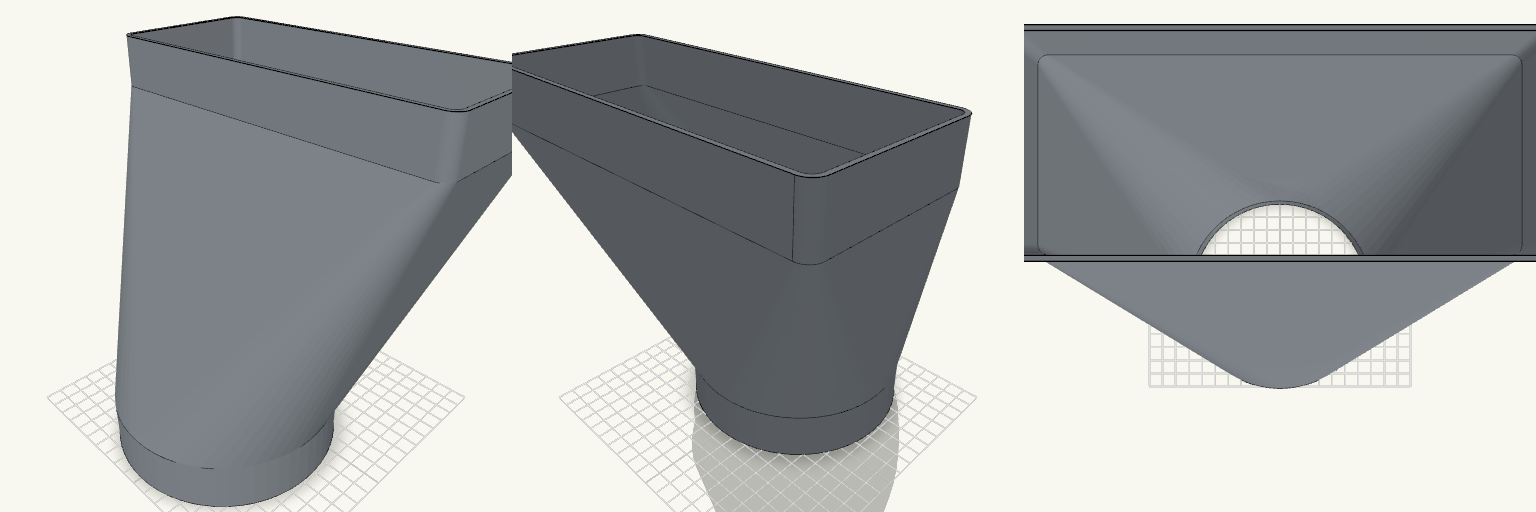
What it's for Bathroom duct adapter that joins a round duct to a flat rectangular duct in one continuous piece. Both ends are female sockets, so the ducts slide into the adapter rather than over it, and the internal passage stays fully open from end to end with no obstruction to airflow. The round socket is bored to Ø132 mm for a free, loose fit over Ø125 mm duct — roughly 3.5 mm of clearance per side, which can be taken up with tape or a gasket if a tighter seal is wanted. Dimensions Round socket: Ø132 mm inner, Ø136.8 mm outer, 30 mm long, 1.5 mm entry chamfer Flat socket: 222 × 92 mm inner, 5 mm corner radius, 30 mm long Transition: 160 mm, smooth round-to-rectangle loft, horizontally symmetric Vertical offset of the flat socket: 72.5 mm Wall thickness: 2.4 mm throughout Overall length: 220 mm Print notes Print as one piece; no assembly and no supports are needed for the open bore. The bounding volume on the plate is about 227 × 189 × 220 mm, so check the build volume before slicing. A 2.4 mm wall prints cleanly in PETG or ABS if the part sees warm bathroom air; PLA works for a dry run-in fit. Remix ideas Change the bore diameter to tune the fit for a different round duct. Adjust the 72.5 mm vertical offset for another mounting position. Lengthen either socket for a deeper grip on the duct.
Bug Zapper Battery Cover 27.65 x 60 mm
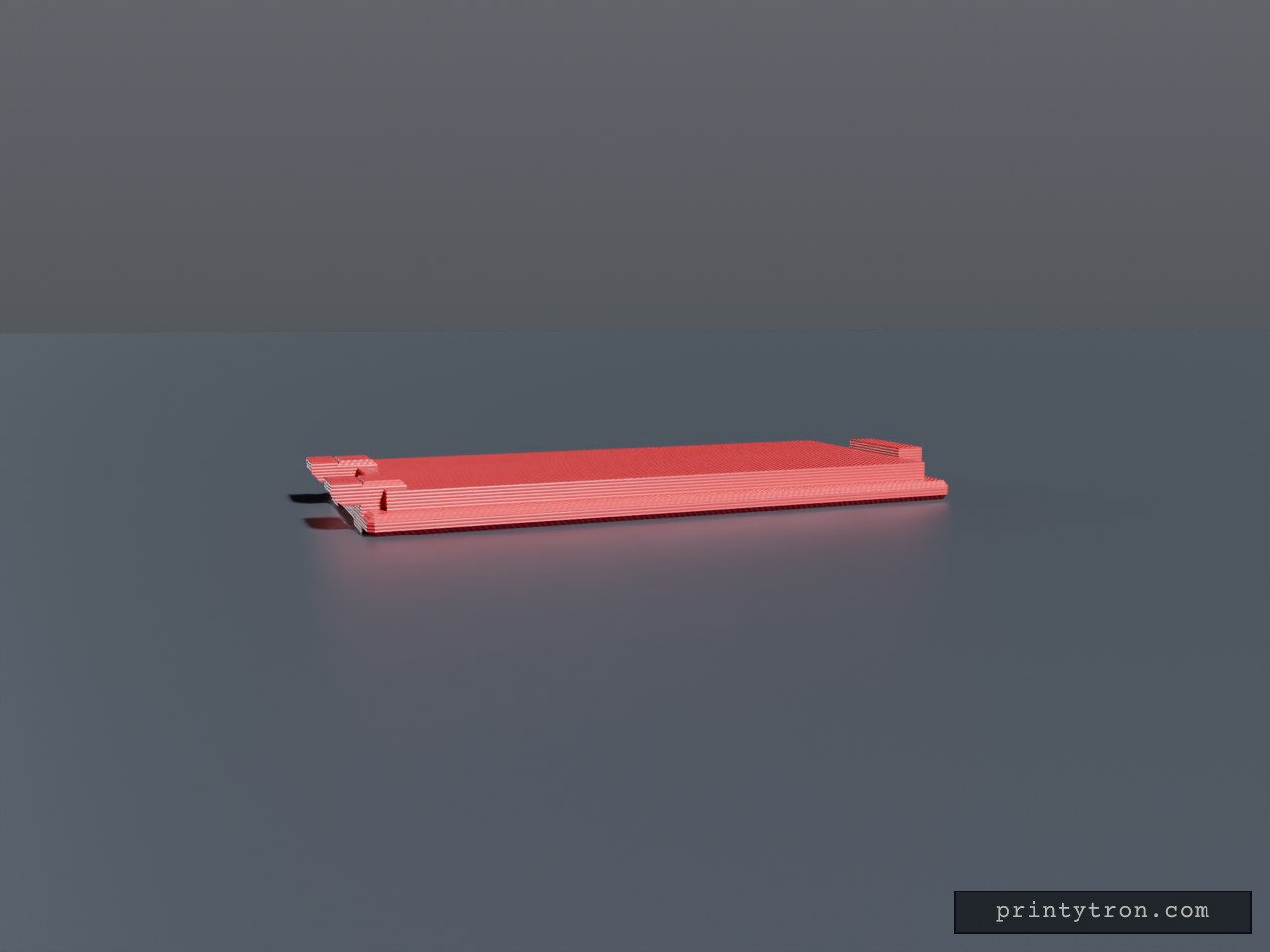
Sliding battery compartment cover plate for a bug zapper, 27.65 x 60 mm. A locating lip sits in the compartment opening, a latch tab sits at one end, and two low retention tabs at the opposite end keep the cover from falling out. Plate: 27.65 x 60 x 2 mm, chamfered edges Lip: 23.65 x 56 mm, 3.8 mm total height Retention tabs: two, 5 mm wide, flush with lip height, at X = ±8 mm Latch tab: 10 mm wide at the +Y end Grip grooves on the outer face Dimensions are estimates; verify against the original opening
Antenna Cover With Mounting Flange
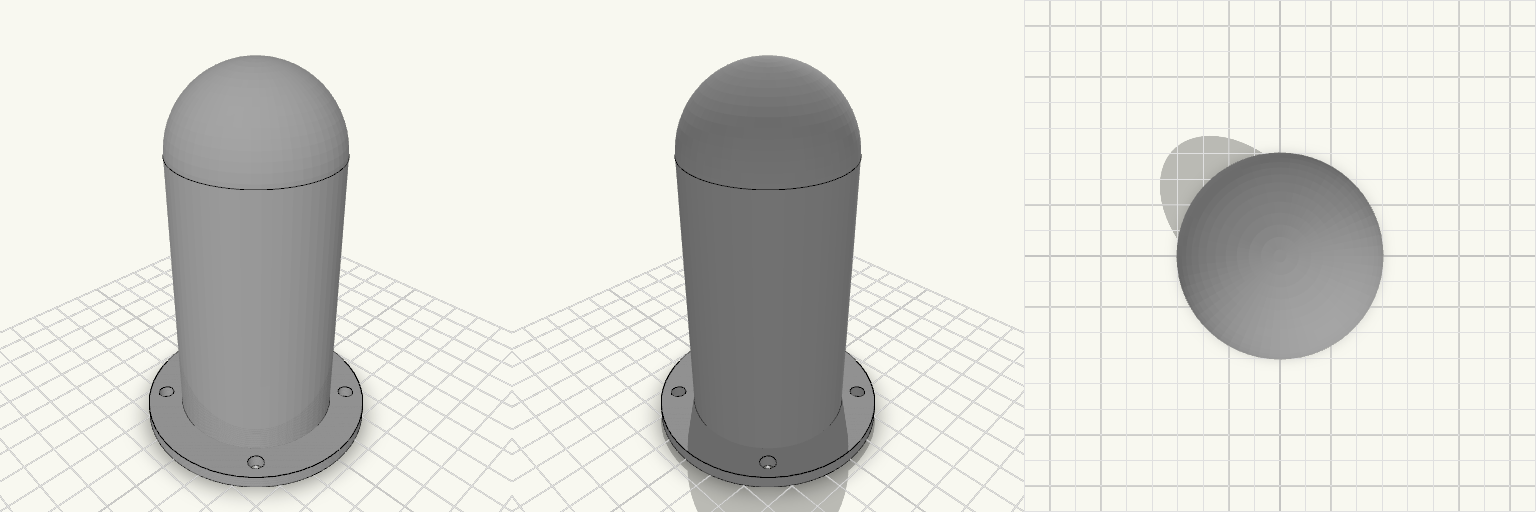
An antenna protective cover that keeps weather and knocks off the antenna: a hollow cylinder with a domed top, open at the bottom, on a flat bolt-down flange. Total height: 115 mm including the 4 mm flange Body: 50 mm outer, 46 mm inner diameter (2 mm wall), dome radius 25 mm blending tangentially into the cylinder Flange: 72 mm diameter, 4 mm thick Holes: four 5 mm through-holes in a square, 43.1 mm between adjacent centres Print: open end down on the flange, no supports needed, 3+ perimeters recommended
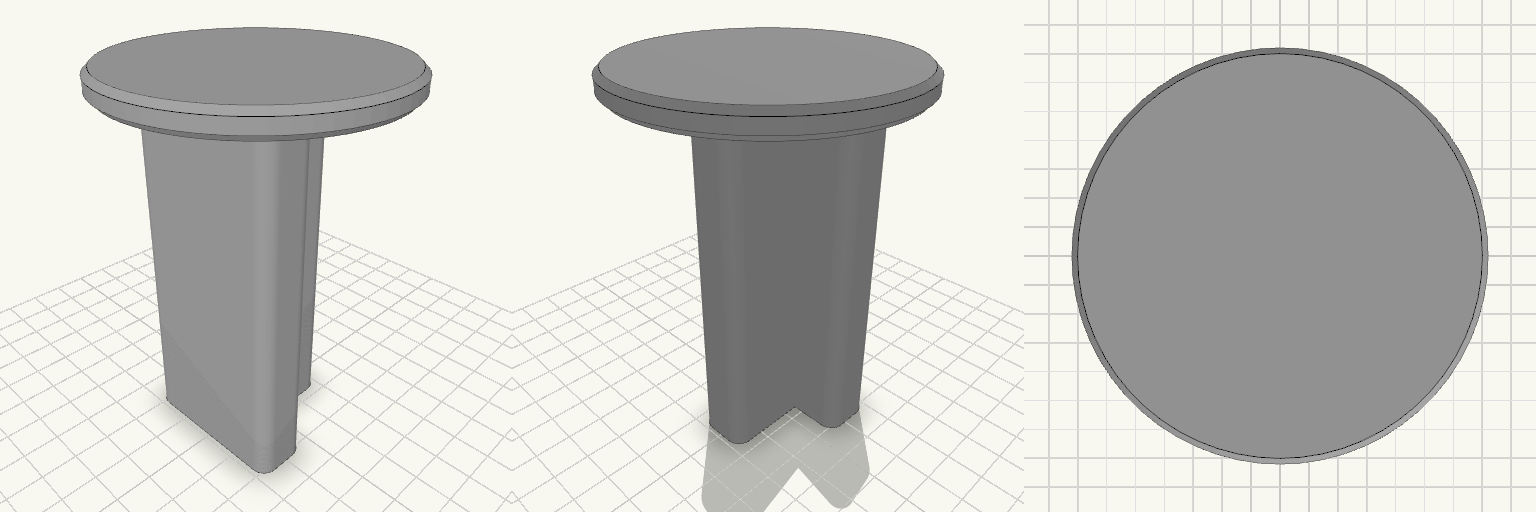
T-Post Cap With 3-Inch Round Platform
A slip-on cap for a steel T-post: 4 in tall, with a T-shaped socket that drops over the post and a 3 in round platform, 1/4 in thick, on top. Fits Steel T-posts, matched to the T-socket below. The socket is a T: a 36 mm crossbar, 7 mm wide at the stem entry, with a 7 × 30 mm stem running down, and a 4 mm wall following that T all the way around. Takes the place of a plain post cap and adds a flat, 3 in round surface on top of the post. Check before printing The socket is the whole fit, and its numbers are a starting size, not a standard — T-posts differ in flange width and web thickness between manufacturers and post weights. Measure the post you intend to use across the crossbar, across the stem, and across the full depth, then set the socket to those sizes plus a little clearance for paint and burrs before you commit filament. Nothing else on the part affects fitment. Does not fit Round posts, wooden 4x4 posts, or any post without a T cross-section. T-posts whose crossbar or stem is wider than the socket above — T-post profiles are not interchangeable, so do not assume a fit from the post name or the post weight alone. The cap prints as a single piece, 76 × 76 × 102 mm overall.
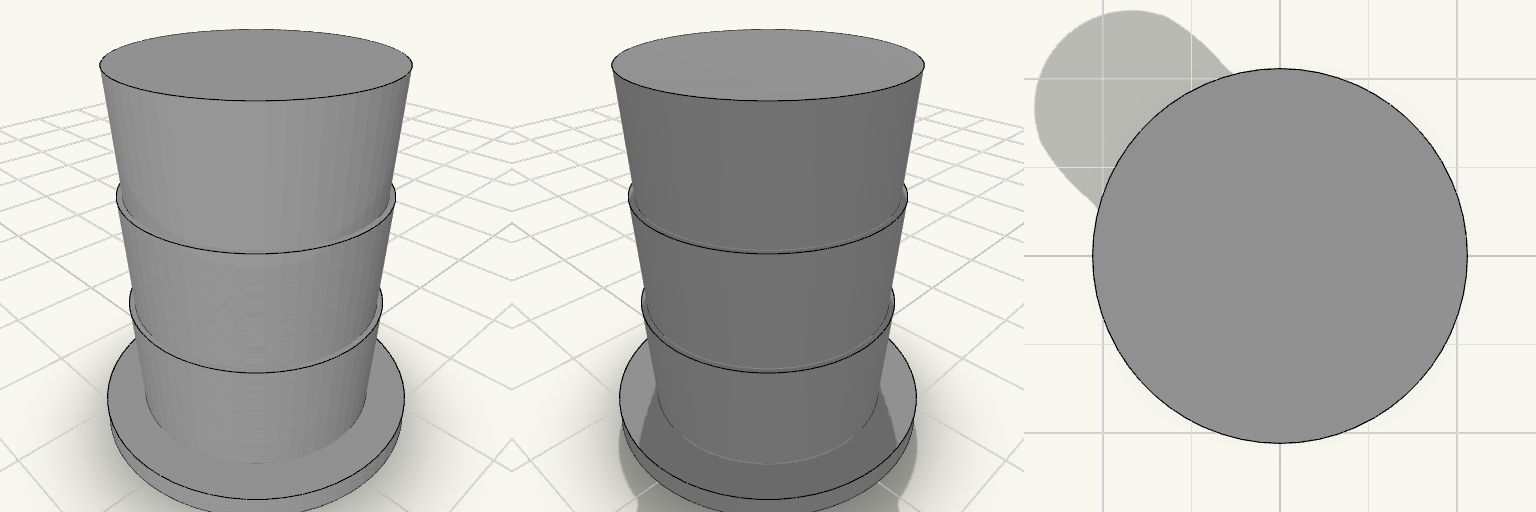
Barbed End Plug for 1-Inch PEX
A barbed end plug that dead-ends a 1-inch PEX line. Three tapered barbs rise from a solid 28 mm collar cap, stacked directly on one another so each ring sits flush against the next with no gaps, and they taper from 21 mm to a 22 mm maximum diameter to suit pipe with roughly a 22 mm inner diameter. The collar is a 28 mm cylinder, 3 mm thick, with a 1 mm chamfer on the bottom outer edge, and it is the cap as well as the pipe stop — only about 3 mm of it shows past the barbs, so the stop is shallow. There is no bore: the plug is solid through, about 33 mm tall, sits flat on the plate, and prints as one piece as a 28 × 28 × 33 mm body. Because it seals rather than joins, check the barb fit against your actual pipe before committing to a full run. Remix hooks Barb profile: three tapered barbs stacked flush as one sawtooth suit roughly 22 mm inner diameter pipe. Change the count or soften the taper for harder or softer tubing, but keep the spacing equal to the barb height so the gaps between rings do not come back. Collar: 28 mm across and 3 mm thick, it is only just wider than the barbs. Widen or thicken it for a firmer insertion stop; the bottom outer edge carries a 1 mm chamfer, which can be enlarged or removed to change entry feel. Height: 33 mm overall is a compact cap; stretch the straight run above the barbs if you need more insertion room or a deeper seat. Barb diameter: 21–22 mm is the number to change first for other pipe sizes. The collar and barb spacing can stay put while only the taper moves. Ends: the solid cap is the safe baseline. Extending the same barbed profile out the other side turns it back into a straight coupling, and an elbow or tee is a body swap rather than a barb redesign. Fit check: barb dimensions are nominal, so test against your actual pipe before printing a full run. Pairs with: 1-inch PEX runs that need a temporary or permanent dead end, pressure testing, and capping a line before fixtures go on.