Bulkhead Signal Box with RJ45 and SMA
Created today
Description
A compact 130 × 65 × 35 mm enclosure in the spirit of a field-radio interface box: Ethernet in one end, antenna and cable gland out the other. The lid sits flush and is held by four M2.5 × 10 mm countersunk screws threading into corner posts.
- RJ45 end: 16.5 × 14 mm rectangular opening, centred in width and height.
- Other end: 6.5 mm hole for a through-mount SMA connector and a 12.5 mm hole for a PG7-style cable gland, spaced evenly across the 65 mm width and centred in height.
- Walls: 2.5 mm; lid 3 mm, printed flat beside the box.
- Screws: 2.1 mm pilot holes in the posts for self-tapping M2.5; countersunk clearance holes in the lid.
Photos
Technical views
More like this
Explore more in Desk & Tech →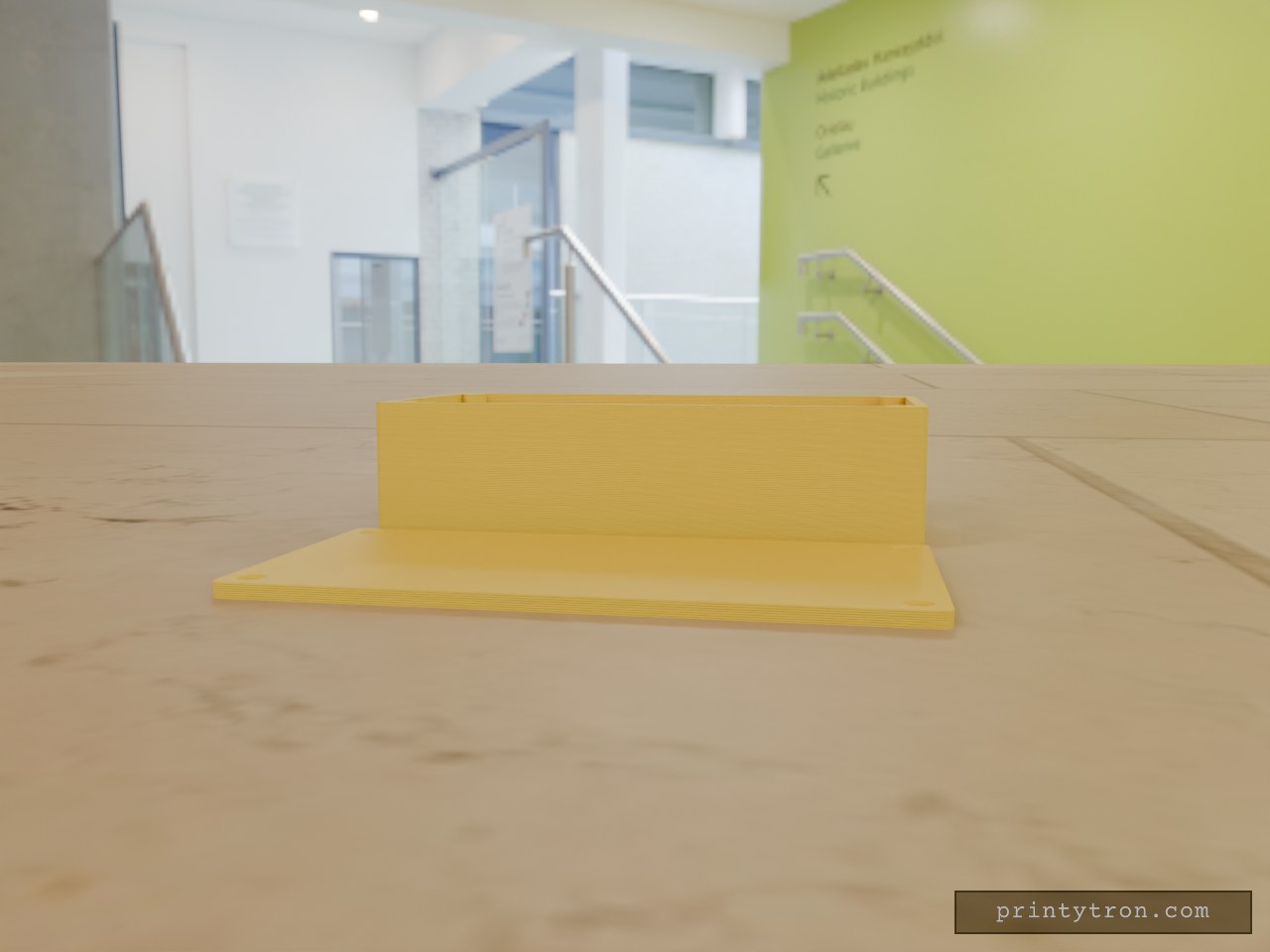
Bulkhead Signal Box with RJ45 and SMA
A compact 130 × 65 × 35 mm enclosure in the spirit of a field-radio interface box: Ethernet in one end, antenna and cable gland out the other. The lid sits flush and is held by four M2.5 × 10 mm countersunk screws threading into corner posts. RJ45 end: 16.5 × 14 mm rectangular opening, centred in width and height. Other end: 6.5 mm hole for a through-mount SMA connector and a 12.5 mm hole for a PG7-style cable gland, spaced evenly across the 65 mm width and centred in height. Walls: 2.5 mm; lid 3 mm, printed flat beside the box. Screws: 2.1 mm pilot holes in the posts for self-tapping M2.5; countersunk clearance holes in the lid.
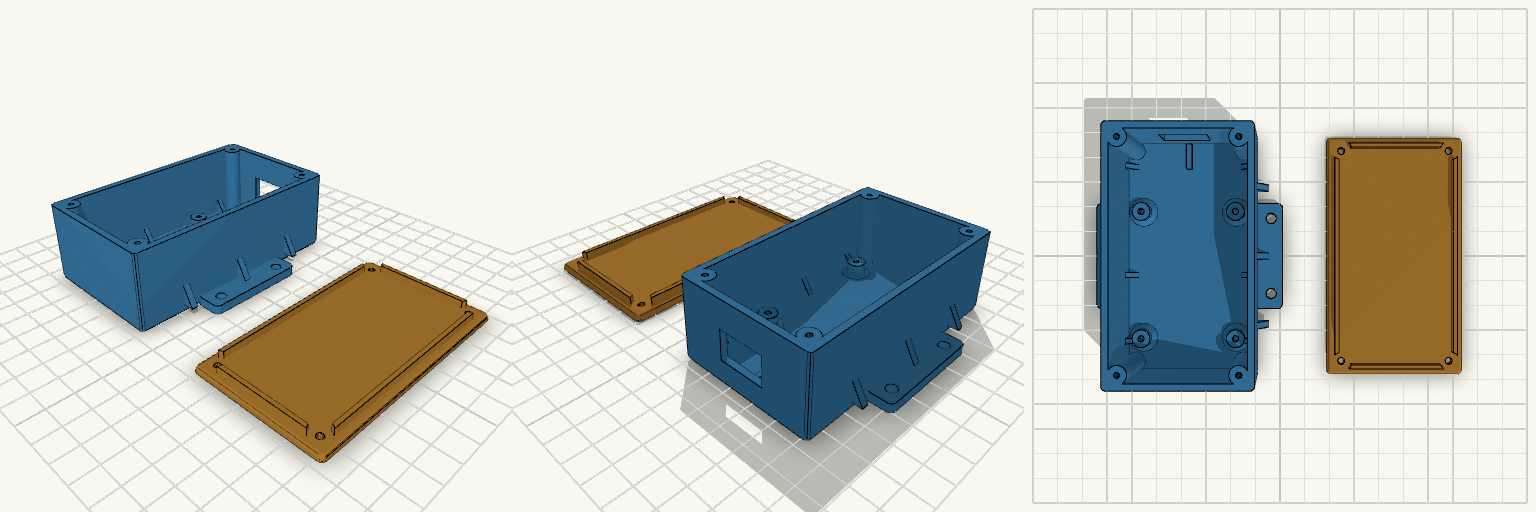
マイコンケース
A two-part enclosure for a 47 × 57 mm STM32F103 board, with a screw-down lid, external mounting flanges and a cable opening at the connector end. The base has 2.5 mm walls, four board bosses at 37 × 50 mm spacing holding the board 5 mm above the floor, and four corner posts for the lid screws. The lid has a locating lip and four clearance holes. Triangular gussets reinforce the flange-to-wall joints and the wall-to-floor joints, and the internal corners are rounded. Total height with lid: 35 mm Connector end extended 20 mm (+Y), with an adjustable cable opening Lid screws: M2.5 self-tapping, 2.2 mm pilot holes in the corner posts Adjustable: hole spacing and offset, boss height and hole size, flange hole size and positions, cable opening, extensions Board hole spacing is approximate and should be checked against the real board
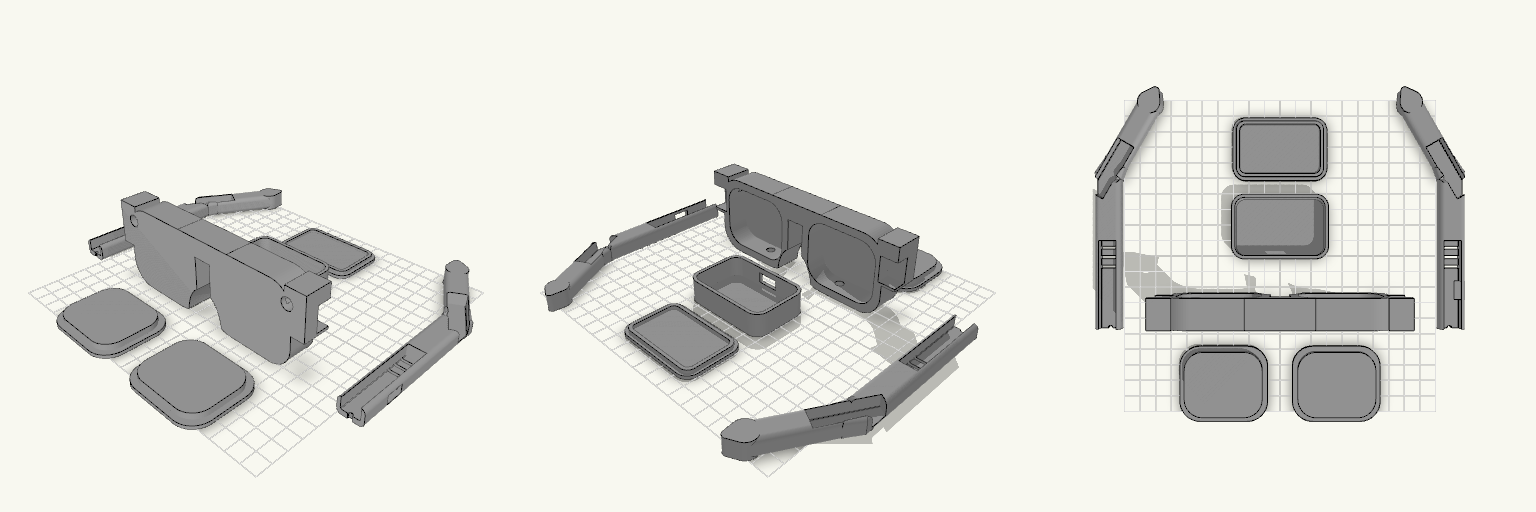
Cyclops Visor Smart Goggles Chassis
A wearable housing for smart-glasses electronics, with a chunky sci-fi visor silhouette: twin rounded lens bays, front camera ports, and downward sensor holes. Hollow temple arms hold speakers and haptics, and a separate electronics box carries the main board. The frame now comes with two cover caps that close the rear eye cavities, so the electronics inside stay protected. Design notes Frame caps: 56 x 48 mm plates with a plug lip that seats in each eye cavity Camera ports: 8 mm wide, 24 mm deep Electronics box with its own lipped lid Arms hinge with 3 mm pins or filament offcuts Prints as separate flat parts, no supports needed
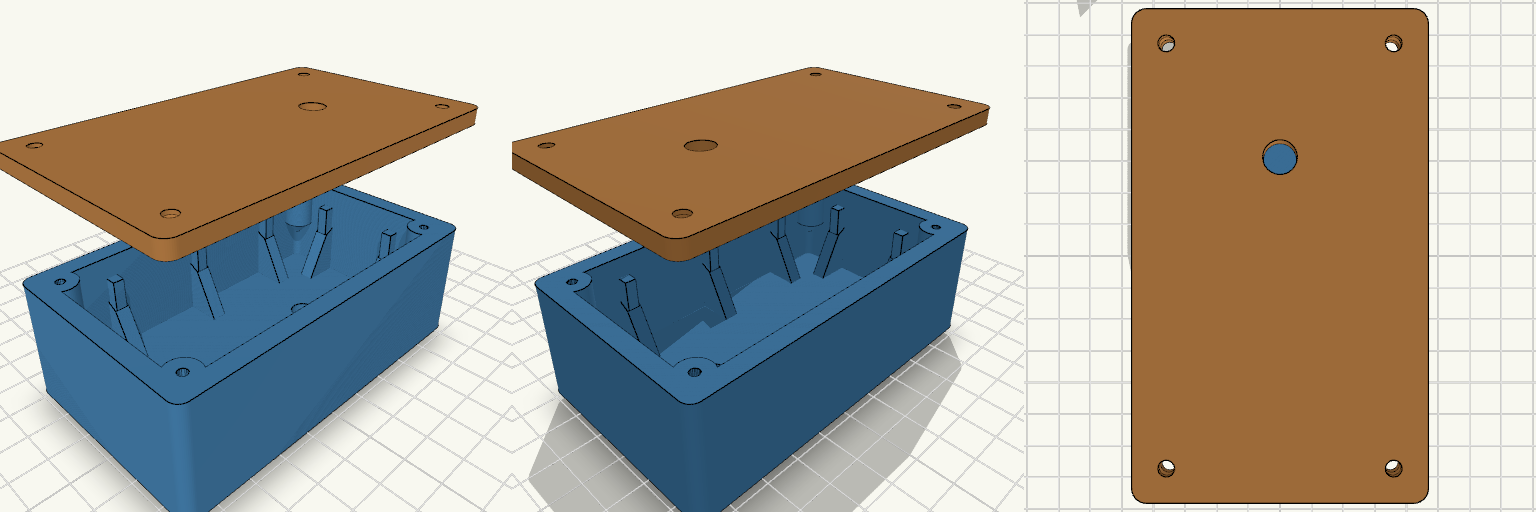
バルブ、サーボケース(仮)
A small bunker of a box: thick walls braced by tapered buttress ribs, a ribbed underside, and a flat screw-down lid that lifts straight off the top. Built as a housing for a servo-driven rotary valve, with a completely empty interior. Design notes Size: 60 × 100 × 40 mm overall, including the lid and all ribs. Ribs: tapered gusset-style ribs on all four walls, plus underside ribs the body stands on when printing. Corners: rounded, with four blended screw bosses that double as corner reinforcement. Lid: 4 mm, with countersunk M3 clearance holes into pilot holes in the bosses. Hose holes: 6 mm, on one shared vertical axis; the Y and X positions are editable parameters (Y defaults to 20 mm off centre). Floor: flat and clear of obstructions.
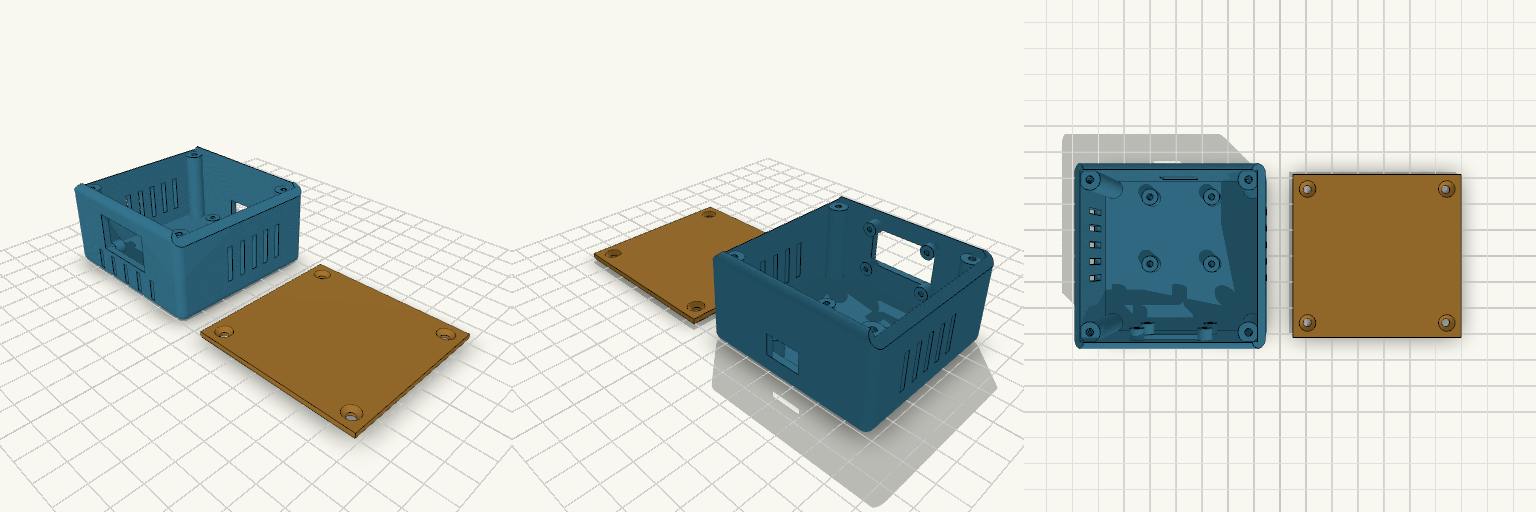
Arcade Console Desk Clock Case
A compact desk-clock enclosure with a gaming-rig attitude: chamfered shoulders, vented flanks and grooved front stripes under the OLED window, like a mini console from a late-night LAN party. Window for a 0.96" OLED on the front Standoffs for an ESP32 WROOM-32 devkit USB slot at the back Four corner screw bosses and a separate screw-on lid Side vent slots for airflow
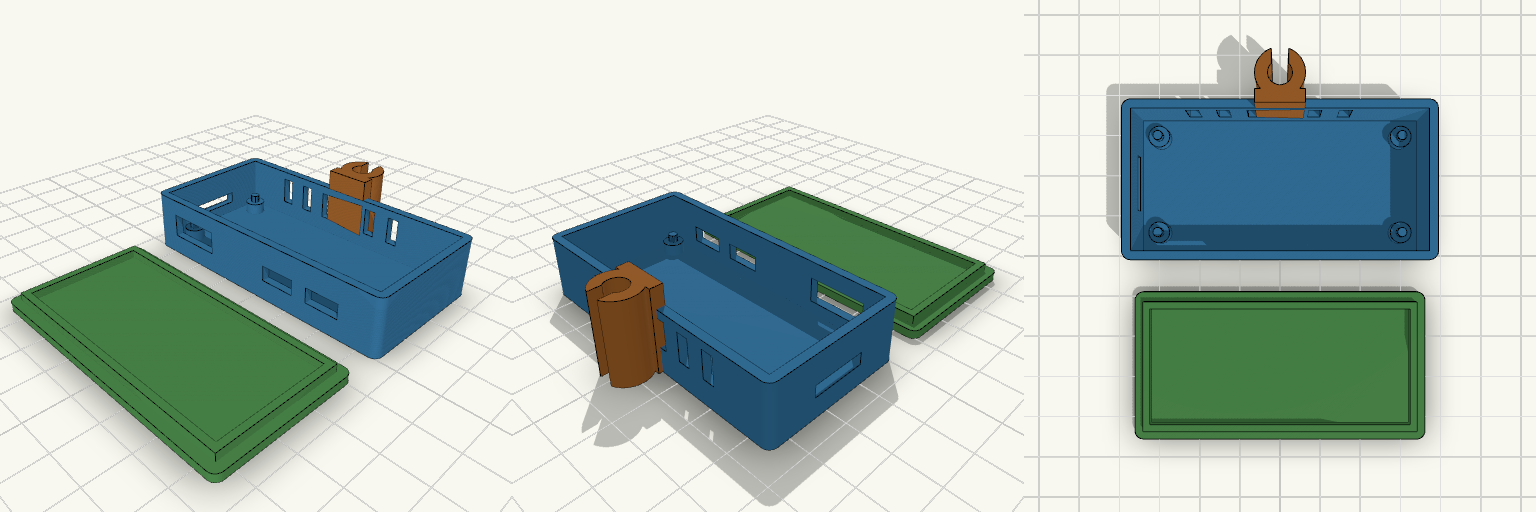
Select Mini Pi Zero Case With Hook
A compact Raspberry Pi Zero enclosure with a snap-on lid and a vertical C-shaped hook on the back wall. The hook clips sideways onto a vertical screw or rod, so the case hangs beside a printer such as the Monoprice Select Mini. Interior fits the 65 × 30 mm board, with 58 × 23 mm standoffs and pins Cut-outs for microSD, mini HDMI, USB and power Vent slots along the back wall Hook bore sized for a 5 mm screw shank, with a 3.8 mm snap opening Lid prints flat beside the case, with no overlapping parts