Description
Case compacto para ESP32 e módulo LoRa SX1278, com compartimento para um cooler de 30 mm e tampa de encaixe sem parafusos. A entrada de ar do cooler fica no piso, sob uma capa em grade, e a parede +X é lisa.
Ganchos para remix
- Entrada de ar: abertura de 25 mm no piso, sob a grade. Dá para trocar por outro desenho de grade ou reabrir fendas na parede +X.
- Cooler: centrado em x = 48, furação de 24 mm (furos de 2,8 mm). Ajuste se o seu for de outra medida.
- Apoios do ESP32: quatro pinos com furo M2, em x = ±22 e y = ±9. Confira com a sua placa.
- Prateleira do LoRa: trilhos de 20 mm, 3 mm de largura, 2 mm de altura. Aumente se a placa balançar.
- Combina com: texto na tampa ("Altear AgroGuard") e na lateral ("Altear Tech"), trocáveis por outros nomes.
Dimensões externas: 98 × 34 mm, altura de 24 mm mais a tampa de 6 mm.
Images
More like this
Explore more in Desk & Tech →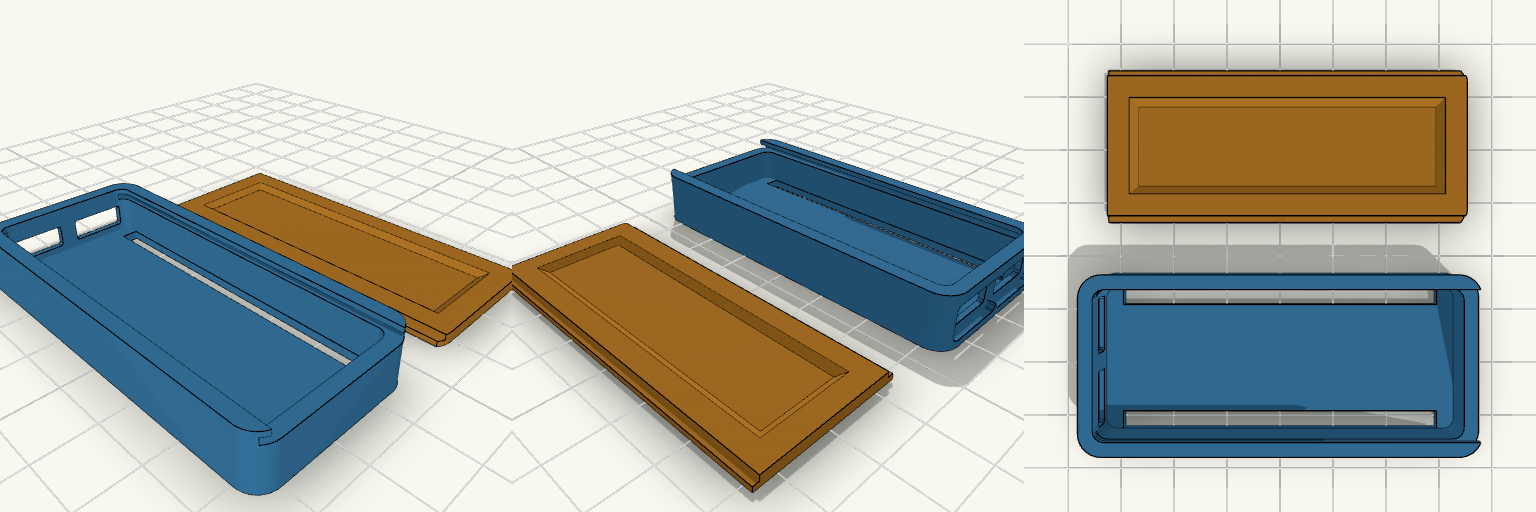
ESP32-S3 Enclosure with Sliding Lid and Dual USB-C v 2
Two-piece enclosure for an ESP32-S3 dev board. The lid slides in from the open end opposite the USB wall, running in grooves cut into the two long walls, and sits flush with the top so no hardware shows. The total height is 10.25 mm, which keeps the profile low but leaves only 6.75 mm inside — enough for the bare board, not for tall headers. Body: 64.3 × 26.2 mm cavity with 0.4 mm clearance per side, 2.5 mm walls, 4 mm vertical corner radius. Lid: 2 mm thick, sliding in grooves on the long walls; recessed centre 1 mm deep with sloped sides and a 4 mm flat border. USB-C: two cutouts on the short wall, each 10.1 × 4.1 mm with rounded corners, a 3 mm strut between them, and a rounded counterbore on the outside of each. Pin rails: two 3.2 × 58 mm slots straight through the floor, 22.9 mm apart (y = ±11.43), lined up with where a DevKitC's header pins sit, so pins can be soldered or connected from below. Blank face: the button and LED area is left plain — no cantilever arms, no LED window. Print the body and lid as separate pieces. The lid sits top-up on the plate with its recess cut from the top, so it needs no supports. Nothing locks the lid in place once it is slid home, so add a small detent or a dab of tape if it needs to stay put. The USB, board and pin positions follow the usual DevKitC layout rather than a measured board, so check them against your own before committing to a long print.
Sleek Ball-Bump ESP32-S3-N16R8 Enclosure v 3
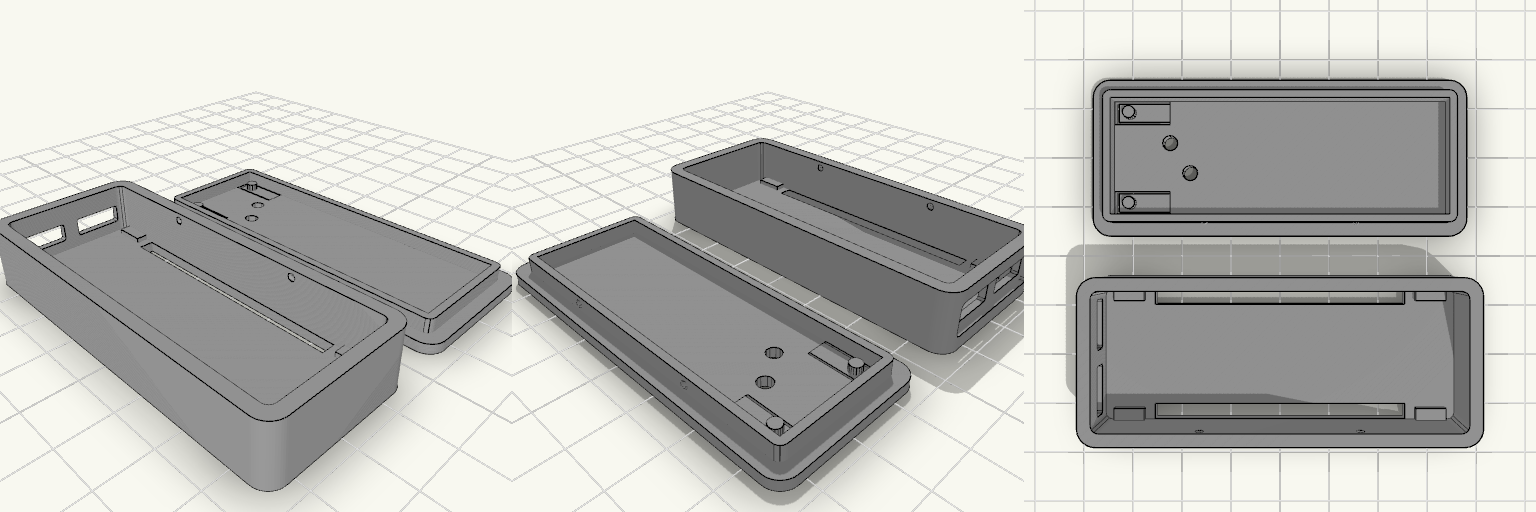
A sleek, modern shell for the ESP32-S3-N16R8 dev board, built around a snap-fit lid instead of screws or hooks. Rounded vertical corners and 2.5 mm walls give it a clean, finished look, while the lid's four ball bumps click into shallow dimples in the long walls: self-centering, no visible hardware, and no layer-line hooks to snap off. A shared counterbore around the USB-C ports lets bulky cable overmolds seat flush against the wall, so the board sits low and the cable still plugs in fully. The lid now carries two cantilever button tongues, and the body is opened underneath for pins from below. Design notes Board fit: internal cavity of 69.8 × 26.2 × 10.25 mm, with about 0.4 mm clearance per side on a 69 × 25.5 mm board. The long rails are now short pads at each end, and overall height is about 12.3 mm. USB-C access: two 9.8 × 3.8 mm cutouts with 0.5 mm rounded corners, separated by a 3 mm strut on the short wall. A single 25.6 × 7 mm counterbore, 1.2 mm deep, wraps both openings so overmolded plugs clear; the strut stays at full depth behind it to keep the board edge captive. Lid and buttons: 2 mm plate with an inner lip; four 0.8 mm ball bumps engage shallow dimples with about 0.5 mm engagement and 0.3 mm interference. Each cantilever button is a tongue cut free of the lid plate by a U-shaped slot, thinned to 0.7 mm, with a 2.4 mm nub under the free end to press the board button. The old plain button holes are gone; the two 3 mm LED holes remain. Button positions are estimated rather than measured, so check them against your board variant before printing. Bottom pin access: two 50 × 3 mm slots run through the floor under the header rows, 22.86 mm apart, so pins can pass through from the bottom. Printing: the shell and lid are separate pieces, sized for PETG. They are laid out side by side on the plate, not stacked, within about 74.8 × 70.4 × 12.3 mm.
Stacked ESP32 Cue Stroke Analyzer Enclosure
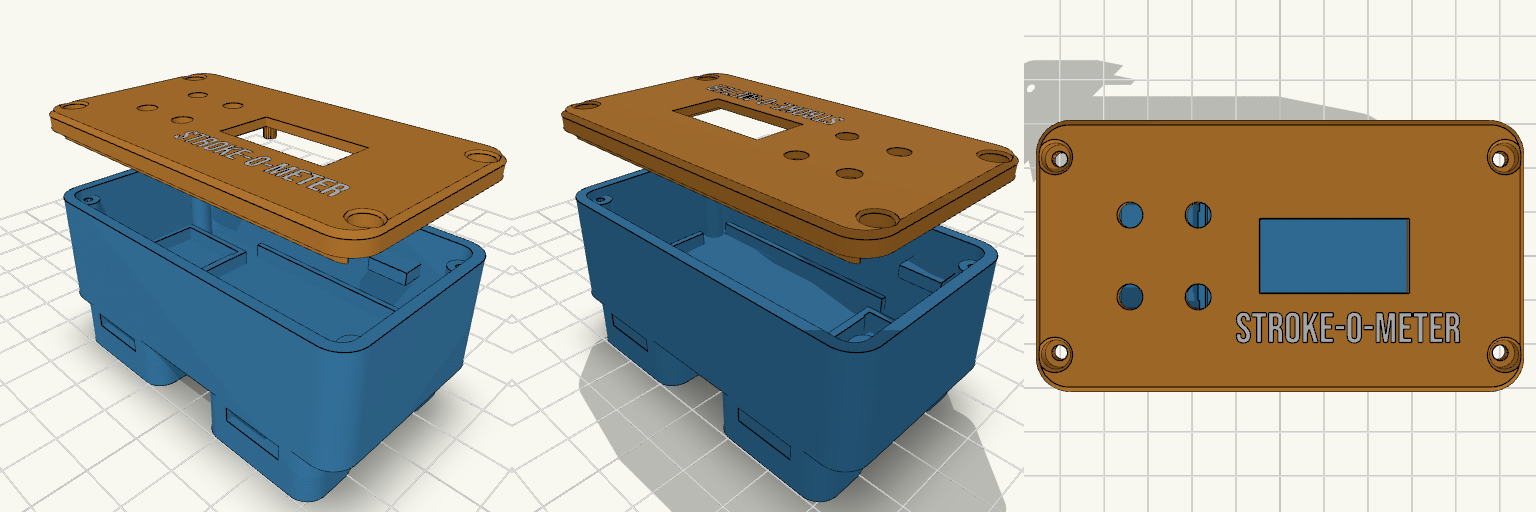
What it's for A compact enclosure that straps onto a pool cue butt and houses an ESP32 30-pin devkit, a 0.96 inch OLED, an IMU, a LiPo battery and a charger board. The lid carries four 6x6 tactile switches, the display window and an inlaid "Stroke-o-Meter" label. Both end walls are closed. The lid comes off for programming, charging and service. Dimensions Body footprint: 72 x 40 mm Overall height: about 49 mm exploded, about 35 mm assembled Battery bay: 45.8 x 32.1 x 9.1 mm, for a 45 x 31.3 x 9.1 mm cell Cue cradle: 32 mm diameter curve on the underside Strap tunnels: 12 x 3 mm, one under each foot Lid fixing: four M2 cap screws in counterbored holes Remix ideas Add a small cable notch in an end wall for in-case charging. Swap the battery bay size for a different cell. Change the cradle diameter to suit another cue. Widen the strap tunnels for a wider strap.
Samsung S24 FE Snap-In Bumper Case
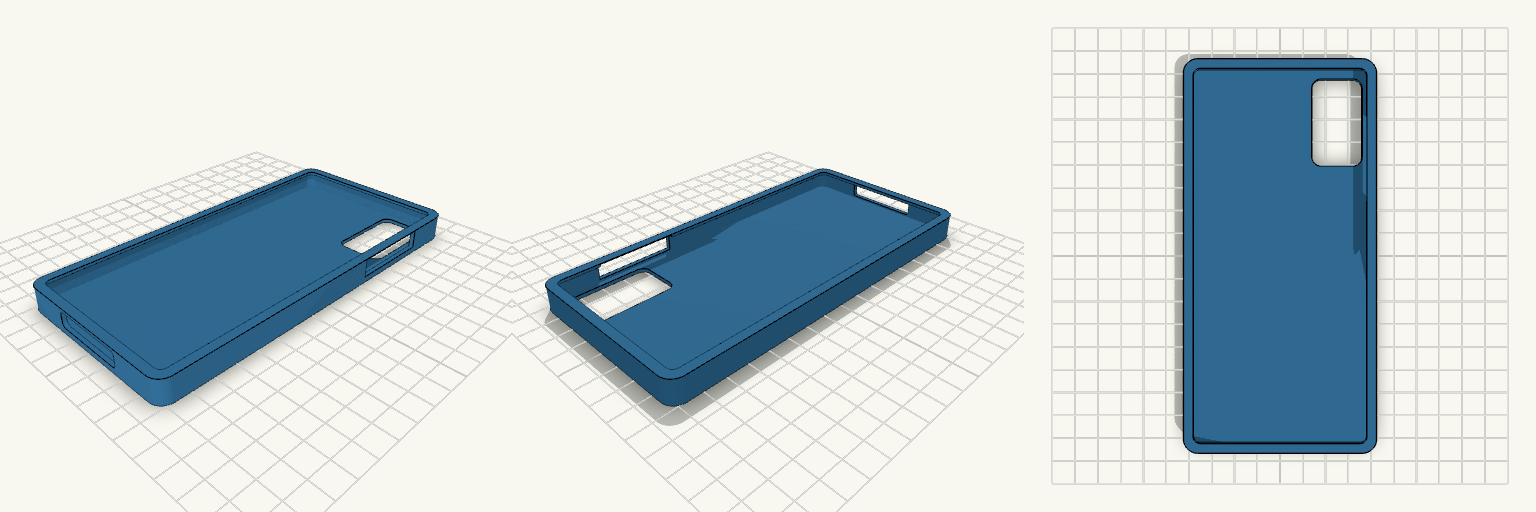
A one-piece snap-in bumper case for the Samsung S24 FE, sized from the 162.0 × 77.3 × 8.0 mm phone spec with 0.2 mm clearance. The open front leaves the screen clear, and the walls are 1.8 mm with a 1.5 mm back and a 1.2 mm lip that catches the screen edge. Camera cutout on the back Button slot along one side Bottom slot for USB-C and the speaker Prints back-down with no supports One piece, no assembly The case is rigid, so the phone presses in from one corner. PLA works, but a flexible filament such as TPU is easier on the phone and less likely to crack the lip. The camera and button positions are estimates, so check them against your phone before printing the whole case.
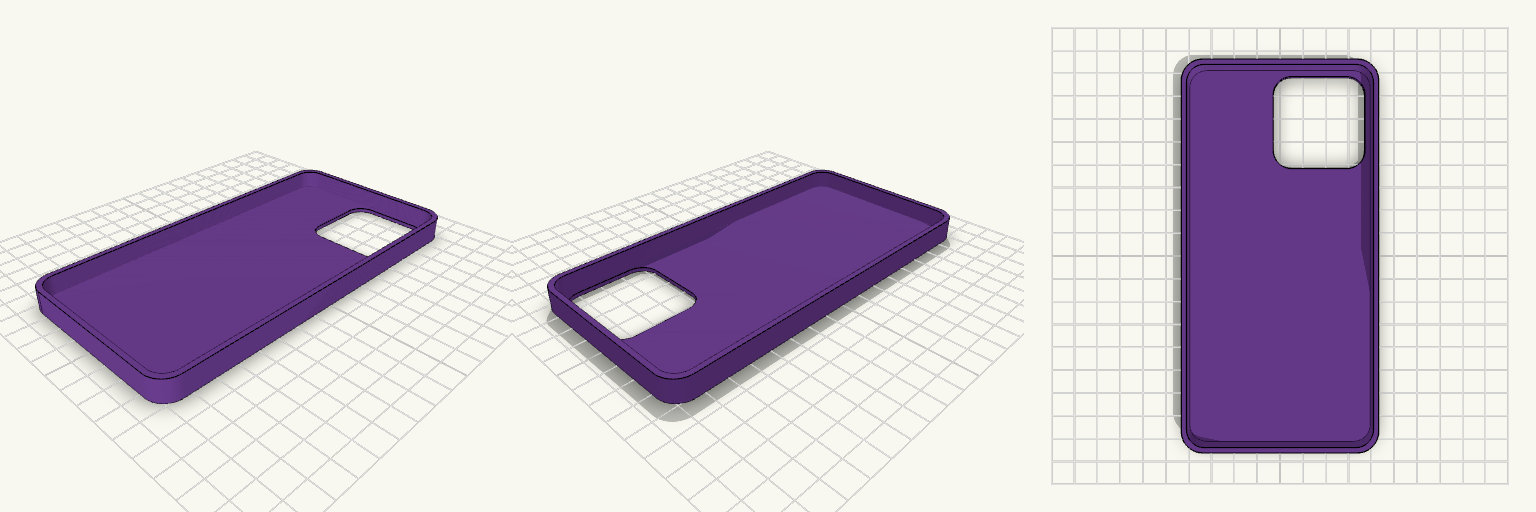
iPhone 13 Pro Max Case with Awareness Ribbon Inlay
What it's for A purple case for the iPhone 13 Pro Max with a peach cancer awareness ribbon inlaid flush into the back. The ribbon sits in a matching recess as a separate 1.2 mm-thick inlay, so you can print it in a second color or change filament at that layer. The screen side is open with a small lip to hold the phone, and the back has a rounded 40 mm camera cutout. It has not been test-fitted on a physical phone. Dimensions Case footprint on the print plate: 83.1 × 165.8 × 10 mm. Phone cavity: 78.7 × 161.4 mm, with 2.2 mm walls and a 1.6 mm back. Peach ribbon inlay: 32 × 49.3 mm, 1.2 mm thick. Camera cutout: 40 mm rounded opening at the top corner of the back. Print the case back-down. Remix ideas Change the ribbon color for another awareness cause while keeping the flush recess. Resize or reshape the ribbon inlay, or add a short message alongside it. Add button cutouts or adjust the front lip for a different fit preference.
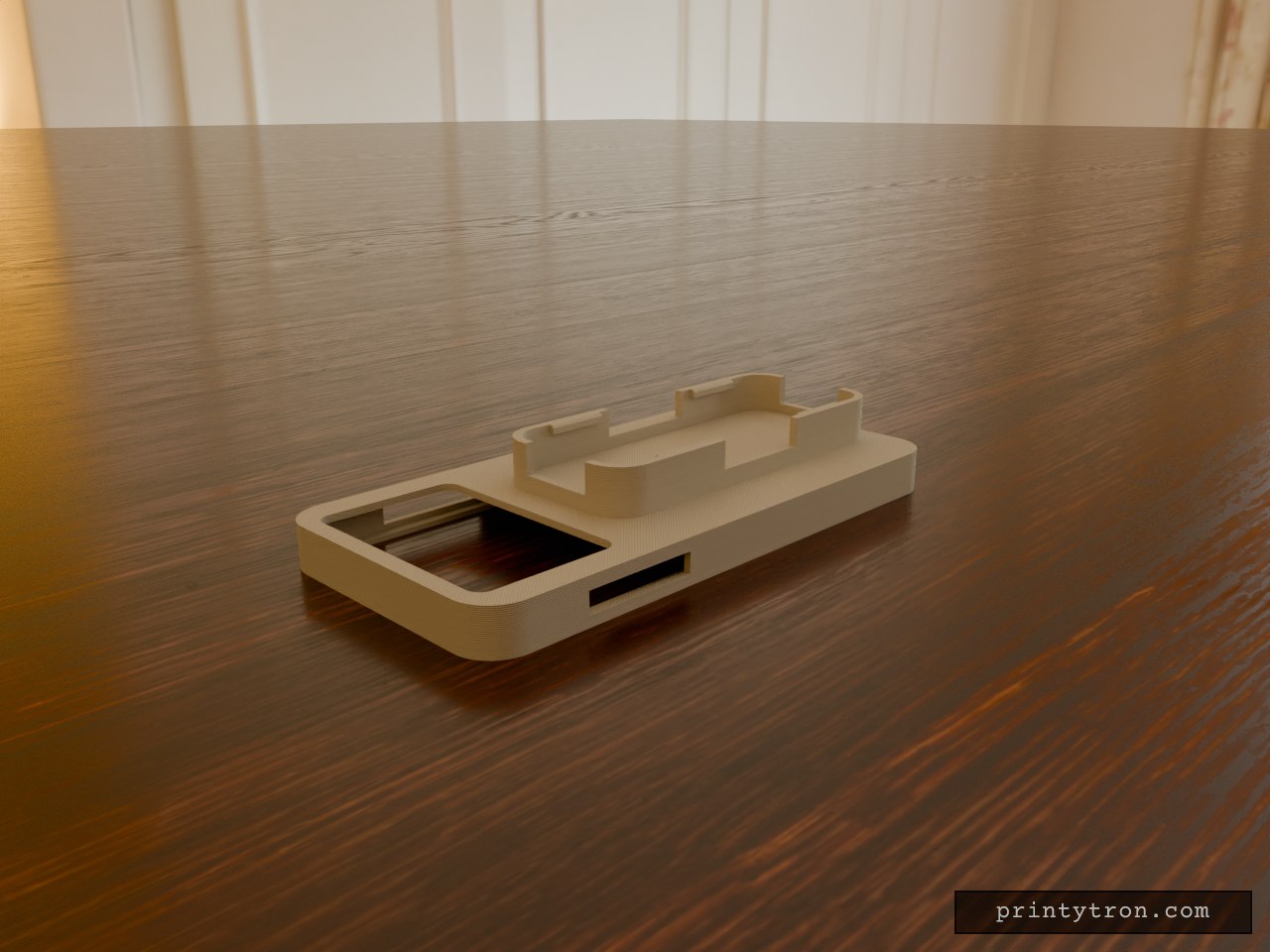
Nothing Phone (1) Case with Flipper Zero Cradle
A snap-on case for the Nothing Phone (1) with an integrated cradle on the back for a Flipper Zero. The phone enters from the screen side and is held by a 1.5 mm lip, while side-button slots and a bottom opening keep the buttons, USB-C port and speaker clear. The cradle sits on the lower two-thirds of the back, clear of the camera, and holds the Flipper Zero with snap ridges and finger notches. Corners on both the case and the cradle are rounded generously for a softer outline. Specs Phone fit: Nothing Phone (1); open front with a 1.5 mm retaining lip; side-button slots; USB-C and speaker opening. Back window: opening over the camera and glyph area. Flipper cradle: lower two-thirds of the back; 13 mm pocket height; port slots at both ends; finger notches on the long sides; snap ridges to hold the Flipper Zero. Flipper clearance: the Flipper Zero is 25 mm thick, so about half of it sits above the cradle rim. Corners: case outline 11 mm radius, cradle 10 mm radius; pockets and screen opening rounded to match; the cradle rim's top edges are still square. Overall size: the case is about 80 mm wide and 164 mm tall; the cradle is about 46 mm wide and 106 mm tall. Wireless charging: the cradle covers the phone’s wireless-charging area. Printing: print screen-side down with the cradle opening facing up. TPU is recommended for the 1.5 mm lip; PLA makes the lip stiff. Print status: this version has not been test-printed.