ESP32-S3 Enclosure with Sliding Lid and Dual USB-C v 2
Created today
Description
Two-piece enclosure for an ESP32-S3 dev board. The lid slides in from the open end opposite the USB wall, running in grooves cut into the two long walls, and sits flush with the top so no hardware shows. The total height is 10.25 mm, which keeps the profile low but leaves only 6.75 mm inside — enough for the bare board, not for tall headers.
- Body: 64.3 × 26.2 mm cavity with 0.4 mm clearance per side, 2.5 mm walls, 4 mm vertical corner radius.
- Lid: 2 mm thick, sliding in grooves on the long walls; recessed centre 1 mm deep with sloped sides and a 4 mm flat border.
- USB-C: two cutouts on the short wall, each 10.1 × 4.1 mm with rounded corners, a 3 mm strut between them, and a rounded counterbore on the outside of each.
- Pin rails: two 3.2 × 58 mm slots straight through the floor, 22.9 mm apart (y = ±11.43), lined up with where a DevKitC's header pins sit, so pins can be soldered or connected from below.
- Blank face: the button and LED area is left plain — no cantilever arms, no LED window.
Print the body and lid as separate pieces. The lid sits top-up on the plate with its recess cut from the top, so it needs no supports.
Nothing locks the lid in place once it is slid home, so add a small detent or a dab of tape if it needs to stay put. The USB, board and pin positions follow the usual DevKitC layout rather than a measured board, so check them against your own before committing to a long print.
Images
More like this
Explore more in Desk & Tech →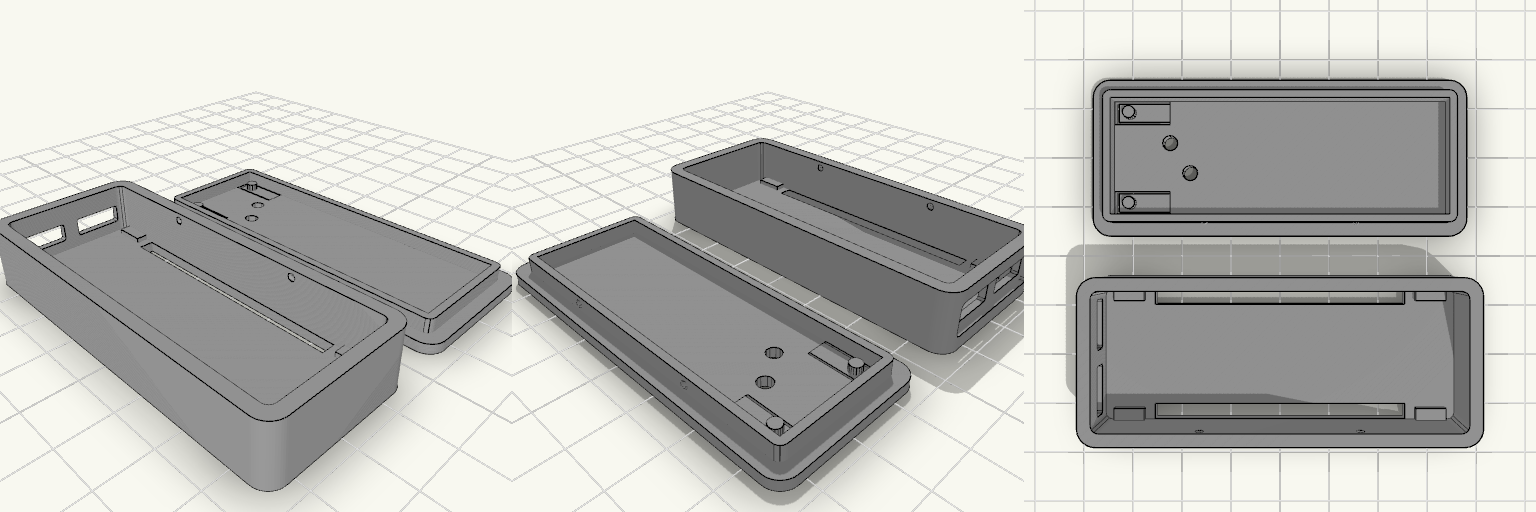
Sleek Ball-Bump ESP32-S3-N16R8 Enclosure v 3
A sleek, modern shell for the ESP32-S3-N16R8 dev board, built around a snap-fit lid instead of screws or hooks. Rounded vertical corners and 2.5 mm walls give it a clean, finished look, while the lid's four ball bumps click into shallow dimples in the long walls: self-centering, no visible hardware, and no layer-line hooks to snap off. A shared counterbore around the USB-C ports lets bulky cable overmolds seat flush against the wall, so the board sits low and the cable still plugs in fully. The lid now carries two cantilever button tongues, and the body is opened underneath for pins from below. Design notes Board fit: internal cavity of 69.8 × 26.2 × 10.25 mm, with about 0.4 mm clearance per side on a 69 × 25.5 mm board. The long rails are now short pads at each end, and overall height is about 12.3 mm. USB-C access: two 9.8 × 3.8 mm cutouts with 0.5 mm rounded corners, separated by a 3 mm strut on the short wall. A single 25.6 × 7 mm counterbore, 1.2 mm deep, wraps both openings so overmolded plugs clear; the strut stays at full depth behind it to keep the board edge captive. Lid and buttons: 2 mm plate with an inner lip; four 0.8 mm ball bumps engage shallow dimples with about 0.5 mm engagement and 0.3 mm interference. Each cantilever button is a tongue cut free of the lid plate by a U-shaped slot, thinned to 0.7 mm, with a 2.4 mm nub under the free end to press the board button. The old plain button holes are gone; the two 3 mm LED holes remain. Button positions are estimated rather than measured, so check them against your board variant before printing. Bottom pin access: two 50 × 3 mm slots run through the floor under the header rows, 22.86 mm apart, so pins can pass through from the bottom. Printing: the shell and lid are separate pieces, sized for PETG. They are laid out side by side on the plate, not stacked, within about 74.8 × 70.4 × 12.3 mm.
70×45×10.25 mm Sliding-Lid Enclosure with USB-C Cutouts
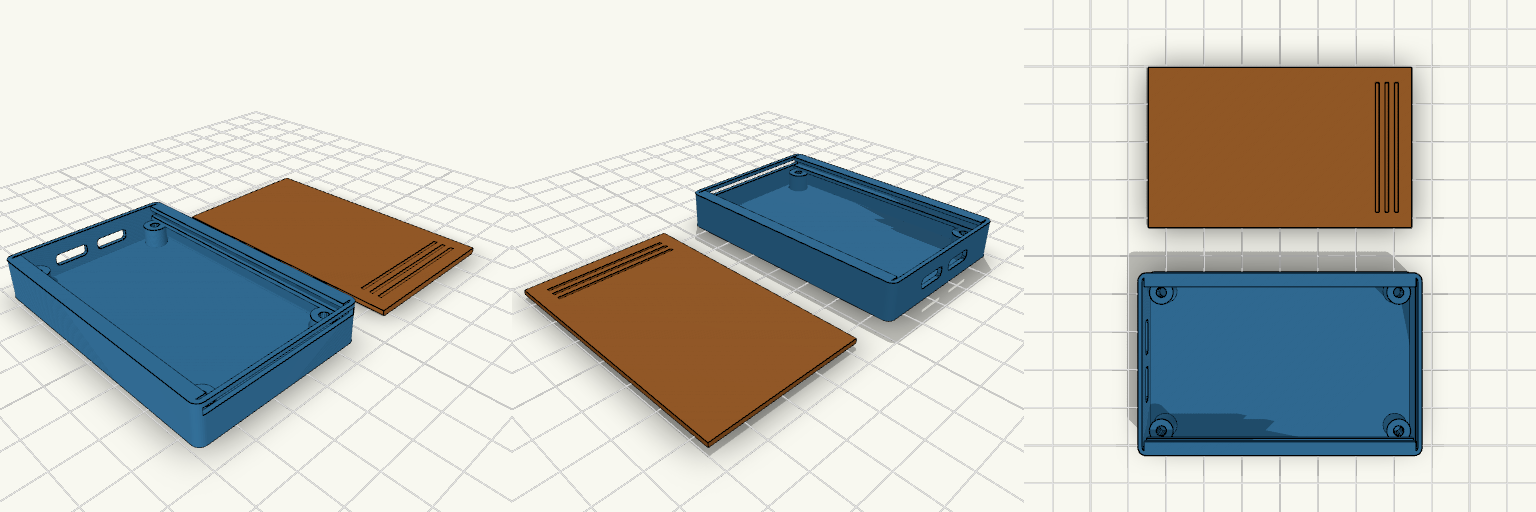
What it's for A sleek-modern two-part enclosure for a small electronics board. The body has two USB-C openings on one short end so the ports can be reached with the lid in place. The lid slides into grooves along the long walls and is stopped by the closed end; three grip ridges at the pull end help you slide it open. Four corner bosses inside give a PCB something to screw down to, and no screws are needed to close the lid. The body and lid print as two separate pieces. Dimensions Body: 70 × 45 × 10.3 mm as laid out; 1 mm walls; vertical corners rounded at 2 mm; top and bottom edges square. Lid: 68.7 × 41.8 × 1.5 mm, with 0.2 mm clearance in the side grooves and three shallow grip ridges. Assembled height: 10.25 mm. USB-C cutouts: two rounded 9 × 3.2 mm plain slots on the short end, with a 3 mm gap between them (centres 12 mm apart, ±6 mm from the middle); the slots sit 2.8 mm above the inside floor. Screw bosses: four at the corners, 6 mm across with 2.6 mm holes for M3 self-tapping screws, 4.75 mm tall and stopping 3 mm below the rim. Compatibility Designed around an ESP32-S3 N16R8 board, but the corner bosses use a generic 6 mm / 2.6 mm layout and may not match that board's mounting holes. The USB-C slots sit low, while the bosses hold a board above the floor, so the slots line up only with a board resting directly on the floor. Check the board's hole spacing and port height before printing. Print notes Print the body with the open side facing up so the bosses and inner groove come out clean. Print the lid flat beside the body. Because the sliding fit is not verified in practice, print the lid first and check it in the grooves before committing to the body. Remix ideas Fit the boss positions and USB slot height to an exact ESP32-S3 N16R8 board layout. Add screw holes or a latch if the lid should be held more securely than by sliding friction. Resize the boss holes for M2.5 screws or heat-set inserts. Move or widen the cutouts for a different connector layout, or add a third opening on another face. Cut a vent grille into the lid for boards that run warm.
Platinenabdeckung 20x20 mm mit Öse
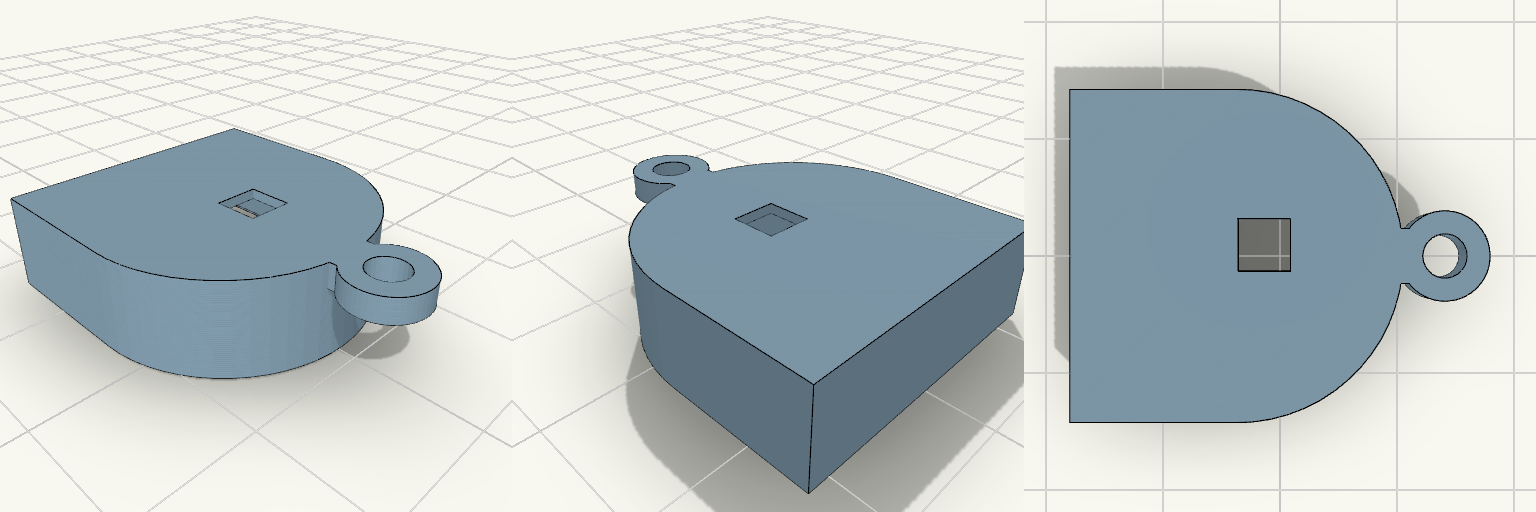
Abdeckung für eine 20×20×4 mm große D-förmige Platine mit Einrastnasen, Tasteröffnung und Schnuröse an der Rundung. Gesamthöhe 7,8 mm, Decke 0,8 mm, Wandstärke 1,8 mm Tasteröffnung 3,8 × 3,8 mm Öse: 6,5 mm Außendurchmesser, 3,2 mm Bohrung, 2 mm dick, bündig mit der Oberseite Öse sitzt mittig an der Rundung (Y = 0) auf der +X-Seite Empfohlen: transparentes PETG oder PLA
ESP32 Enclosure with 1.3 Inch OLED Lid
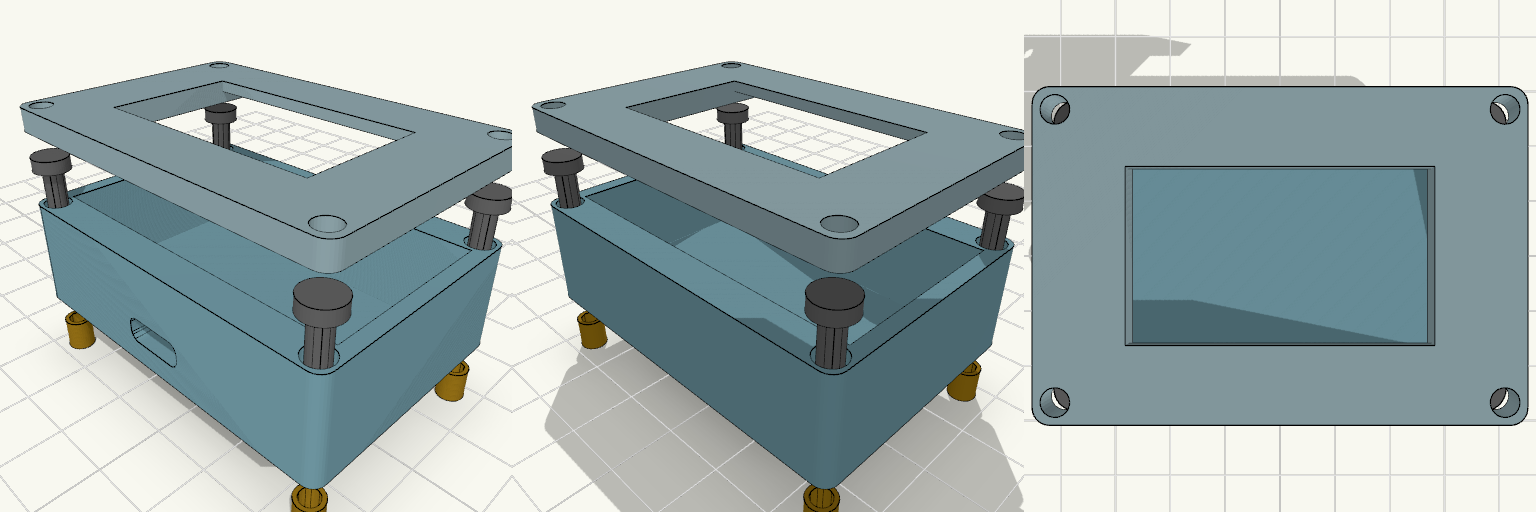
Two-piece enclosure for a 30-pin ESP32-WROOM-32 DevKit V1 with a 1.3 inch SH1106 OLED mounted in the lid. Shown exploded with heat inserts and M3 screws aligned to the corner holes. The lid has a 35.5 x 34.5 mm recess on the underside that holds the OLED PCB, and a 35.5 x 20.5 mm window through the front panel for the visible display area. ESP32 pocket: 52 x 28 mm, 14 mm deep Outer size: about 56.8 x 40.4 mm, 2.4 mm walls Front USB-C slot, 10 x 4 mm Four corner screw holes for M3 screws and heat inserts Front panel thickness behind the window: 1.6 mm Print the lid face-down for a clean front surface.
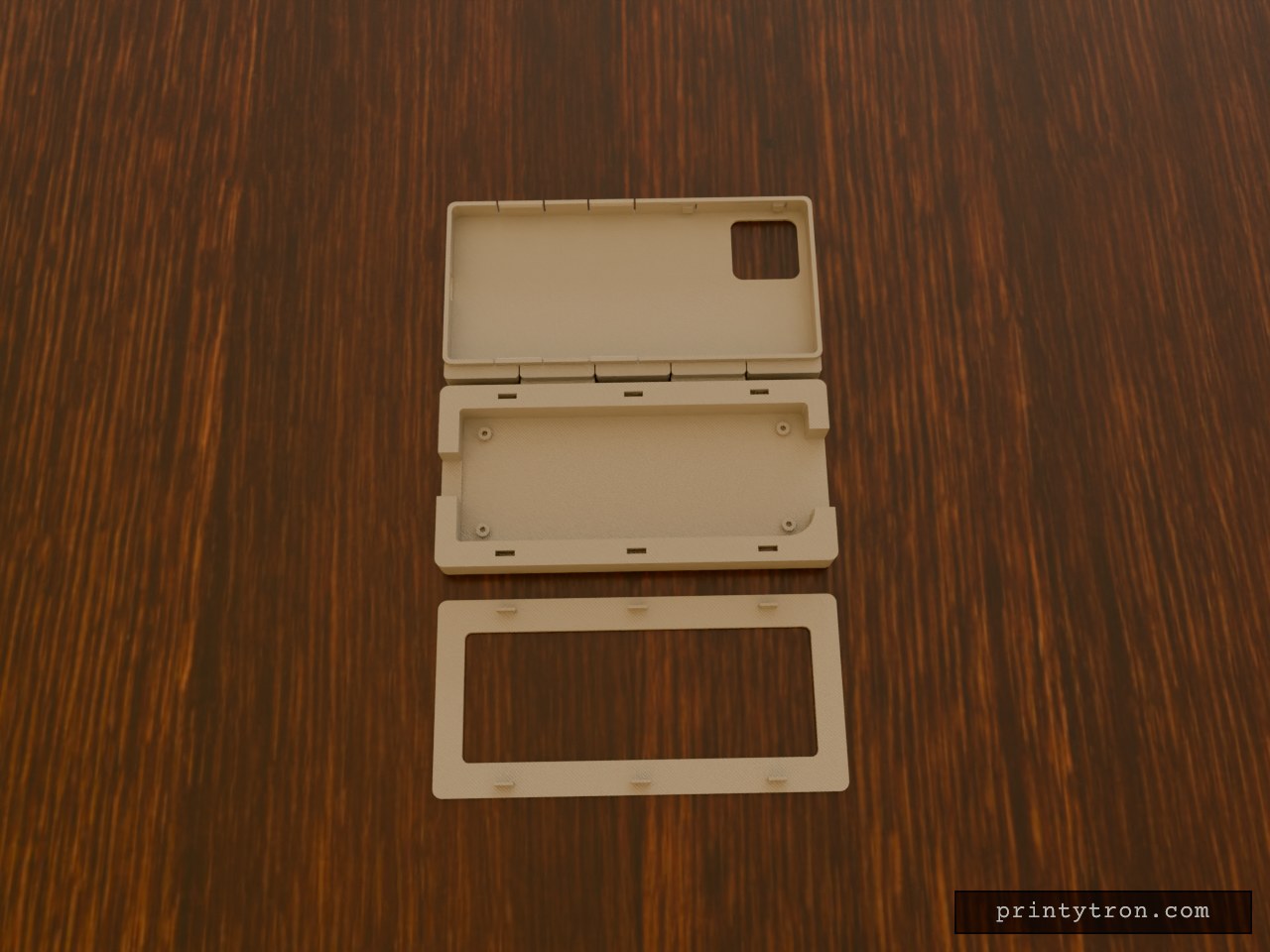
FoldDeck — Phone Shell and Printed-Hinge Keyboard Cover
FoldDeck is a clamshell-style phone-and-keyboard case built around a Galaxy A14 5G and a K808 Mini keyboard. The cover folds shut over the phone like a pocket flip-style mini laptop, and the hinge is printed as part of the design, so no pin, screw or other outside hardware is needed. Features Phone shell that replaces the phone's back, with snap hooks, a USB-C slot and flexing button covers Keyboard tray with screw posts for the K808 board Snap-on face plate with a window over the keys and touchpad Printed hinge: 3 mm round stubs on the tray knuckles seat in 3.6 mm blind bores in the shell knuckles Print notes Print the hinge parts with the stubs lying along the bed PETG or ASA is recommended for the snap hooks and hinge Port, button and camera positions are placeholders until measured
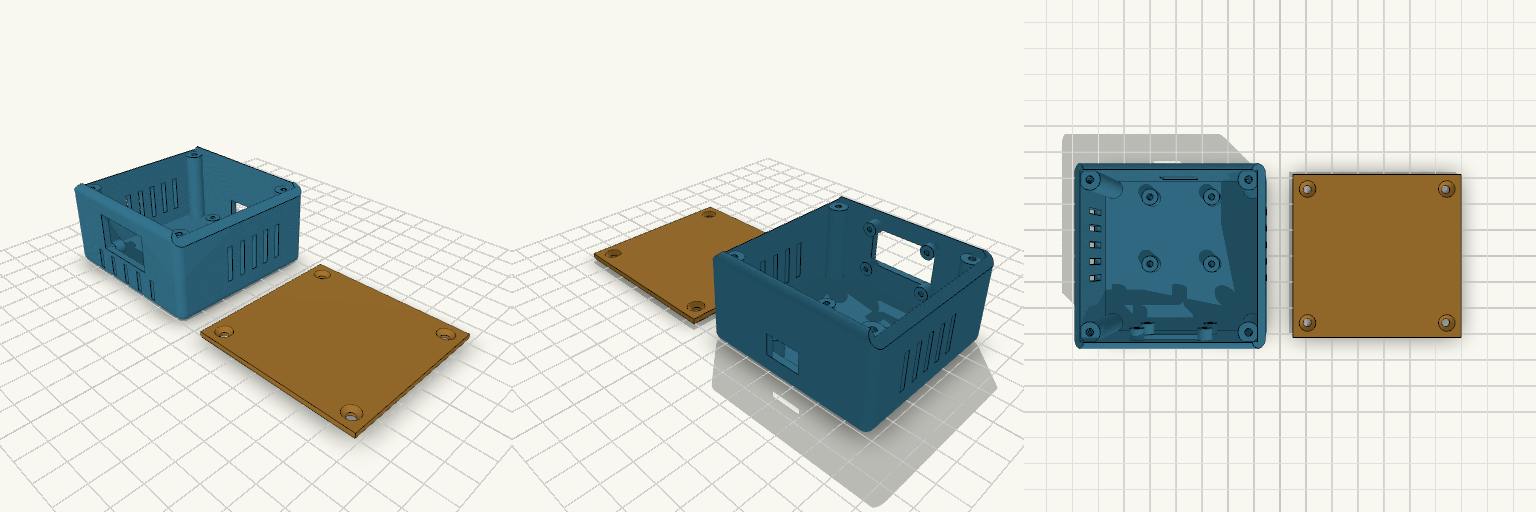
Arcade Console Desk Clock Case
A compact desk-clock enclosure with a gaming-rig attitude: chamfered shoulders, vented flanks and grooved front stripes under the OLED window, like a mini console from a late-night LAN party. Window for a 0.96" OLED on the front Standoffs for an ESP32 WROOM-32 devkit USB slot at the back Four corner screw bosses and a separate screw-on lid Side vent slots for airflow