[Fixed] Solid Pickup Truck Desktop Model
Created 5 months ago
Description
A robust, single-piece pickup truck model tailored for desk display or arts/crafts. The design features integrated rolling stock and newly added window recesses to break up the cabin, providing natural boundaries if you decide to paint it.
Details and Updates
- Strengthened Chassis: The wheel wells are now constrained to the sides, leaving a solid central block so the axles and body are perfectly bridged.
- Thick Tray Bed: The truck bed floor is raised well clear of the wheel cutouts, providing solid structure.
- Cabin Updates: Simple recessed geometry acts as a windscreen, side windows, and rear window.
- Footprint: Hand-sized format with integrated large, chamfered wheels ready for straightforward printing.
Images
More like this
Explore more in Automotive, RC & Hobby →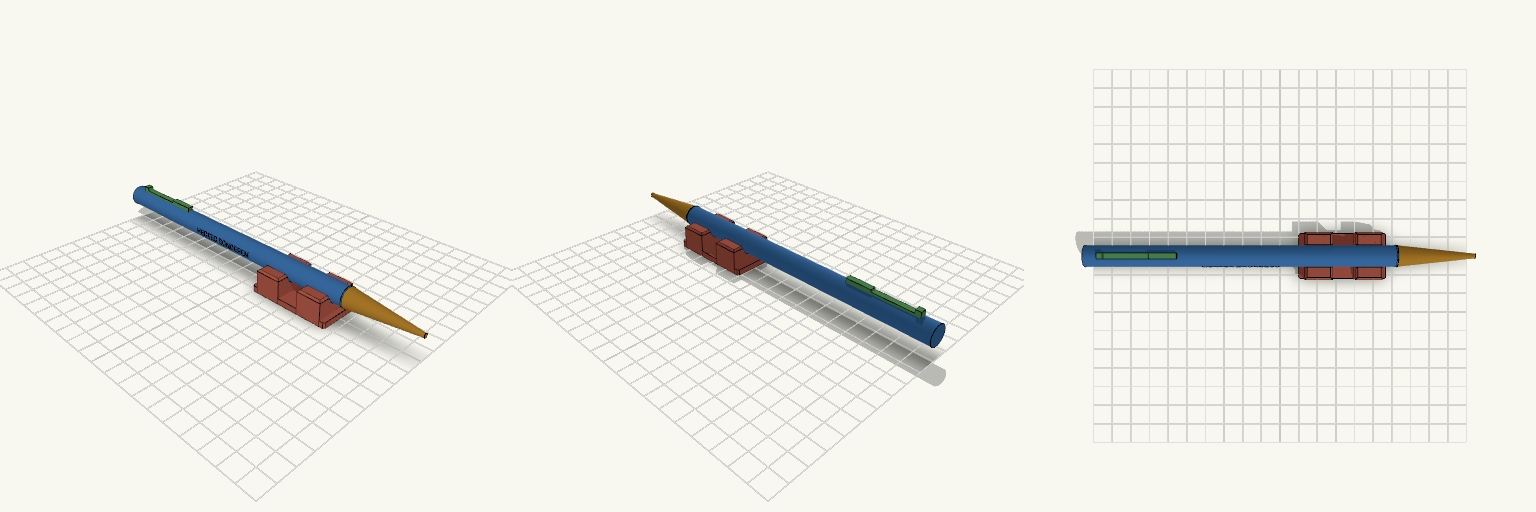
200 mm Pen with Compact RC Mount
A 200 mm display pen with an 11 mm round barrel, a tapered tip, a pocket clip and "HECTEC SONDEREN" engraved on the front. A small base plate with two cradles sits under the barrel near the tip end, for mounting the pen on an RC car. The pen is held in the cradles with zip ties, and the plate is fixed down with one central screw. Pen length: 200 mm, barrel diameter 11 mm Mount plate: 46 x 24 mm, located at the tip end of the barrel Two cradles with zip-tie slots beside each One 3.6 mm screw hole in the plate centre Solid barrel, display use only
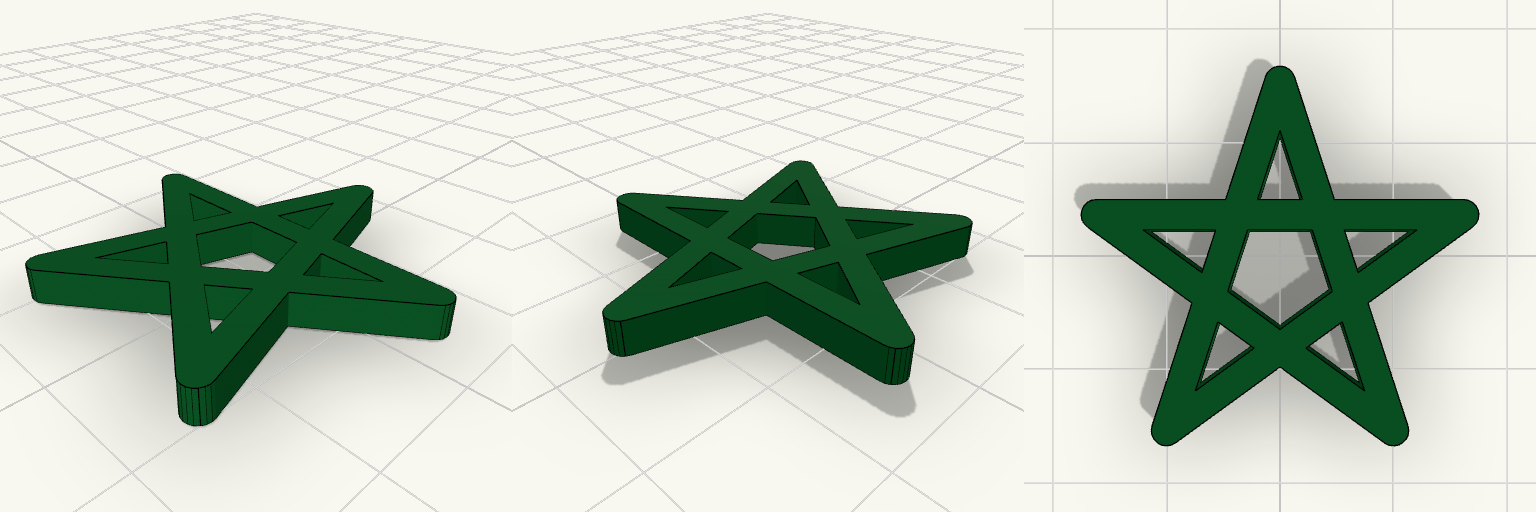
NAJMA
A compact, single-piece delivery truck chassis designed as Part 1 of a commemorative desk model. Engineered to print in place with zero assembly required for the base. Integrated Wheels: Solid cylinders fused into the chassis base for a robust, no-moving-parts foundation. Rear Platform: Provides a flat bed with two precisely placed alignment pins to locate a custom cargo box. Commemorative Markings: Features embossed text on the cabin roof celebrating the occasion. Built to be fully printable without supports, keeping the underside flat and stable.
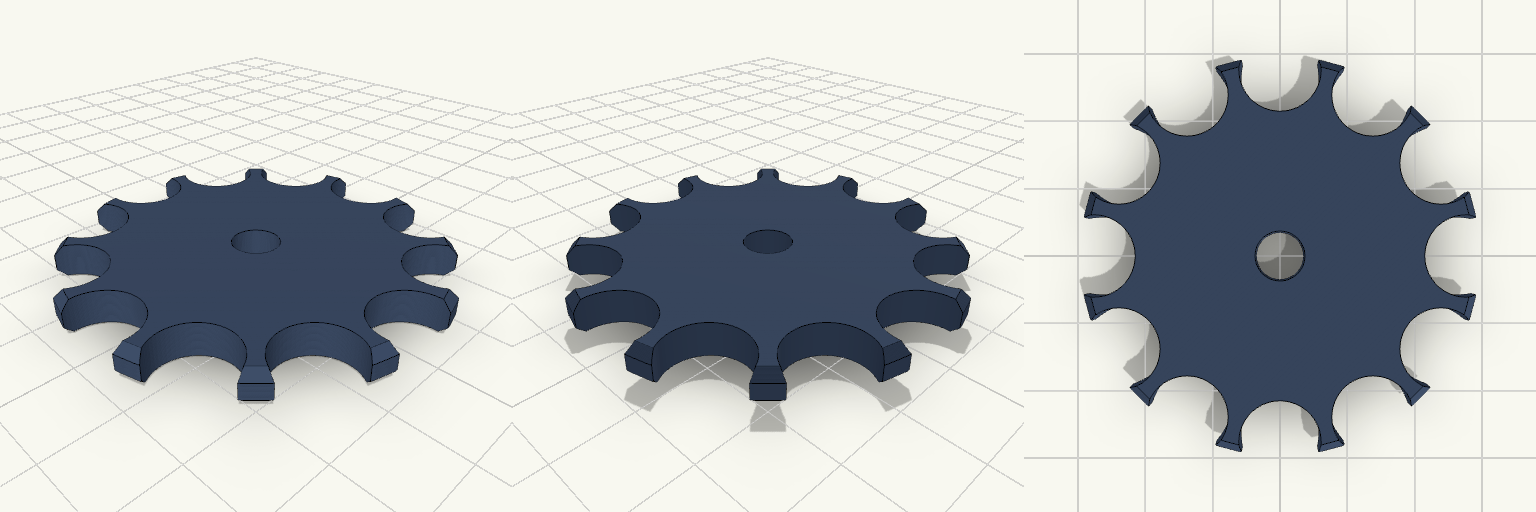
1/2" Pitch 24T Solid Blank Sprocket
A solid 24-tooth bicycle sprocket designed for standard 1/2" pitch, 3/32" wide chains. Fitment Pitch: 1/2" (12.7 mm) Chain Width Compatibility: 3/32" (Teeth are chamfered down to ~2.2 mm at the edges to clear the narrow rollers) Overall Plate Thickness: 3/16" (4.76 mm) for rigidity Center Bore: Completely solid blank (0 mm) — designed to be custom drilled or machined to fit your specific motor or prop adapter. Overall Diameter: ~104.9 mm The solid center provides maximum material for custom mounting solutions. Print with a high infill and robust walls if this will see significant torque.
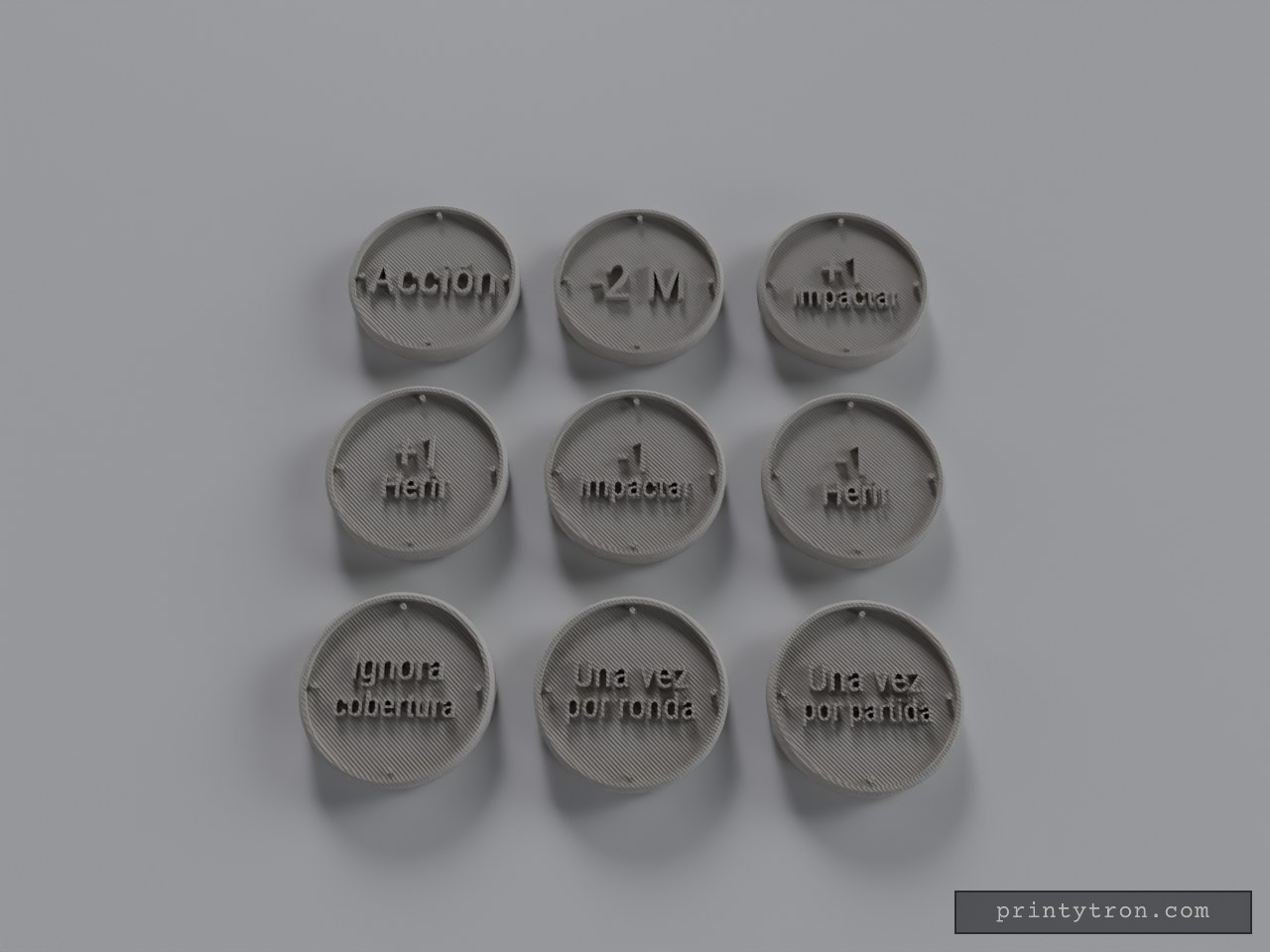
25mm Tactical Tabletop Tokens
A complete set of nine 25mm wargaming tokens tailored for tabletop tracking. Designed with a clear separation between the base and the raised lettering, making them perfectly suited for a mid-print filament swap or a multi-material system. Specifications Dimensions: 25 mm diameter, 4 mm overall height. Tolerances: The raised text and outer rim sit exactly 1 mm above the base layer, creating a clean Z-height transition for color changes. Printability: No supports required. The bottom edges feature a 1 mm chamfer to prevent elephant-foot distortion on the first layer, ensuring the tokens remain perfectly circular and easy to pick up from flat tables. Layout: Arranged in a flat 3x3 grid for immediate batch printing. Can be split into individual models in the slicer if needed.
Curved Snap-In Interior Trim Cover
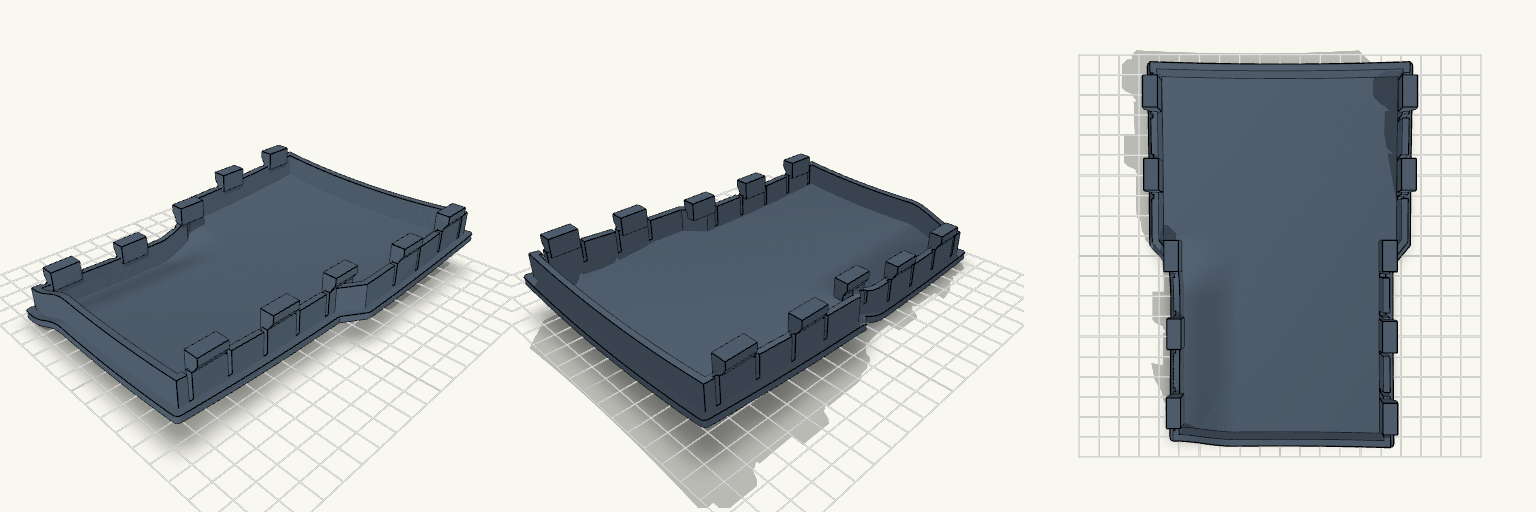
A 123 × 180 mm curved interior trim cover with a straight bottom edge, a stepped outline (107 mm wide at the top, 123 mm in the lower 85 mm) and a 3 mm panel. The perimeter flange follows the crowned surface so the part sits flush around the opening. Remix hooks Surface crown: the front curvature is a few millimetres in both directions. Flatten or deepen it to match a measured body profile. Raised area: 10 mm high with a soft ~30 mm blend at the upper left. Change height or width to suit. Clips: five per side at 18, 54, 90, 126 and 162 mm, 14 mm wide and 4.5 mm thick, with a ~2 mm hook. Adjust hook depth to the real metal edge thickness. Rear frame: 15 mm deep, 2.8 mm wall, inset 3.5 mm. Change the inset for a tighter or looser fit. Pairs with: fuzzy skin in the slicer for a textured look. Print in PETG, ASA or ABS.
OO Gauge semi detached house stone v2
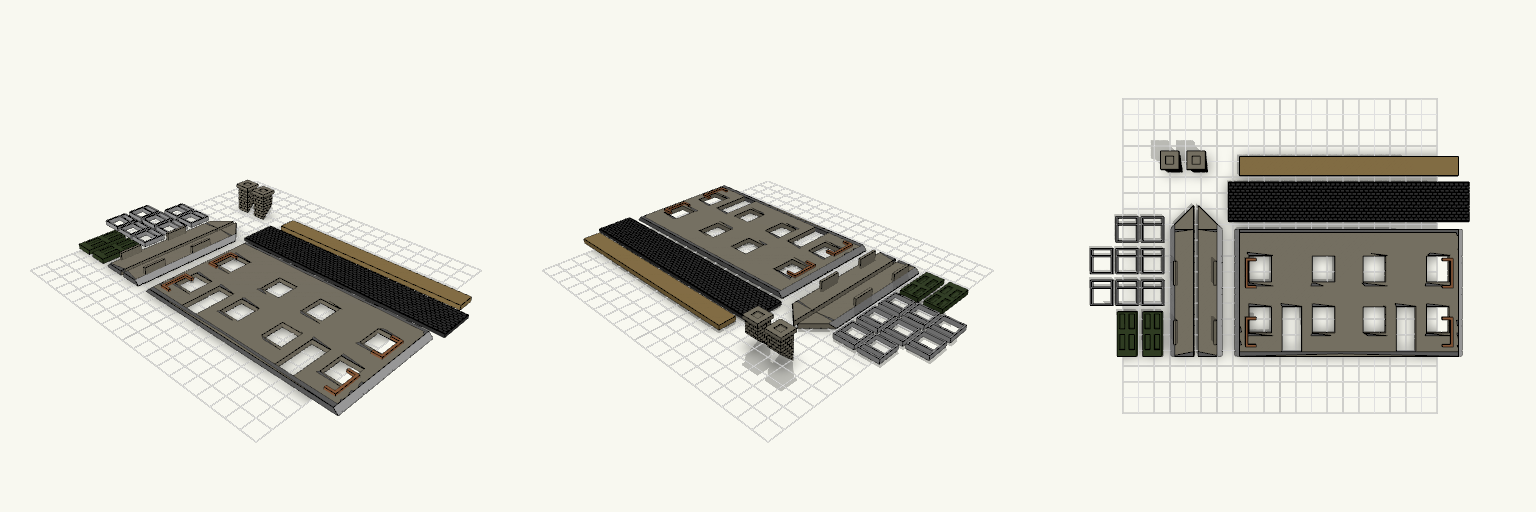
A semi-detached stone house pair in OO gauge, printed as separate pieces: front wall with quoins at the outer ends, mitred side walls, a one-piece roof, a floor piece, two chimneys, and separate window and door inserts. Four small locator rails now help position the side-wall tabs on the front wall. Remix hooks Tab locators: four U-shaped pieces, each 6.8 × 18.6 × 1.5 mm. Glue one against the inside of the front wall beside each side-wall tab. The 0.3 mm clearance around the 15 × 5 mm tab is the value to tune for your printer. Locator thickness: 1.5 mm now. Raise it for a firmer stop. Window and door inserts: 3 mm thick, 0.2 mm clearance per side. Pairs well with: a thin plasticard base or a printed street baseboard.