Garden-Plumbing Workhorse: BSP to 3/4 Hose Barb
Created today
Description
A straight-line adapter that bridges a 1-1/4" BSP female threaded socket to a 3/4" hose barb, with a tapered shoulder carrying the eye from the wide threaded end down to the narrow ridged nozzle. It reads like a piece of honest utility hardware: a ring of 11 TPI thread at one end, three crisp ridges at the other, and a 15 mm bore running clean through a compact 55 mm body — short enough to tuck into tight pump and tap arrangements without a loop of hose fighting for room.
The barb's ridges ramp up gently from the tip and widen toward the body, then drop off in a sharp step — the hose slides on without a fight, and the step keeps it from backing off again.
Design notes:
- 1-1/4" BSP female socket, 11 TPI, 41.91 mm major diameter, 18 mm deep
- Tapered transition from the socket down to the barb
- 19 mm barb with three retention ridges, 7 mm tall and spaced 8 mm apart, narrow at the tip and widening to a step at the body side, for 3/4" hose
- 15 mm bore through the full length; 55 mm overall
- Prints as a single piece, sitting upright at roughly 50 × 50 mm on the plate
Fit and sealing:
- The thread is modelled at nominal size with no added clearance, so a first test fit against the male fitting is worth doing — if it binds, opening it out by 0.2–0.4 mm is the easy fix.
- For a watertight joint, wrap the thread with PTFE tape or seat a flat washer against the socket floor.
- The shortened barb leaves less hose length to grip; a hose clip just behind the final ridge makes up for it.
Pairs naturally with garden hose, pump outlets and tank fittings.
Images
More like this
Explore more in Home & Fixtures →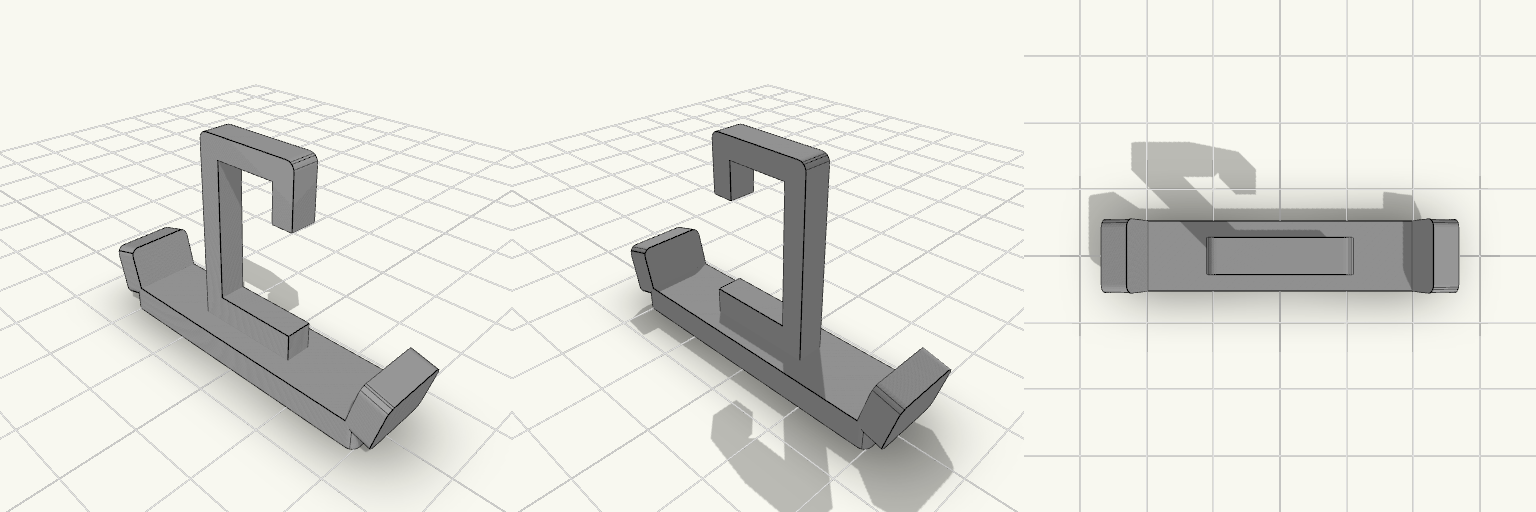
Kampas — Mini pakaba su pakeltais galais
Kompaktiška vaikiškos suknelės pakaba su stačiakampe kilpa ir stipriai pakeltais galiukais, kad petnešėlės nenuslystų. Savybės Plotis 10 mm Galiukai pakelti 45° kampu Stačiakampė atvira kilpa Plokščia apatinė dalis pailginta 0,8 mm
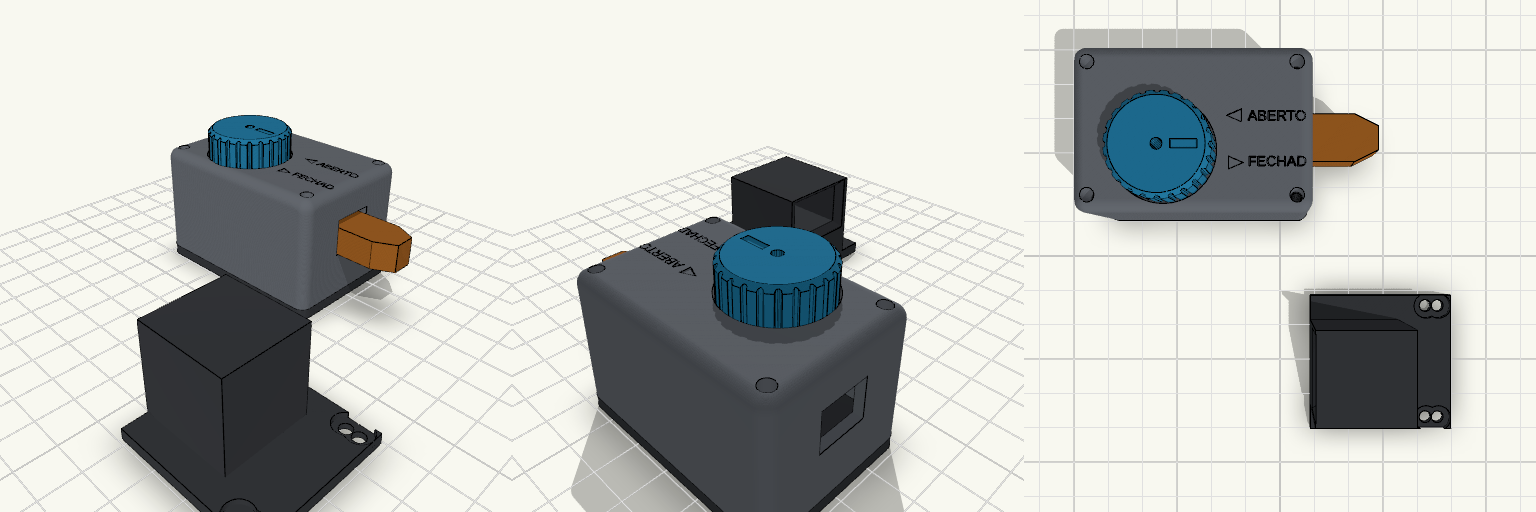
Tranca de Sobrepor com Tampa Removível
Tranca de sobrepor compacta (56,5 × 39 × 35,6 mm) em que toda a parte superior do corpo é uma tampa única. Ao retirar os 4 parafusos M3, a tampa sai inteira e deixa o interior à mostra. O conjunto inclui base com piso de 3 mm, ferrolho, manípulo elevado com serrilha, pino de aço Ø4 mm e receptor separado. Ideias para remix Altura da divisão: a tampa começa no piso (3 mm). Subir esse corte deixa paredes na base e uma tampa mais rasa. Manípulo: disco Ø24 mm com 8 mm acima da tampa. Uma alavanca alongada dá mais braço. Fixação: 4 furos Ø3,4 mm (34 × 29 mm) com rebaixo, para parafusos 3,5 × 25 mm. Combina com: receptor de 40 × 38 mm, que pode ser aparafusado na porta ou no batente.
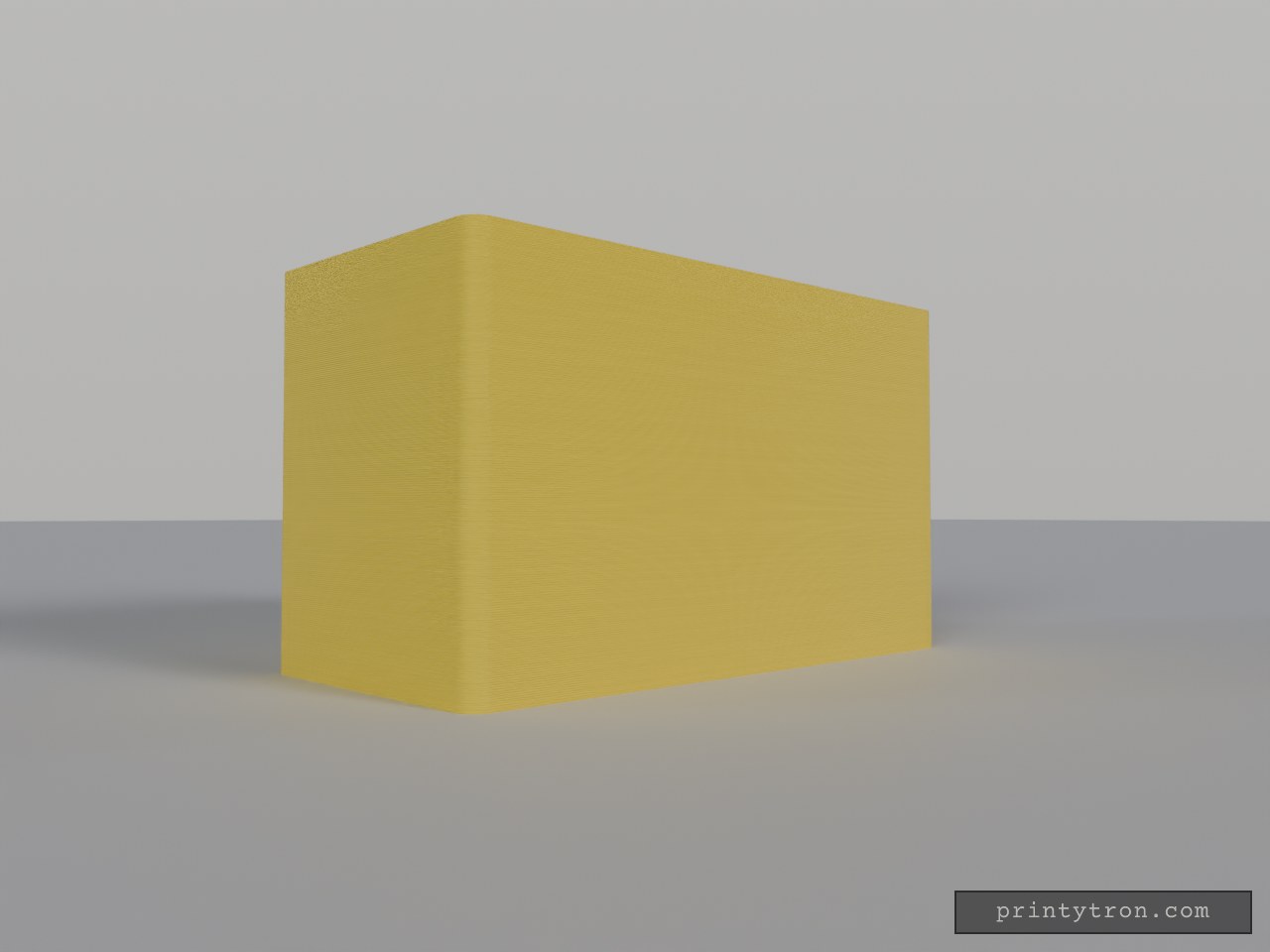
253 x 126 x 150 mm Rectangular Trash Bin
Open-top rectangular trash bin with 4 mm walls and a 3 mm floor, sized 253 mm long, 126 mm wide and 150 mm tall (outside dimensions), with rounded vertical corners. Fitment notes Measure first: the 253 mm length exceeds a 220 mm print bed. Check your bed's usable X/Y before printing. Fits: any liner or bag that suits a 245 x 118 mm inside opening. Does not include: a lid, handle or drainage holes. Inside size: 245 x 118 mm, 147 mm deep.
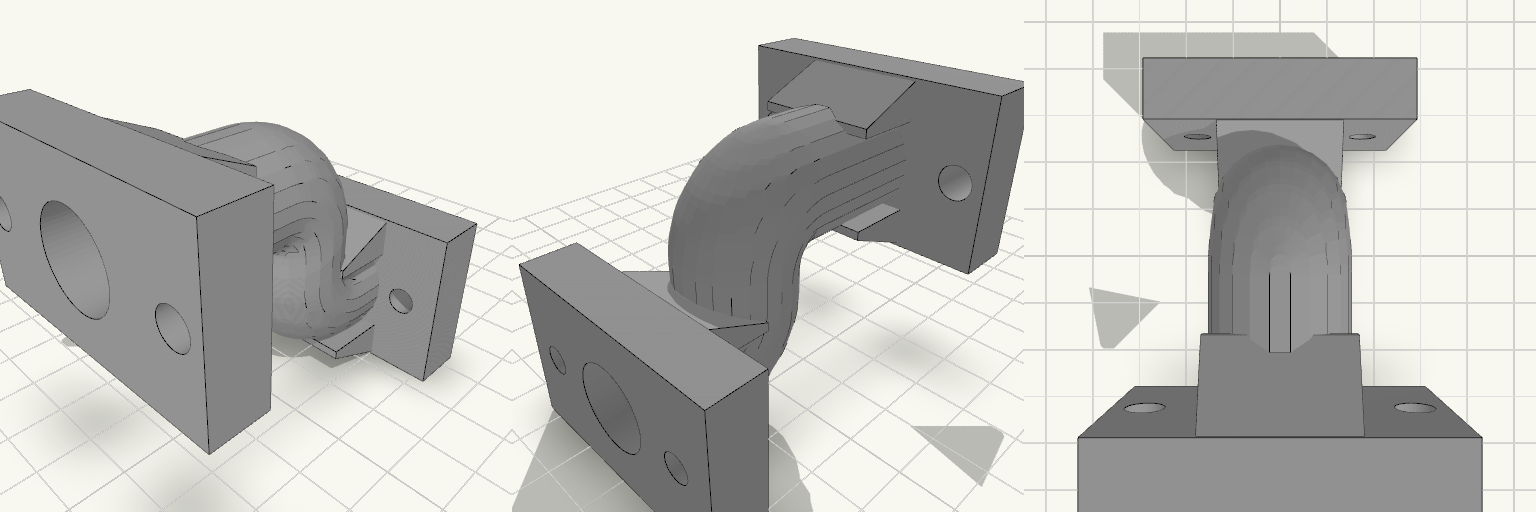
Ansaugstutzen Hercules
Rohrverbindungen, die aus einer Platte austreten, knicken an der Kante gern weg — dieser Rohrwinkel verstärkt genau dort mit Keilen über und unter dem Rohr. Er verbindet eine 45 × 30 mm große Platte mit einer 50 × 30 mm großen Platte, weitet den Innendurchmesser von 15 auf 16 mm und lässt die seitlichen Schraublöcher frei. Das Rohr ist an beiden Enden durchgehend offen: Die Bohrung läuft von der 15-mm-Seite bis zur 16-mm-Seite komplett durch Platte und Rohr. Platte 1: 45 × 30 × 10 mm; Mittelloch 15 mm; zwei 5-mm-Löcher bei ±15,5 mm vom Mittelpunkt. Platte 2: 50 × 30 × 10 mm; Mittelloch 16 mm; zwei 6-mm-Löcher bei ±20 mm. Rohr: 15 mm innen, 3 mm Wandstärke (21 mm außen), 25 mm nach oben und 20 mm nach vorn, zwei 90°-Biegungen; auf den letzten 20 mm weitet sich der Innendurchmesser auf 16 mm. Offene Enden: Bohrung an Platte 1 mit 15 mm und an Platte 2 mit 16 mm, jeweils komplett durch Platte und Rohr. Verstärkung: An beiden Platten sitzt je ein Keil über und unter dem Rohr, nur so breit wie das Rohr; seitlich bleibt Platz für die Löcher. Gesamtgröße: 50 × 65 × 55 mm auf dem Druckbett.
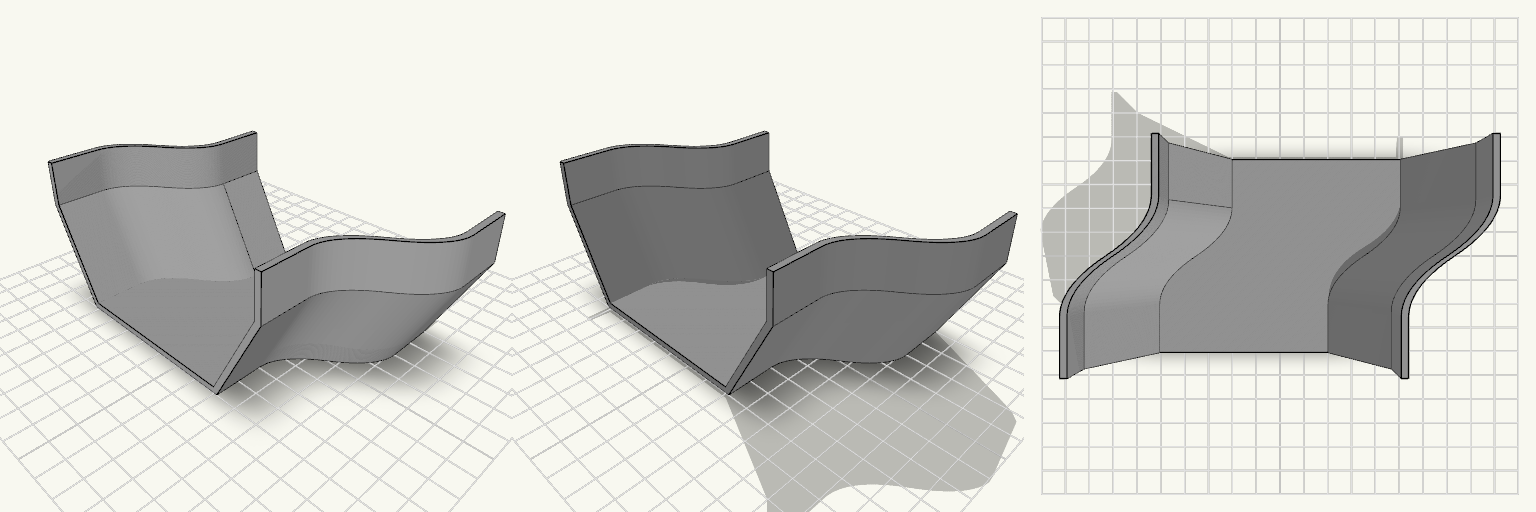
114mm Square Gutter S-Bend Section
A square-profile gutter offcut with an S-bend that pulls the run 30 mm closer to the wall, replacing a straight section that sits too far out from the fascia. Overall width 114 mm, depth 57 mm, wall 2.4 mm Base flat 73 mm wide, vertical sides 18 mm tall, angled sections between Length 80 mm: 20 mm straight at each end, 40 mm S-bend between Offset 30 mm toward +X (wall side) Open-top hollow channel, end to end; print upright on the base, supports not needed
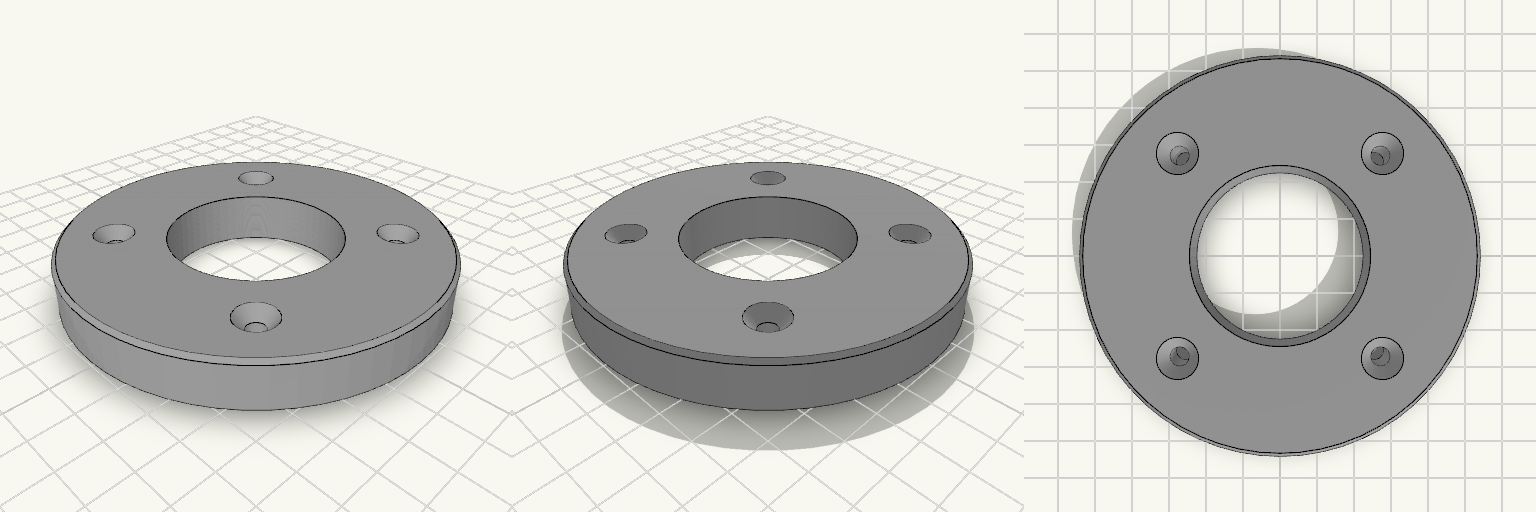
100 mm OD Flange, 45 mm Bore
A flat round flange, 100 mm outside diameter and 13 mm thick, with a 45 mm bore straight through the middle. Four 5 mm holes sit on a 72 mm bolt circle at 45°, 135°, 225° and 315°, countersunk from the top face and 10.5 mm across at the rim. The outer edges carry a 1 mm chamfer, so there is no sharp rim to catch on. What it fits Bore: 45 mm nominal — measure the shaft, tube or spigot it goes over with calipers first. A printed 45 mm bore comes out undersized on most machines, so plan on reaming or drilling to size. Bolt pattern: four holes on a 72 mm bolt circle, at the diagonal positions rather than at 12/3/6/9 o'clock. Confirm the orientation of the mating part before drilling anything. Fasteners: 5 mm clearance with a countersink 10.5 mm across, sized around M5 flat-head screws so the heads sit at or just below the top face. Longer screws will not sit flush, and the 13 mm body sets how much thread you have to play with. Face: the 100 mm diameter leaves roughly 27.5 mm of material between the bore edge and the outer edge. What it does not have No hub and no raised face — it is a plain flat disc, so it will not self-centre on a register. No thread, no taper and no keyway in the bore. No O-ring groove or gasket recess; sealing has to come from the mating faces or a separate gasket. No second bolt pattern — if the part you are mating to has six or eight holes, or a circle other than 72 mm, this will not bolt on. Before you print Measure the bolt circle and the hole positions on the part you are mating to, centre-to-centre, and check that the four-hole diagonal layout matches. Also check that 13 mm of thickness clears whatever sits behind the flange, since the countersinks eat into the top face and leave less material under the heads than a plain 13 mm plate would suggest. Prints flat on the bottom face with no supports; the chamfer and the bore both come out clean laid down that way, and the countersinks form on the top surface without bridging.