Gear Locker Housing and Parts Kit
Created today
Description
A parts layout for a small mechanical binary gear locker: the housing, door and hinge pin, selector rail, eight 0/1 selectors, eight checking discs, a three-gear train, a main turning gear, a sliding bolt, a hexagonal OPEN LOCK button, and loose shafts, spacers, washers and collars.
Fit notes
- Gears are module 2 spur gears: 12, 20 and 28 teeth in the train, 24 teeth for the main gear. Shaft bore is 8 mm.
- Shafts are 7.6 mm, spacers and washers are bored 8.4 mm, collars 8 mm with a 3 mm set-screw hole.
- Housing: 120 x 40 x 70 mm, open back, eight 8 x 14 mm selector slots, 9 mm shaft opening, 23 mm hex bottom opening, 4.5 mm side holes.
- Door hinge bores are 3.6 mm for a 3.2 mm pin.
Check before printing
Measure your printed shaft against the 8 mm bores. The housing selector slots (8 mm wide) are not matched to the 14 mm selector bodies; the selector grip sits behind the panel. The mechanism is not tuned for a specific commercial lock, and no electronics are included.
Images
More like this
Explore more in Desk & Tech →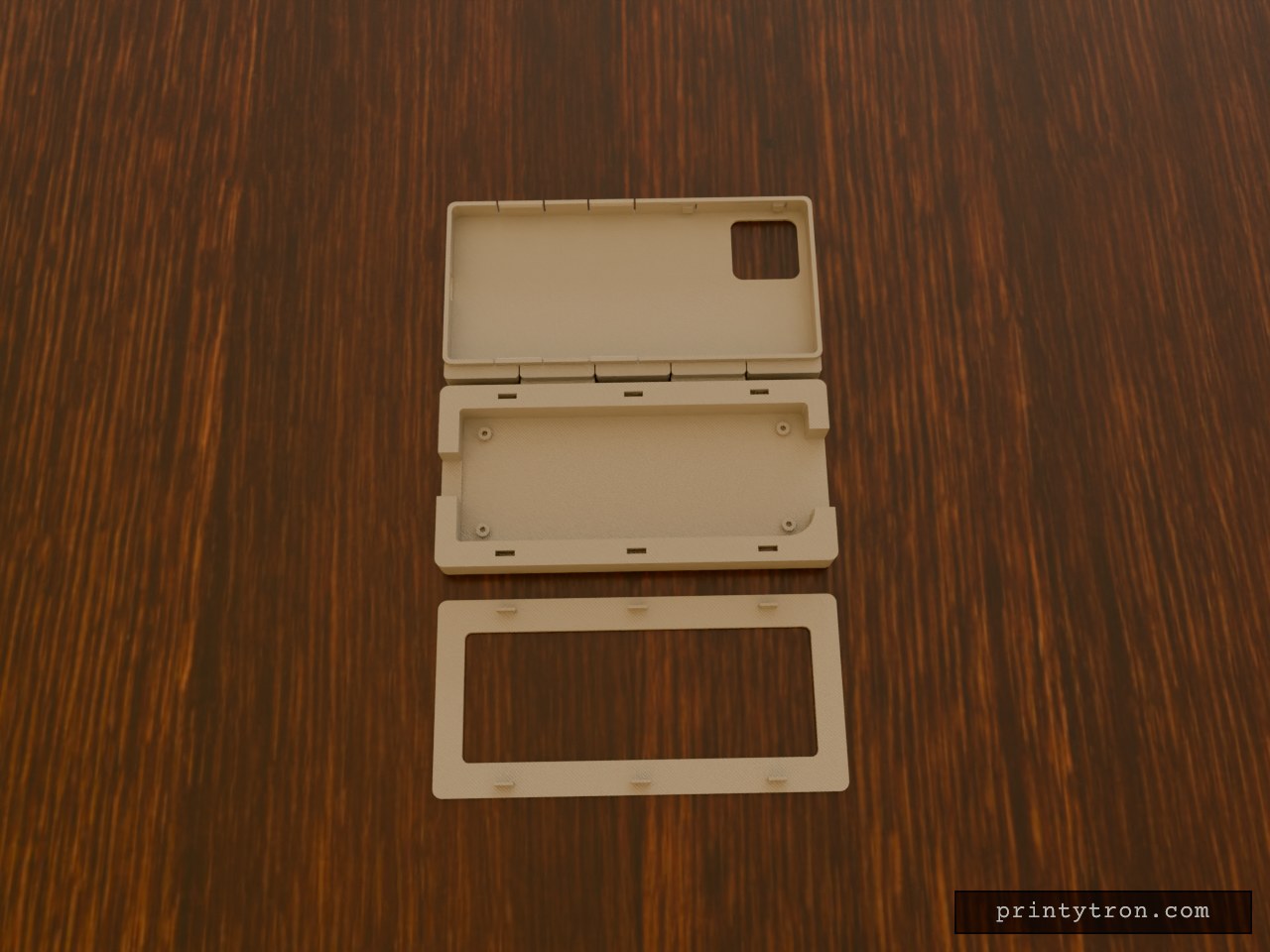
FoldDeck — Phone Shell and Printed-Hinge Keyboard Cover
FoldDeck is a clamshell-style phone-and-keyboard case built around a Galaxy A14 5G and a K808 Mini keyboard. The cover folds shut over the phone like a pocket flip-style mini laptop, and the hinge is printed as part of the design, so no pin, screw or other outside hardware is needed. Features Phone shell that replaces the phone's back, with snap hooks, a USB-C slot and flexing button covers Keyboard tray with screw posts for the K808 board Snap-on face plate with a window over the keys and touchpad Printed hinge: 3 mm round stubs on the tray knuckles seat in 3.6 mm blind bores in the shell knuckles Print notes Print the hinge parts with the stubs lying along the bed PETG or ASA is recommended for the snap hooks and hinge Port, button and camera positions are placeholders until measured
Cyclops Visor Smart Goggles Chassis
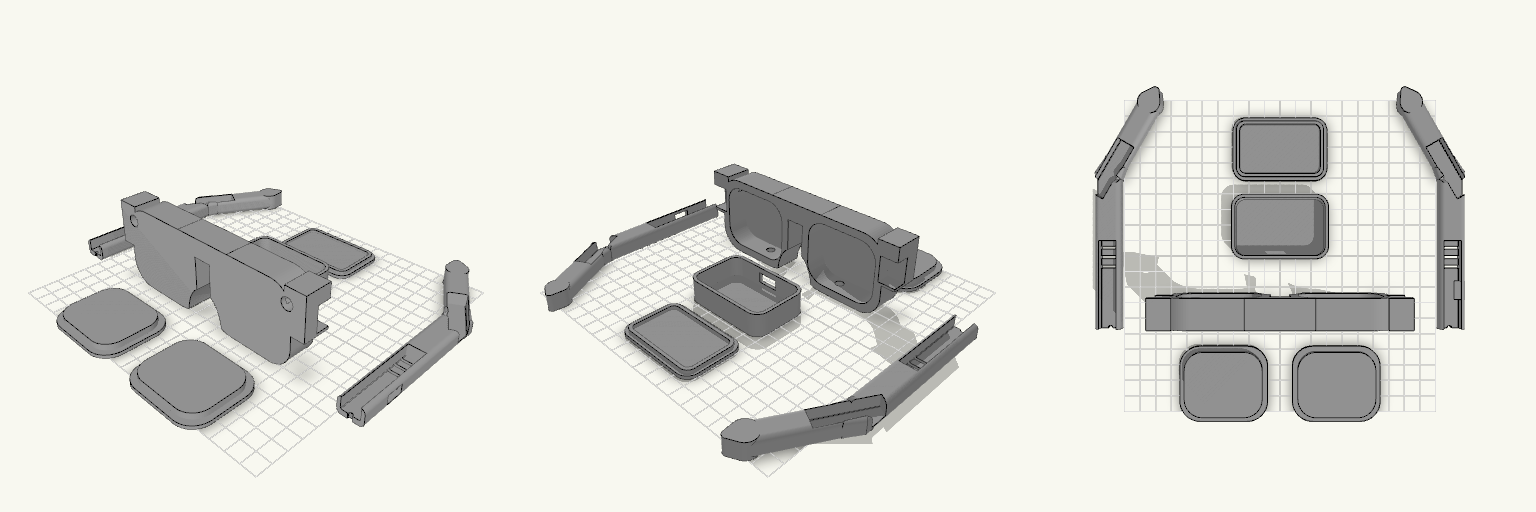
A wearable housing for smart-glasses electronics, with a chunky sci-fi visor silhouette: twin rounded lens bays, front camera ports, and downward sensor holes. Hollow temple arms hold speakers and haptics, and a separate electronics box carries the main board. The frame now comes with two cover caps that close the rear eye cavities, so the electronics inside stay protected. Design notes Frame caps: 56 x 48 mm plates with a plug lip that seats in each eye cavity Camera ports: 8 mm wide, 24 mm deep Electronics box with its own lipped lid Arms hinge with 3 mm pins or filament offcuts Prints as separate flat parts, no supports needed
Fidget Spinner Planetario Ø70 mm
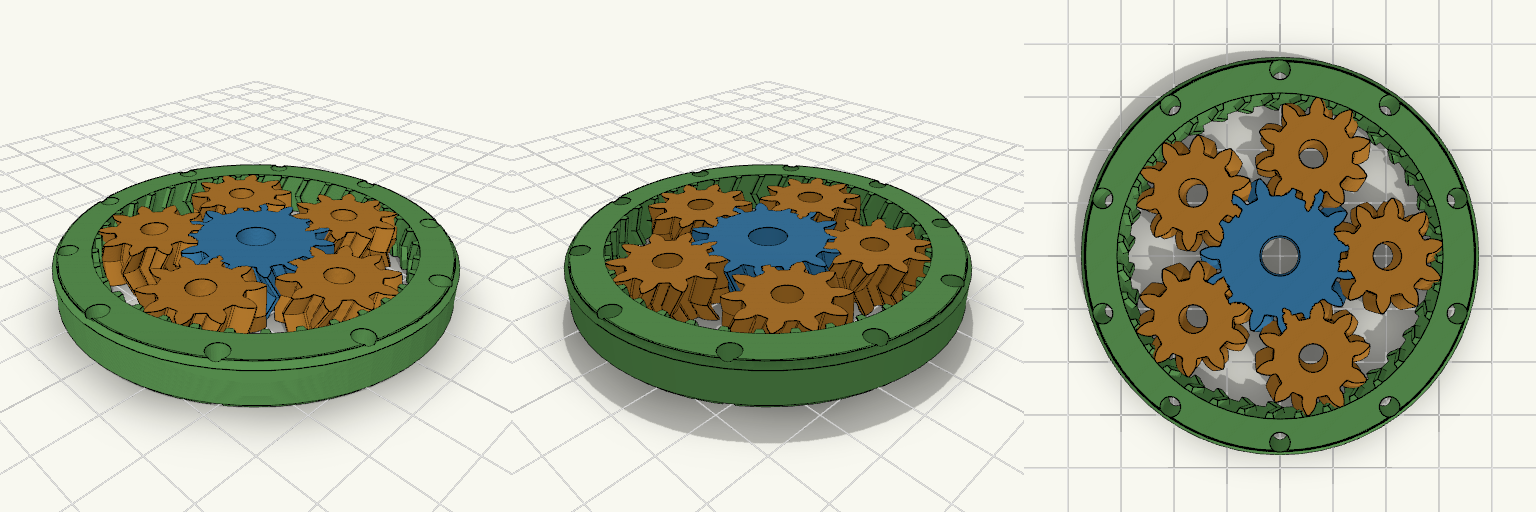
Fidget spinner a ingranaggi planetari stampabile in un solo pezzo (print-in-place), diametro esterno 70 mm, con ingranaggio solare centrale, 5 satelliti e anello esterno dentato internamente. L'anello è alleggerito da 10 fori passanti e non ha coperchi, così gli ingranaggi restano visibili. Diametro esterno: 70 mm, spessore 8 mm Modulo 1,5; solare 15 denti, satelliti 10 denti, corona 35 denti Denti elicoidali a spina di pesce (25°) che trattengono i satelliti senza assi Gioco sui denti: 0,25 mm Fori centrali Ø7 mm (solare) e Ø5 mm (satelliti) per alleggerire Stampa piatta, senza supporti; PLA o PETG
Phone
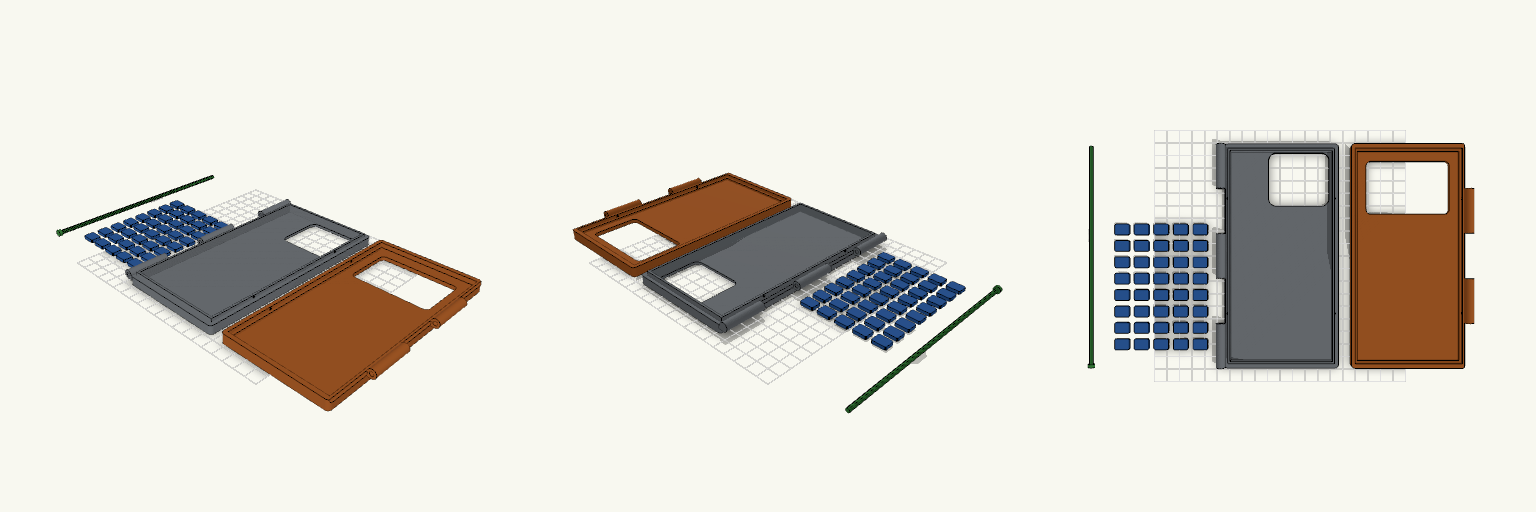
A calculator-shaped phone case styled after the TI-30Xa, with the top shell hinged along the right long edge so it folds open like a book and lies back behind the bottom shell, exposing the whole phone. Lay the phone screen-up in the bottom shell, close the top, and it clicks shut on the other three sides; the screen sits behind an oversized 66 × 42 mm window where the LCD would be. The keypad is 40 recessed divots in a 5 × 8 grid, with the buttons printed as a separate set 0.5 mm smaller on each side so they drop in and sit slightly proud. A camera opening sits in the back of the bottom shell, "TI-30Xa SOLAR" is engraved above the window, and a separate hinge pin runs the full length of the hinge. It prints as four separate parts: bottom shell, top shell, buttons and hinge pin. Remix hooks Shells: each about 96 × 176 mm on the plate; the top shell is 11.5 mm thick and the bottom shell 10.5 mm. The 176 mm length is the real constraint — shorten it and the 5 × 8 button grid has to lose rows, and the hinge spacing follows the same length. Hinge: a full-length piano hinge set into a notch along the right edge, so nothing protrudes past the outline. Five knuckles about 7 mm across, three on one half and two on the other, with 0.5 mm gaps and round clearance cutouts where the opposite knuckles pass. The body is a little wider overall to swallow it. This is the part worth redesigning first: move the notch to the left edge for a left-handed fold, or lengthen the knuckles for more stiffness. Hinge pin: 3 mm thick with a 5.5 mm head, 174.5 mm long, running in 3.5 mm holes and stopped by a closed end so it cannot slide through. Print it lying flat. A 3 mm metal rod is a direct drop-in substitute if you want it tougher. Phone cavity: 80 × 165 mm and 10 mm deep, closed at both ends when shut. That clears an iPhone 17 (about 71.5 mm wide) and the Pro Max sizes (about 77.6 mm). This is the first number to touch for fit; narrowing toward 76 mm tightens things up for standard phones, and going past about 82 mm starts to thin the side walls. Screen window: 66 × 42 mm, deliberately oversized so the cutout does not fight the phone's own bezels. Shrink it to hide more of the display, grow it for more live screen. Camera opening: 48 × 42 mm in the back of the bottom shell, sized around a large camera bump — a smaller phone just gets extra opening, so this is a safe one to trim down to your own lens. Button divots: 12.5 × 9.5 mm, 1.2 mm deep, in a 5 × 8 grid; the separate button set lays out on a 73.5 × 99.5 mm plate at 11.5 × 8.5 mm each — 0.5 mm clearance per side — so they drop in without binding and sit slightly proud. Deepen the divots to 1.6 mm if you want them flush. Obvious directions to take it: swap the uniform 5 × 8 grid for a true TI-30Xa layout, engrave the legends onto the buttons instead of leaving them blank, add a raised lip around the rear camera opening, add a lanyard loop, or print the shells in contrasting colours. The snap closure is the easiest thing to tune — deepen or shave the rim bumps if the lid is too tight or too loose. It pairs well with a second-colour button set and with any phone that fits the slot dimensions above.
Bridge-Style Monitor Riser With Pen Lip
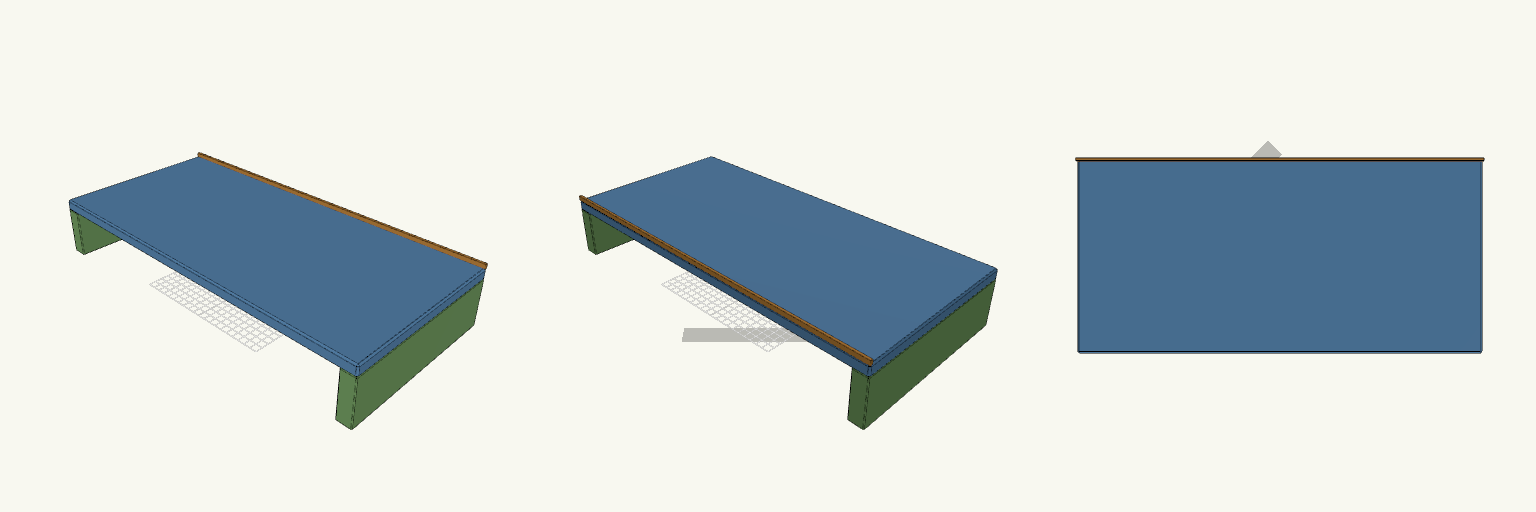
A low viaduct for your desk: a flat 500 mm span carried on two slab-sided legs, lifting the monitor 80 mm and leaving a wide open tunnel underneath. A low profile keyboard slides straight in and out, and a thin lip along the back edge works as a curb so pens and pencils stop rolling off the far side. Design notes Footprint: 500 mm wide by 240 mm deep. Shelf height: the top surface sits 80 mm above the desk, with a 15 mm thick shelf and chamfered edges. Keyboard clearance: about 65 mm of open height between the legs, comfortably above the 35 mm minimum requested. Gap between legs: roughly 460 mm, enough for a full-size keyboard with room to spare. Back lip: 3 mm thick and rising 6 mm above the shelf, running the full width. Print note: at 500 mm wide it exceeds most print beds, so it suits a large-format printer or a split into joined sections. Pairs well with A cable clip or grommet added along the back for monitor leads. Non-slip pads under the legs to keep the bridge planted.
Platinenabdeckung 20x20 mm mit Öse
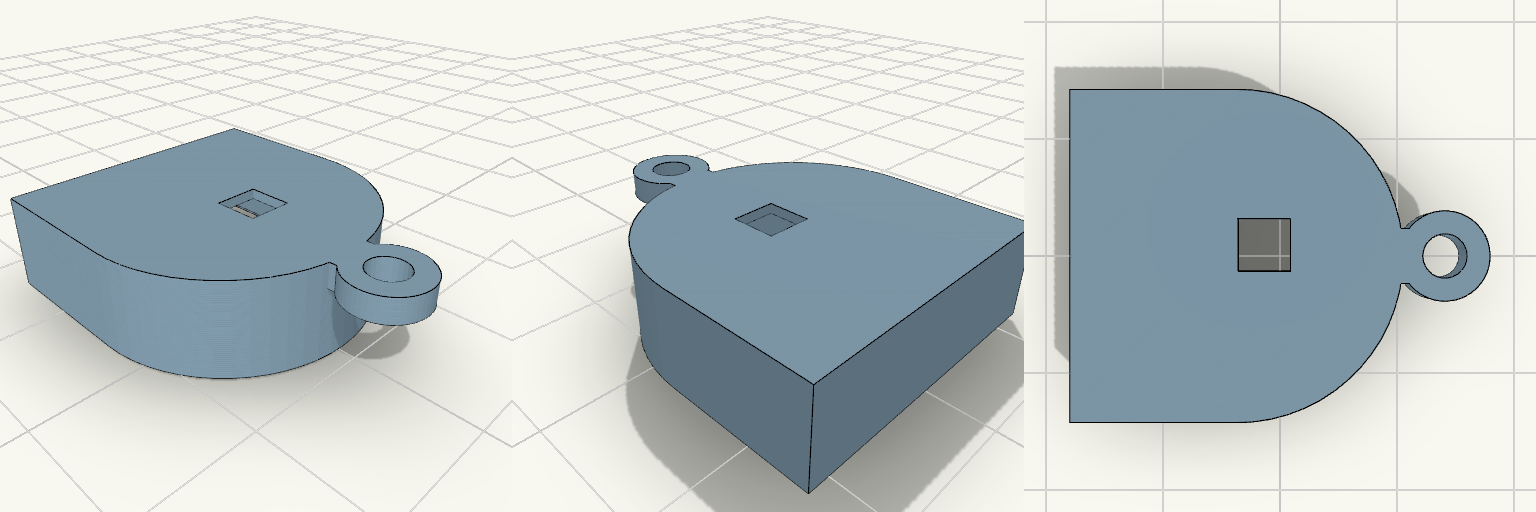
Abdeckung für eine 20×20×4 mm große D-förmige Platine mit Einrastnasen, Tasteröffnung und Schnuröse an der Rundung. Gesamthöhe 7,8 mm, Decke 0,8 mm, Wandstärke 1,8 mm Tasteröffnung 3,8 × 3,8 mm Öse: 6,5 mm Außendurchmesser, 3,2 mm Bohrung, 2 mm dick, bündig mit der Oberseite Öse sitzt mittig an der Rundung (Y = 0) auf der +X-Seite Empfohlen: transparentes PETG oder PLA