Heavy-Duty Strap Tension Lock
Created 3 months ago
Description
A heavy-duty tension lock (tri-glide slider) sized perfectly for standard 50mm (2-inch) nylon webbing. This single-piece buckle uses a reinforced and raised center bar to ensure high friction, keeping straps tightly locked under load.
Key Features
- Perfect Fit: 51mm internal width to give thick duty straps just enough clearance.
- Aggressive Grip: Three raised cylindrical ridges span the center bar to bite into the woven nylon and prevent slow slipping.
- Heavy-Duty Walls: 6mm thick external walls and a 9mm tall command bar mean this won't snap under tension.
- No Support Required: Prints entirely flat on the build plate.
Images
More like this
Explore more in Workshop & Tools →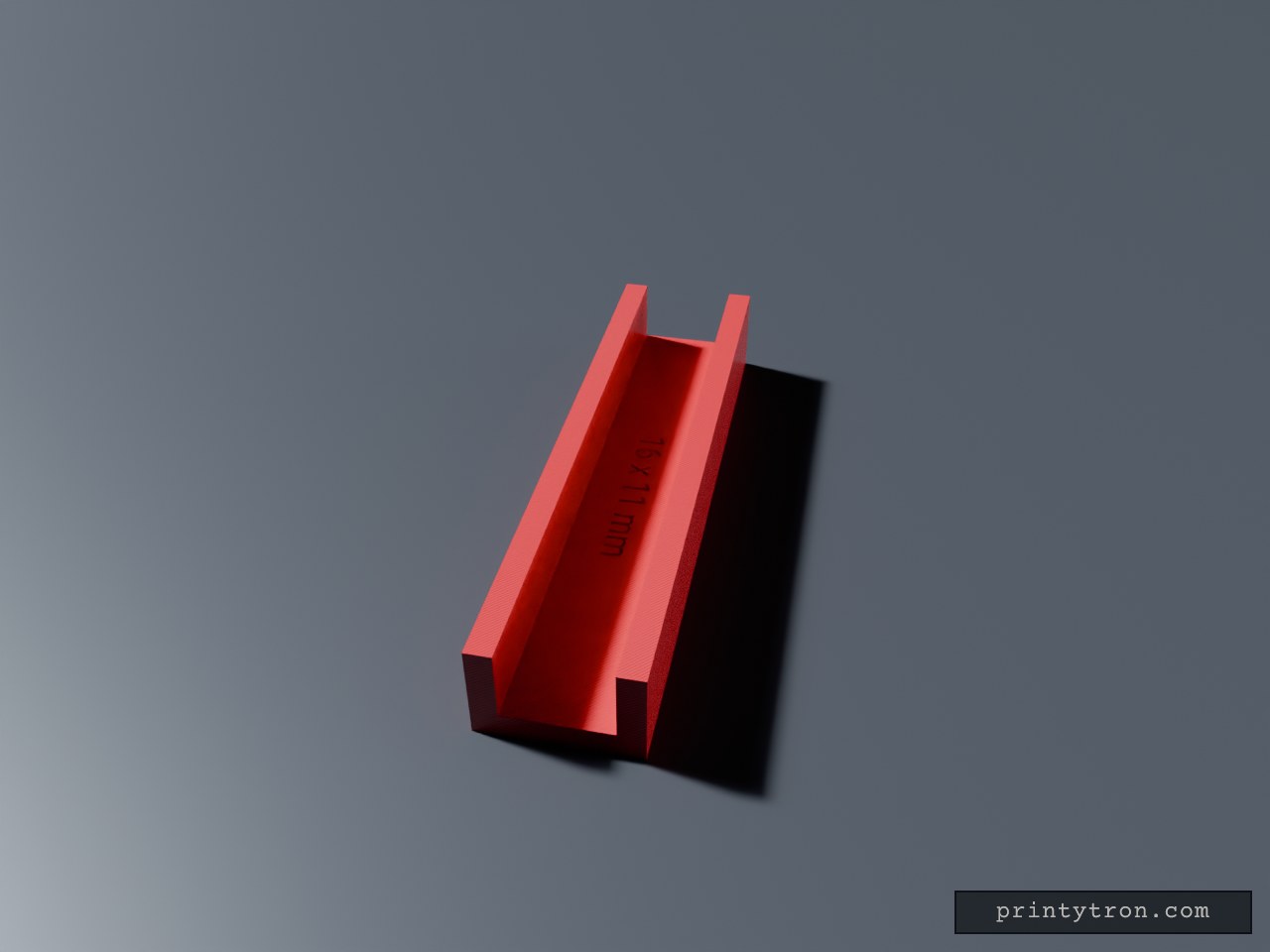
door lock
Rectangular block, 100 mm long, 24 mm wide and 15 mm tall, with a 16 mm wide by 11 mm deep groove running the full length along the top centre. The groove size is engraved into the groove floor as "16 x 11 mm". Overall size: 100 x 24 x 15 mm Groove: 16 mm wide x 11 mm deep, open at both ends Side walls: 4 mm; floor: 4 mm Engraving: 0.6 mm deep, readable from above Prints flat with no supports
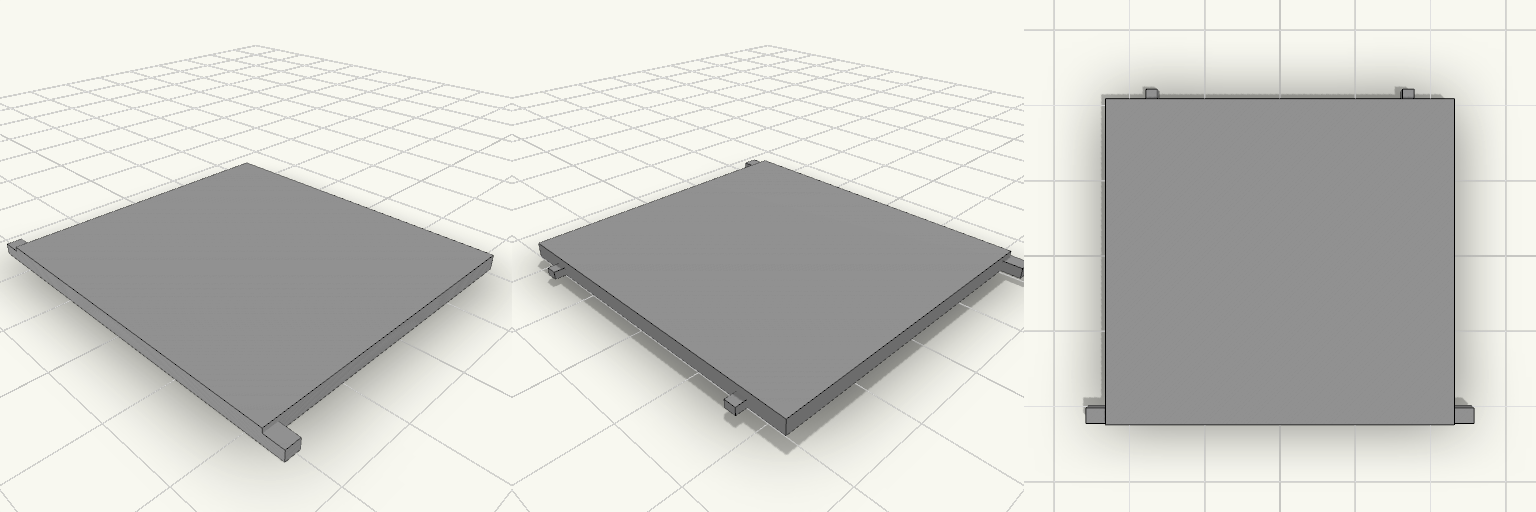
Flat Ground Plate 45x42x2 mm with Tabs
Flat 45 × 42 × 2 mm ground plate with two side tabs on the front 45 mm edge and two small blocks on the back edge. Overall width across the tabs is 50.4 mm. Plate: 45 × 42 × 2 mm, sharp edges Side tabs: 1.4 mm thick, flush with the underside, 50.4 mm overall span Back blocks: 1.5 mm wide, 1 mm thick, 1.5 mm protrusion, 5 mm from each side edge Print flat, no supports needed
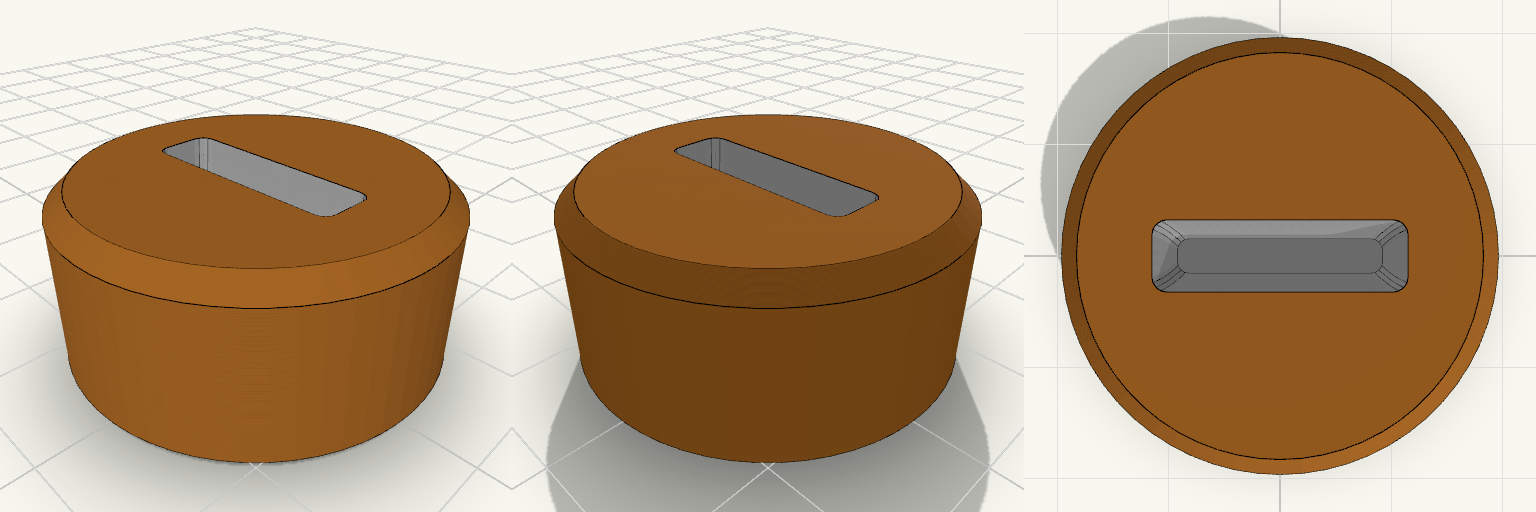
サーボソケット
A servo can't turn a valve knob without a socket that grips it, and a loose fit slips under torque. This cylindrical socket slides onto the knob from the bottom and keeps the top face flat and closed for a future servo horn. Key numbers Body: 30 mm diameter, 14 mm tall, chamfered edges Cavity depth: 10 mm, opening only on the bottom face Opening at the bottom: 2.6 mm × 16.7 mm, widening to 4.5 mm × 16.7 mm at the inner end Clearance: 0.15 mm per side, with rounded corners and slightly bowed long walls Top wall: 4 mm solid, with no screw or mounting holes Printing: open face down on the bed, no supports needed; the wall slope is about 5° from vertical Cavity size, taper, corner radius and clearance are all adjustable parameters
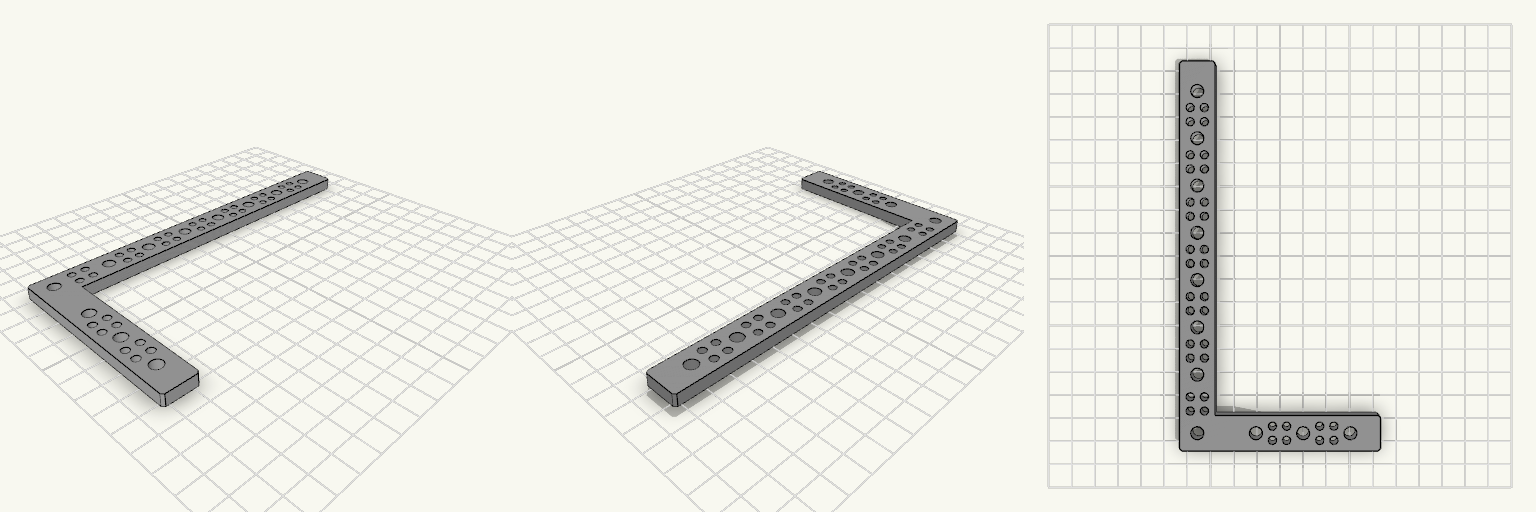
Flat L Bracket 15mm Strap
A flat L-shaped strap bracket with a 15 mm wide, 5 mm thick strap. Inside edges measure 70 mm along X and 65 mm along Y, giving an overall footprint of 85 × 80 mm. Five 5.5 mm holes suit M5 screws in 2020 extrusion slots. Remix hooks Arm lengths: the inside lengths (70 mm X, 65 mm Y) are the main parameters to change. Strap width: 15 mm now. Widening it allows holes offset from the centreline. Hole pitch: pairs are 20 mm apart, with the first hole 12.7 mm from the free end. Change the pitch for other slot spacings. Hole size: 5.5 mm clearance. Go up for counterbores or down for M4. Pairs with: 2020 extrusion, M5 T-nuts and button-head screws.
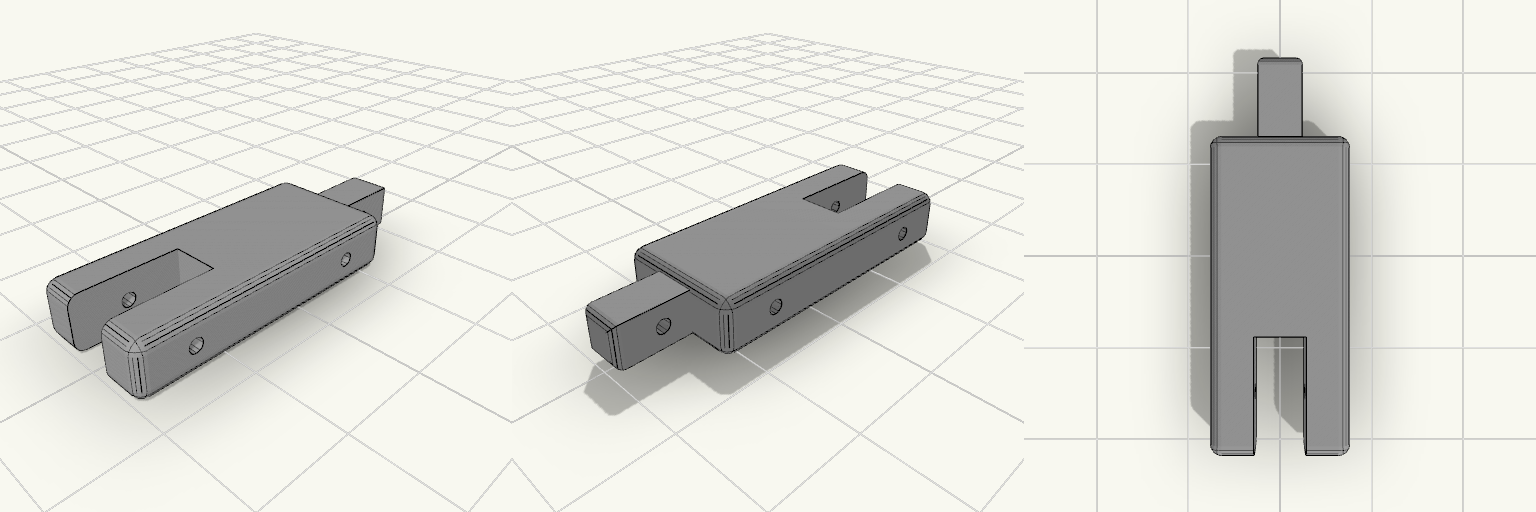
Bracelet Link Fit Gauge Block
A bracelet repair print that turns out too tight or too loose wastes hours. This fit gauge block is a 15-minute test piece that checks the fork slot and pin bores before the real part gets printed. Key numbers Block: 14 x 32 x 6 mm, origin at center, 1.2 mm edge fillets Fork slot: 5.2 mm wide, 12 mm deep, open at the -Y end, flat end wall at Y = -4 Prongs: 4.4 mm wide each Bores: Ø1.6 along X at Y = -10 (through both prongs) and Y = +10 (solid section) Tongue sample: 4.4 x 4.6 mm, 8 mm long on the +Y end, 0.9 mm end fillets, Ø1.6 bore at Y = +19 (40 mm overall) Printing Flat on the bed, PLA or PETG, 0.4 mm nozzle, 0.2 mm layers 4+ walls, 100% infill, 3 mm brim, no supports, 40 mm/s or slower Ream both bores once by hand with a 1.5 mm drill bit Checks A bracelet tongue link should enter the slot with slight friction. An original pin should slide through the -Y bore.
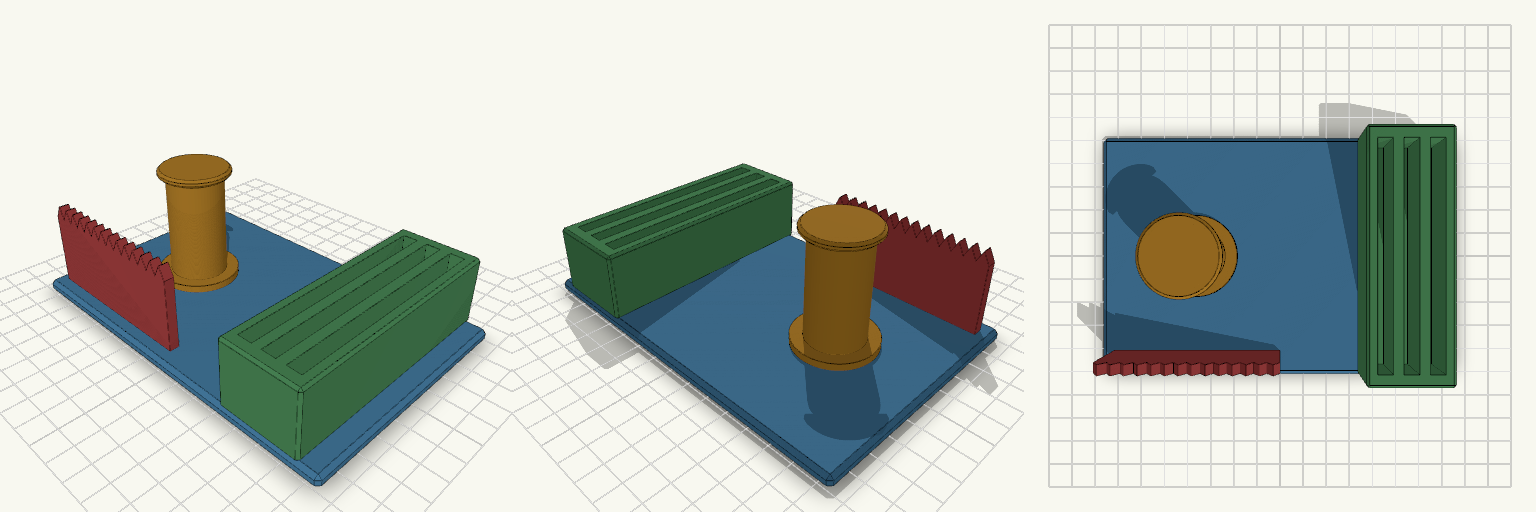
Tape Spindle and Zip Tie Bench Caddy
Bench caddy that keeps a tape roll and a bundle of zip ties in one fixed spot on the bench. A 24 mm spindle holds a roll with a 25 mm core. A serrated tear bar runs along the front edge so tape can be pulled across the teeth and torn. A block on the right has three slots for zip ties up to 90 mm long. Specs Base: 150 × 100 × 5 mm plate with 1.5 mm chamfered edges Spindle: 24 mm diameter, about 46 mm tall, with a 34 mm foot and a 30 mm top flange. Sized for a 25 mm core with 1 mm clearance. Tear bar: 70 mm long, 4 mm thick wall with 14 serrated teeth. It sits along the front (-Y) edge, beside the spindle. Tie trough: 34 × 100 mm block, 28 mm tall, with three 6 mm wide slots, each 90 mm long, in a row across X. Overall height: about 54 mm, measured at the top of the spindle flange. Material: PLA or PETG. Print flat on the base with no supports. Notes Fit has not been tested against a physical roll. If the roll is tight on the spindle, reduce the spindle diameter slightly. Slot width suits standard narrow zip ties. Wider ties need wider slots.