Luggage Tag with Sliding Cover
Created today
Description
A two-piece luggage tag that holds a standard business card and hides the address behind a sliding cover panel. The body is 96 × 66 mm with an 86 × 56 mm card window (a 5 mm border on every side) and a side tab with a 6 mm strap hole. The cover prints flat beside the body and slides in from the right end through grooves in the border.
Remix hooks
- Card window (86 × 56 mm): sized for an 85 × 55 mm card with 0.5 mm play per side. Change both numbers together for other card sizes, and adjust the body size to keep the border.
- Border width (5 mm): the body is window size plus 10 mm per axis. A wider border gives more room for the grooves and a sturdier tag.
- Groove clearance: the groove has 0.8 mm of side play and 0.2 mm of height play around the cover. Tighten or loosen these to suit your printer, since this is the fit most likely to need tuning.
- Detent bump: the cover can slide open on its own, and the card drops in from the top, so it is the only thing keeping the card in. A small bump on the cover and a matching dimple in the groove would hold it shut.
- Strap tab: 22 × 30 mm and 2.6 mm thick, with a 6 mm hole. Enlarge the hole for wider straps or cable loops.
- Body thickness: 4.6 mm overall. Thinning it saves filament but shortens the groove and window walls.
Pairs well with
- Split-ring or lanyard clip through the strap hole
- A different colour for the cover, so the sliding piece reads at a glance
- Embossed or engraved text on the cover top, such as a name or a "contact owner" line
Print notes
- Print both pieces flat, as laid out on the plate.
- Check the cover fit after the first print before committing to a batch.
Images
More like this
Explore more in Keychains & EDC →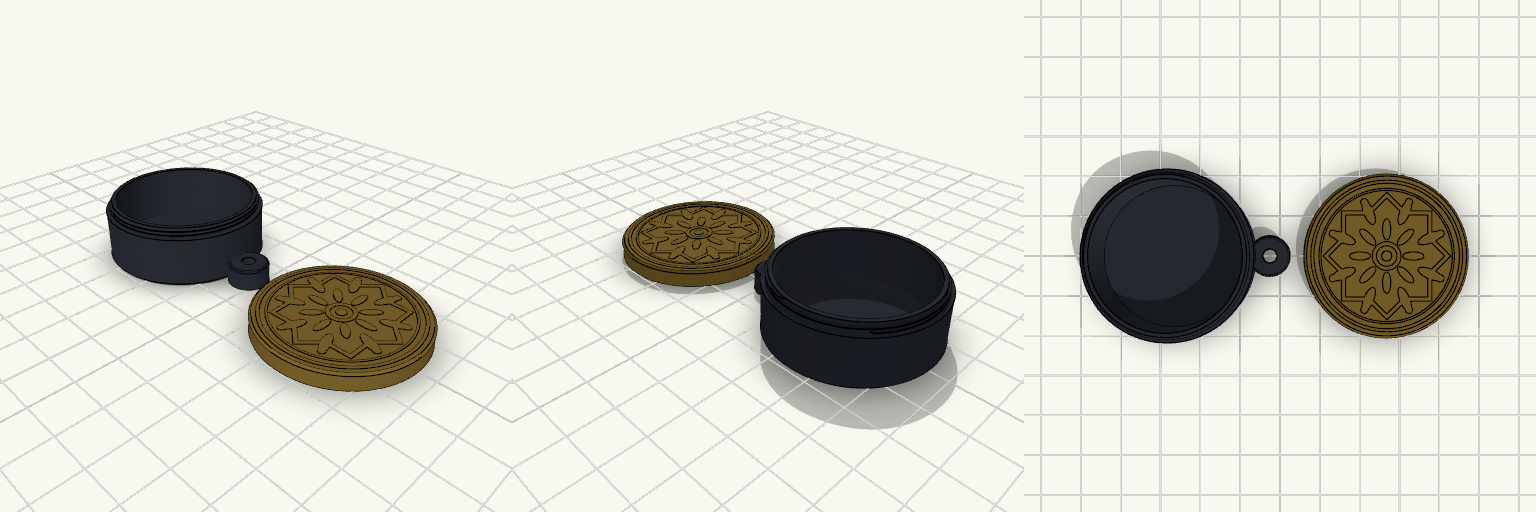
تربة حسينية100
A round pocket case in the spirit of Islamic tilework: a dark cylindrical base with a threaded neck, and a gold-toned cap that screws down over the outside. The cap's top carries a raised eight-point star, petal ring and beaded borders, all geometric with no lettering. 40 mm diameter body, 15 mm tall base with a 32 mm storage cavity External male threads on the base neck; matching internal threads in the 4 mm cap About 0.35 mm radial thread clearance Keychain lug with a 3.5 mm hole fused to the base side Ornament raised 0.1 mm
Hollow Sphere Keychain, 33 mm Screen Opening
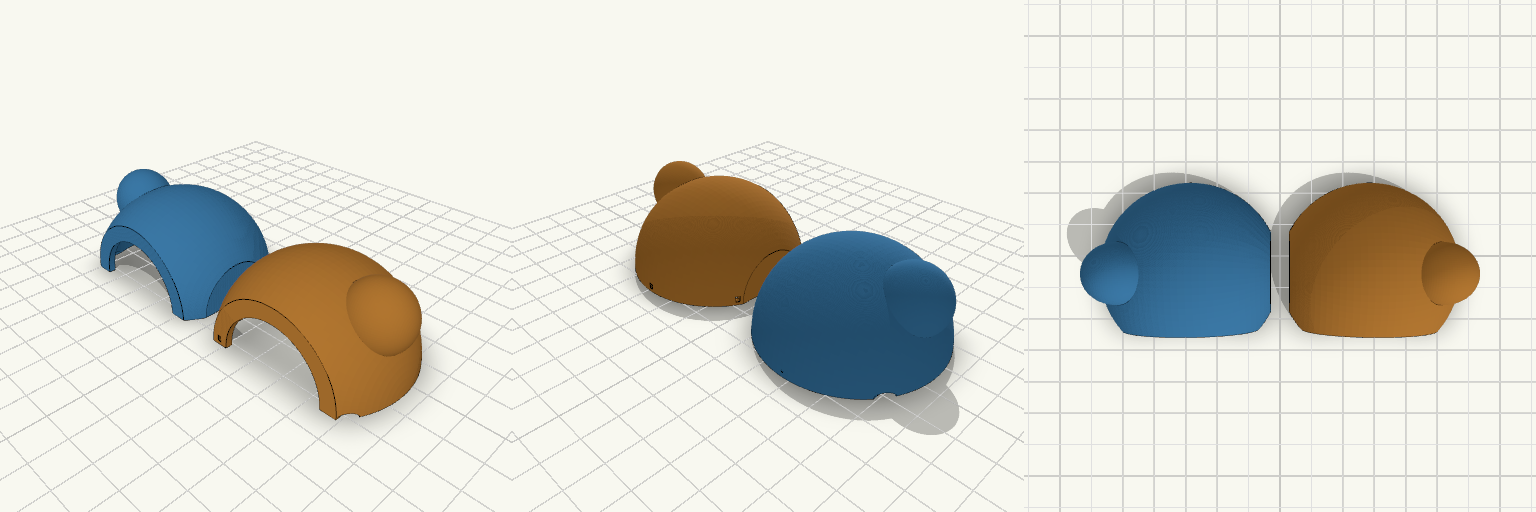
Two-piece hollow sphere keychain with a 33 mm round screen opening in the front and a 3.3 mm ring hole through the top wall. The halves snap together with small bead pegs and can be pulled apart by hand. Body: about 56 mm sphere with two ear bumps, 2 mm wall, flat front face Screen opening: 33 mm diameter, through the front wall into the hollow interior Ring hole: 3.3 mm, a plain hole through the top wall on each side, with no inner sleeve Joint: three bead pegs and undercut sockets, pull apart along the left-right axis Print: each half sits cut-face down, no supports needed for the outer curve
Apple Watch SE 44mm Keychain Case
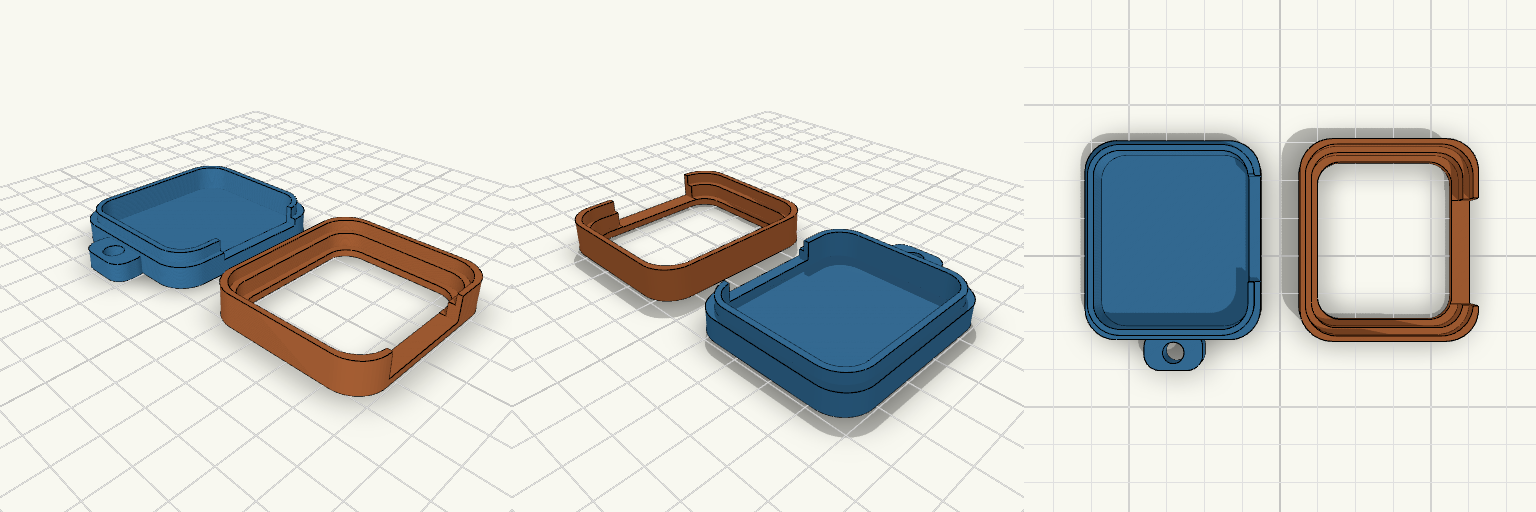
What it's for A two-piece case that turns a 44mm Apple Watch SE (1st gen) into a keychain fob, with no wrist strap. A back shell cradles the watch and carries the key-ring lug. A front bezel fits over it and holds the watch in, leaving the screen open. Dimensions Cavity: 38.6 x 44.6 mm, sized for a 44mm watch body with about 0.3 mm of clearance Outer size: about 44.6 x 50.6 mm, plus the lug Wall thickness: 3 mm Key-ring hole: 5.5 mm Side window on the crown/button edge: 27 mm long, so the Digital Crown and side button stay usable Screen opening: about 1.75 mm of lip around the display Print notes Both parts are laid out separately on the plate. The bezel is flipped so its lip prints flat. Print in PETG or PLA. Check the fit on the stepped joint and sand it if it is tight. The halves are a press fit, and a drop of glue will make the joint permanent. Remix ideas Add a lanyard slot or a carabiner notch. Emboss initials on the back. Make a version for 40mm watches by shrinking the cavity.
Pocket Lighter With Spark Wheel
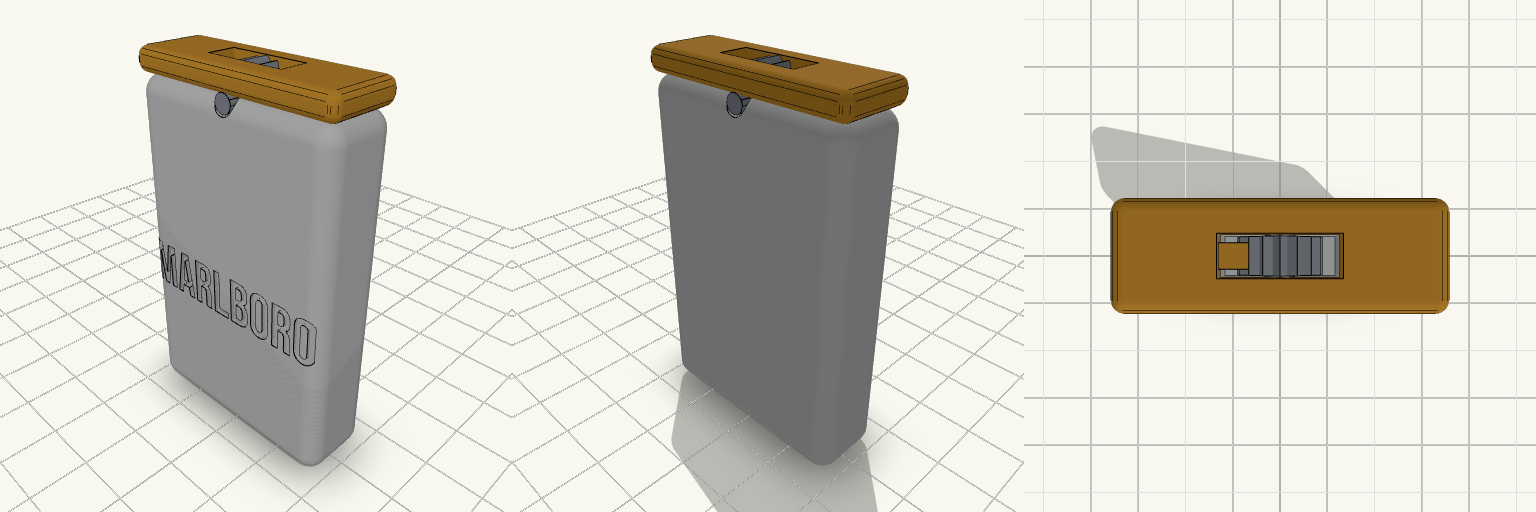
A pocket lighter body with a hinged lid and a spark wheel that clicks as it turns. The wheel carries ratchet teeth and rides on a 3 mm axle spanning both side walls, and a thin flexible pawl in the lid presses against those teeth, so flicking the wheel snaps it tooth to tooth for a mechanical click. The body, the lid and the wheel sit side by side on the plate as separate pieces, so the wheel can be printed in a contrasting colour and dropped in afterwards. The front face is engraved 0.6 mm deep with "MARLBORO" in tall condensed capitals, easy to swap for your own lettering. Overall it measures 38 × 13 × 62 mm with the lid on, a footprint that matches a classic 38 × 13 mm lighter case almost exactly; the height runs about 4 mm over because of the 4 mm lid, which is the simplest thing to change if you want a flush match. Nothing here is final: the click mechanism is the one part worth test-printing before you commit, since the pawl's thickness sets both how loud the snap is and how freely the wheel spins. Remix hooks Click pawl: the thinnest feature and the first thing to tune. A thinner tab gives a softer, quieter click and less drag; a thicker one snaps harder but can bind the wheel. Trim or shim it after a test print. Spark wheel: 10 × 12.6 × 10 mm with 16 teeth. Tooth count and tooth depth carry the character of the click — more, finer teeth give a rapid tick, fewer coarse ones a single heavy snap — and a knurled or coarser profile swaps in without touching anything else. Axle: 3 mm and the one genuinely tight constraint, since it runs through both side walls. Change the wheel and the axle has to change with it. Lid: 38 × 13 × 4 mm. Its wheel opening and the pawl seat are the fitted areas; remove material from the lid face rather than from the wheel seat if a wheel runs tight. Shortening the body by 4 mm brings the closed height down to a flush match. Body: the largest free variable. Profile, height and wall thickness are all open; roughly 1.6–2 mm walls keep the shell printable upright without supports, and anything thinner shows the cavity through the side. Front engraving: the brand text, font width and depth all change independently of the shell — deeper letters catch more shadow, shallower ones survive a fast print better. Keep the text clear of the hinge line so the lid still seats. Hinge: loosen the pin or knuckle a touch for a lid that swings freely, tighten it for one that stays put. Add-ons and variants: a lanyard hole or pocket clip on the base, a textured grip band, or a small tray that holds the lighter with the lid open. If you want a real sound rather than a mechanical one, a pocket for a small buzzer replaces the pawl entirely. Colour changes at the wheel and at the lid boundary do most of the visual work, and the lid reprints on its own if you change your mind about the wheel seat.
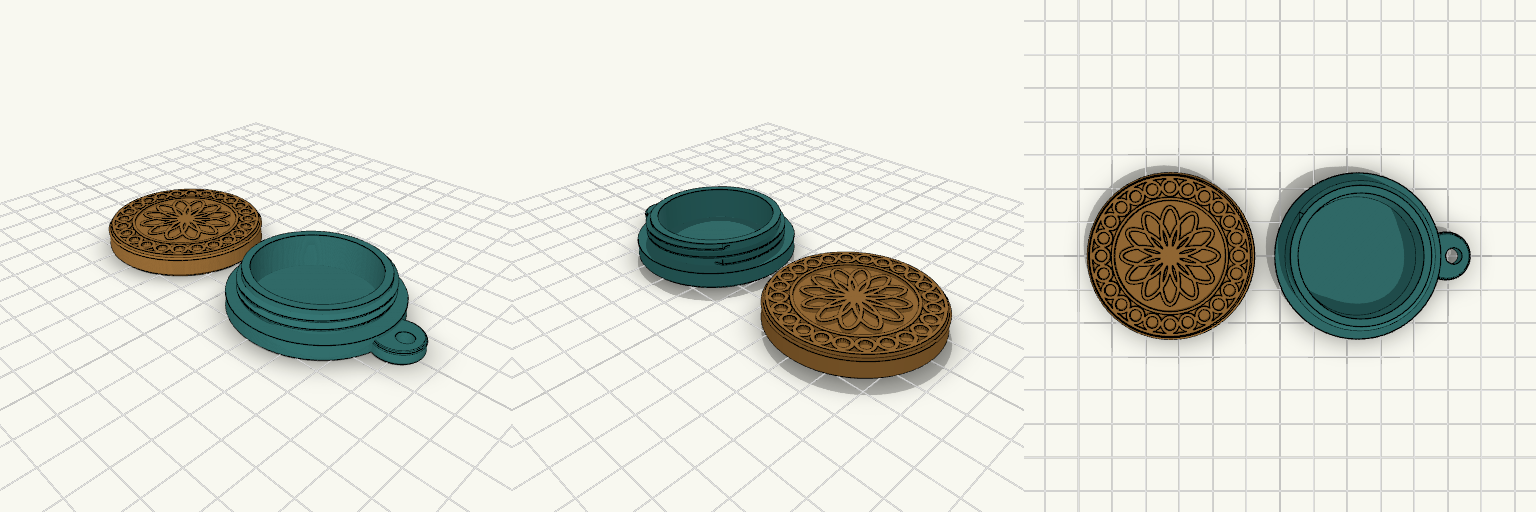
35 mm Threaded Keychain Container, Rosette Lid
Round screw-top keychain container: a deep base with a 35 mm bore and a thin matching lid with an ornamental rim and a twelve-petal rosette centre. Fit Bore: 35 mm diameter, 10 mm deep. Thread: 42 mm major diameter, 2.5 mm pitch, lid cut 0.7 mm oversize. Outer diameter: 48 mm on both pieces. Keyring tab: 4.8 mm hole, on the outside of the base. Check before printing Measure how your printer holds the 35 mm bore. Print the lid first to test the thread fit. Not included No Arabic calligraphy. The lid uses a geometric rosette and scalloped border.
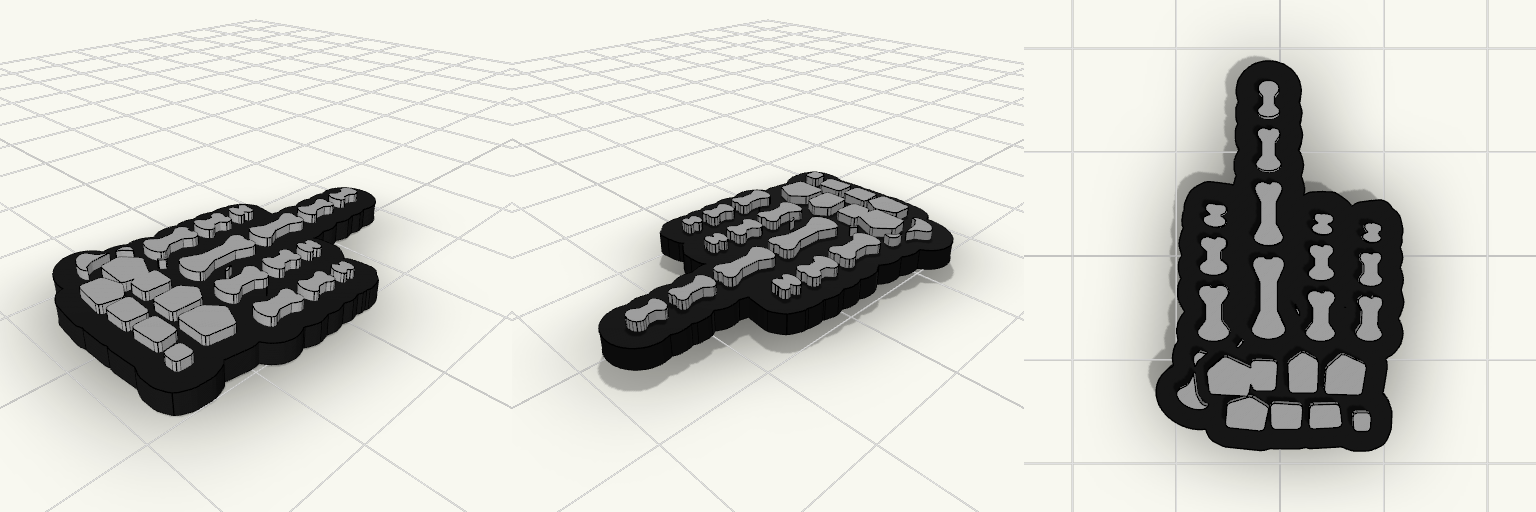
Pin de mano esquelética con dedo medio levantado
Pin con forma de mano esquelética cerrando el puño y con el dedo medio levantado. El dedo medio sube recto con sus tres falanges; el índice, el anular y el meñique quedan plegados hacia la palma. El pulgar va por detrás de los dedos plegados, así que solo asoma por el lado izquierdo y entre los huesos. Los huesos son blancos y de estilo realista: cada uno tiene una diáfisis fina y dos cóndilos redondeados en cada extremo, con una muesca central, y el extremo superior algo más pequeño. Las divisiones negras entre huesos marcan las articulaciones. En la palma hay cuatro metacarpianos y en la muñeca un grupo de huesos del carpo pequeños. La placa negra de 2 mm sigue la silueta de la mano y sobresale como borde. Los huesos van elevados 0,9 mm sobre ella, con la parte trasera completamente plana. La pieza mide unos 23 × 36 mm, así que queda 1 mm por encima de los 35 mm; el grosor total es de unos 2,9 mm. Para ajustarla al límite de 35 mm, reduce el borde de la placa. Placa negra plana de 2 mm; huesos blancos elevados 0,9 mm Huesos segmentados y separados por huecos negros de articulación, todos apoyados en la placa Sin piezas flotantes; se imprime como una sola pieza Sin soportes: la parte trasera es plana y los detalles se elevan desde la placa Huecos estrechos entre huesos; pensados para una boquilla de 0,4 mm