OO Gauge Terraced House Kit with gable end not good
Created 1 months ago
Description
A terraced house facade for model railways, now complete with a separate matching gable end and textured roof panels. The brickwork and quoins evoke classic British railway architecture, designed to sit seamlessly beside track setups or diorama streetscapes.
Additions
- Gable End: Completes the vertical facade, rising 20mm with continued mortar lines and coping stones.
- Roof Panels: Two separate 15mm-deep sections with an interlocking tile texture, ready to cement in place.
- Print Layout: All parts are arranged flat on the bed for straightforward printing without supports.
Images
More like this
Explore more in Automotive, RC & Hobby →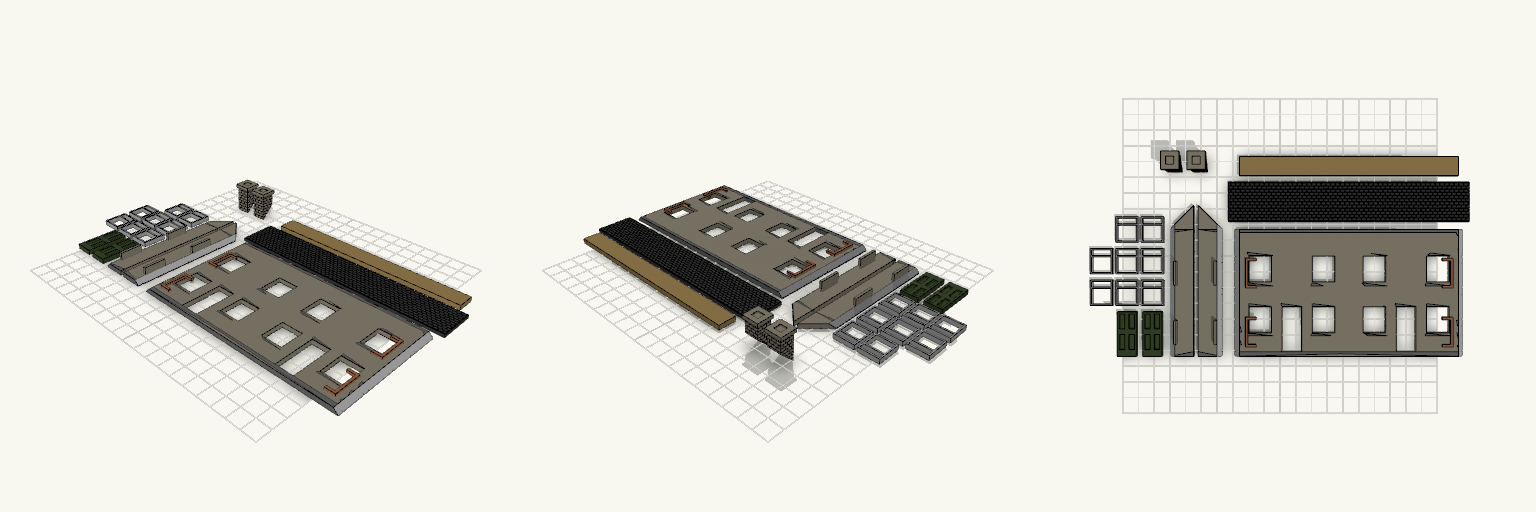
OO Gauge semi detached house stone v2
A semi-detached stone house pair in OO gauge, printed as separate pieces: front wall with quoins at the outer ends, mitred side walls, a one-piece roof, a floor piece, two chimneys, and separate window and door inserts. Four small locator rails now help position the side-wall tabs on the front wall. Remix hooks Tab locators: four U-shaped pieces, each 6.8 × 18.6 × 1.5 mm. Glue one against the inside of the front wall beside each side-wall tab. The 0.3 mm clearance around the 15 × 5 mm tab is the value to tune for your printer. Locator thickness: 1.5 mm now. Raise it for a firmer stop. Window and door inserts: 3 mm thick, 0.2 mm clearance per side. Pairs well with: a thin plasticard base or a printed street baseboard.
Kawasaki z1100 bar end mirror handle bar adaptors
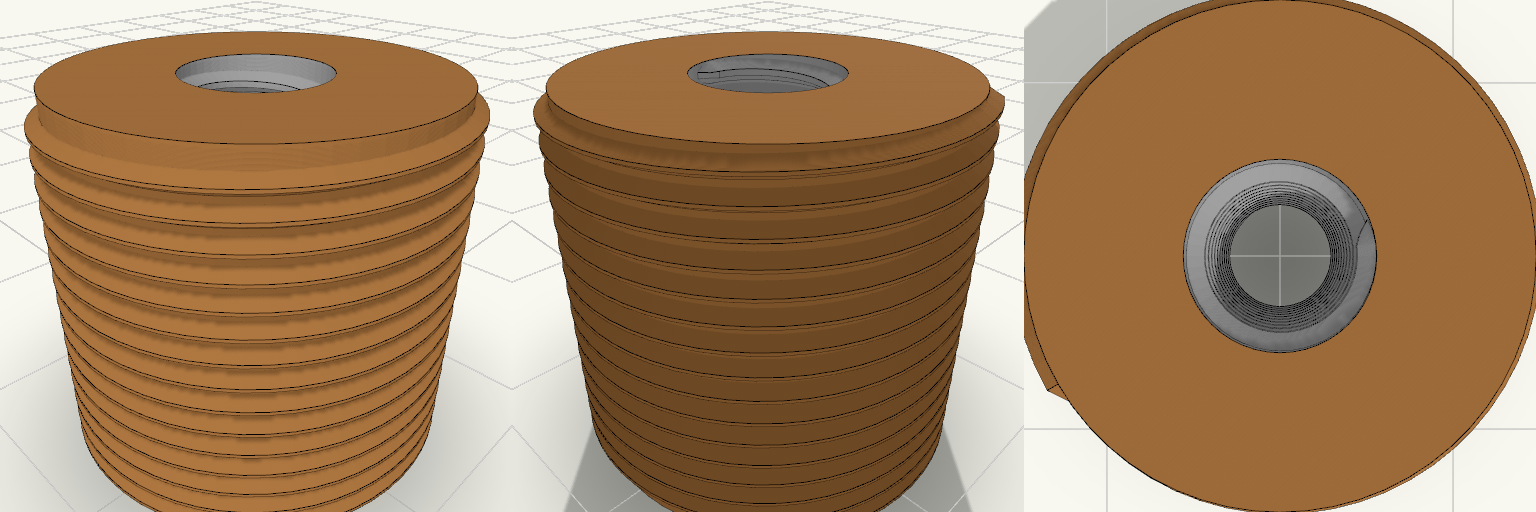
A threaded adapter that steps an M18x1 fine-pitch external thread down to an M6x1 internal thread, made for fitting bar end mirrors to the handlebars of a Kawasaki Z1100. The stud is 16 mm tall with no flange, and a 10 mm hex socket in the base lets it be driven in with an Allen key. Remix hooks Hex socket size and depth: 10 mm across flats, 5 mm deep. A deeper socket (7 mm was the earlier value) grips a key better but leaves less solid material around the M6 thread. Change the across-flats value to match a different key. Overall height: 16 mm. Taller gives the mirror stem more thread to bite into; shorter reduces how far it protrudes from the bar end. Thread fit: both threads are modelled at nominal size. FDM usually needs 0.1–0.2 mm of adjustment on the M18x1 outside and the M6x1 inside, so print a short test ring first. Add a stop: there is no flange, so insertion depth is set by feel. A thin collar or a shoulder on the mating part would give a hard stop. Pairs with: a lock nut or thread-locking compound on the M6 side to keep a mirror from backing out under vibration. Starting dimensions External thread: M18, 1 mm pitch Internal thread: M6, 1 mm pitch, through the full height Height: 16 mm Socket: 10 mm hex, 5 mm deep Check the thread on your actual bar ends before relying on it. Print in a tough material such as PETG or ABS, since the part sees vibration and weather.
1:37 Tiger I 8.8 cm KwK 36 Barrel
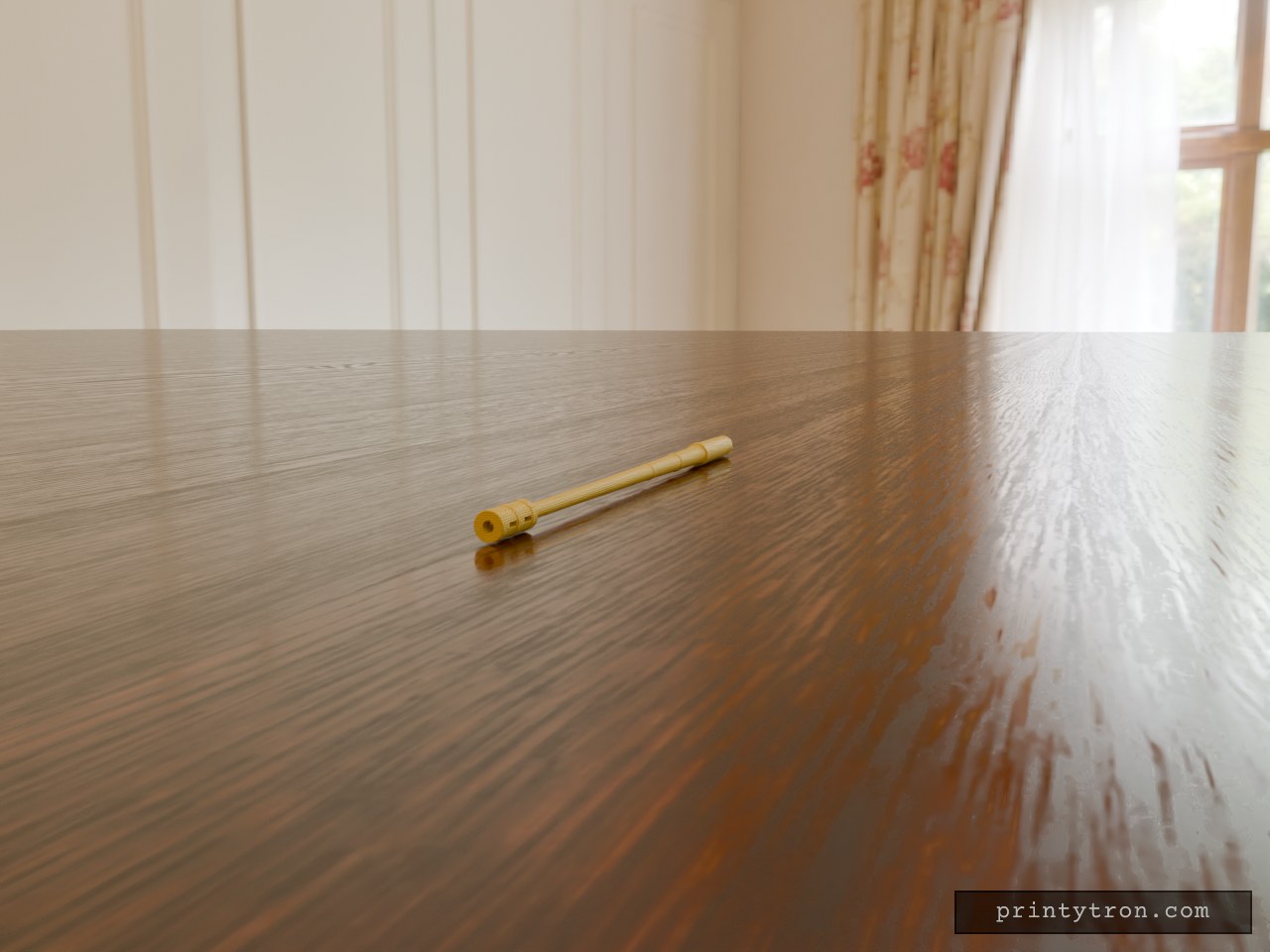
A static 1:37 scale 8.8 cm KwK 36 L/56 gun barrel for the Tiger I, with a muzzle brake and a rear mounting stub. Fitment Scale: 1:37. The tube is 133.2 mm long (4,930 mm full size) and does not include the muzzle brake. Bore: 2.38 mm (88 mm full size). It is modelled as a recess in the brake end, not a through bore. Rear stub: stubd is 6 mm and stubl is 6 mm. These are placeholder values. Measure the mantlet hole on your own kit and set both before printing. Does not fit: any kit with a different mantlet bore. It also does not fit other 88 mm guns such as the KwK 43 or the Flak 36. Details Tapered tube profile, from a thick breech end down to a slim muzzle end. Three reinforcing rings along the tube. Double-baffle muzzle brake with side slots, fused to the tube. Check before printing The mantlet bore diameter. Print the barrel standing upright or lying flat, depending on your printer and the fine detail you want to keep. The brake slots are the finest features.
25mm Tactical Tabletop Tokens
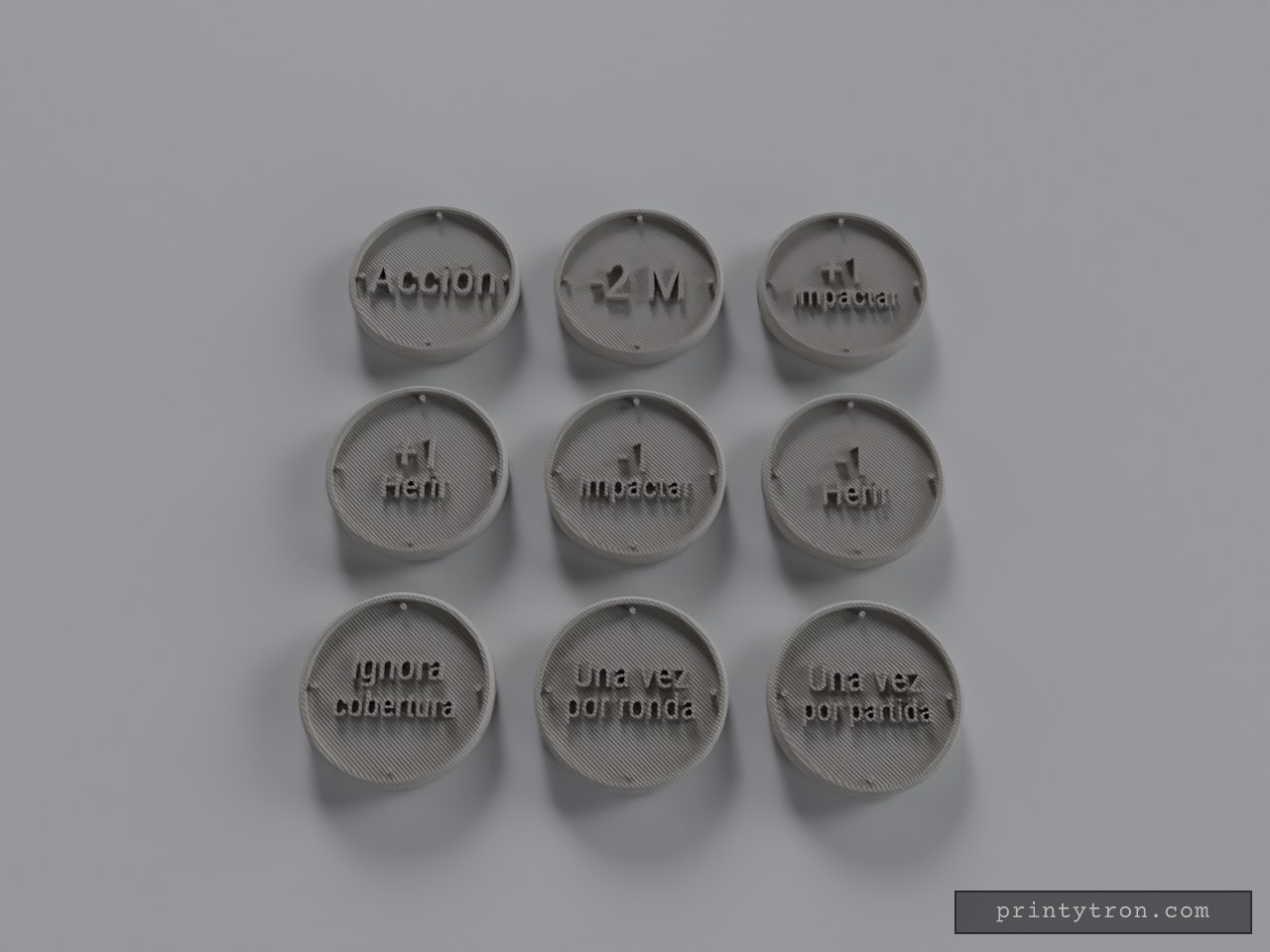
A complete set of nine 25mm wargaming tokens tailored for tabletop tracking. Designed with a clear separation between the base and the raised lettering, making them perfectly suited for a mid-print filament swap or a multi-material system. Specifications Dimensions: 25 mm diameter, 4 mm overall height. Tolerances: The raised text and outer rim sit exactly 1 mm above the base layer, creating a clean Z-height transition for color changes. Printability: No supports required. The bottom edges feature a 1 mm chamfer to prevent elephant-foot distortion on the first layer, ensuring the tokens remain perfectly circular and easy to pick up from flat tables. Layout: Arranged in a flat 3x3 grid for immediate batch printing. Can be split into individual models in the slicer if needed.
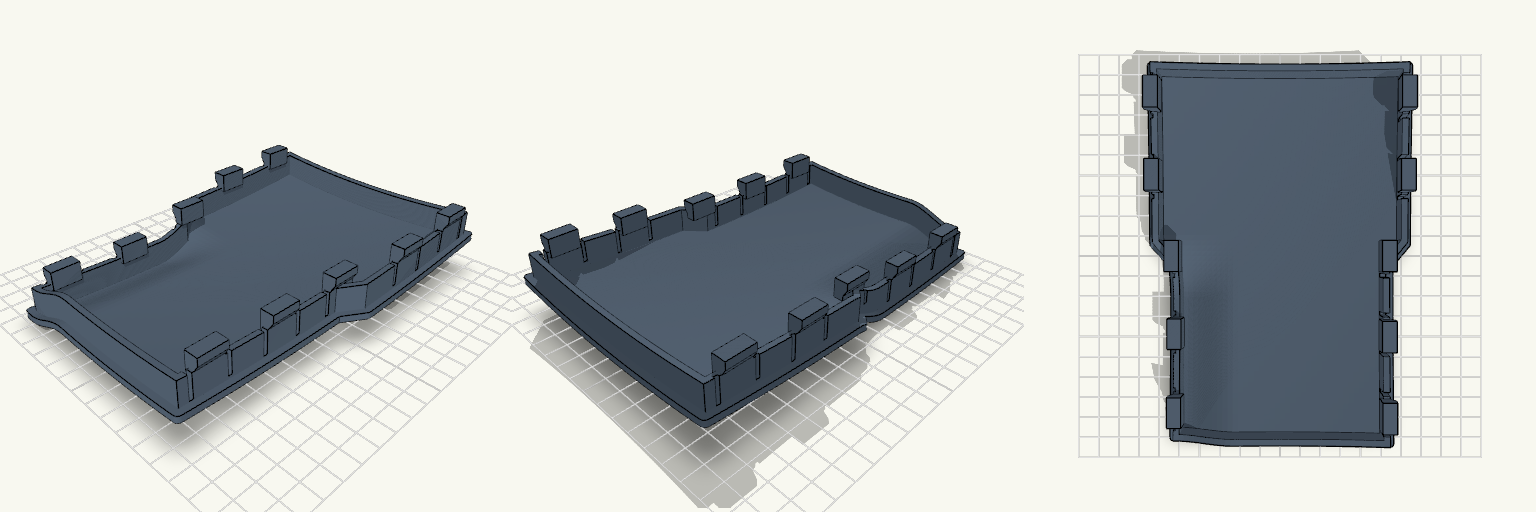
Curved Snap-In Interior Trim Cover
A 123 × 180 mm curved interior trim cover with a straight bottom edge, a stepped outline (107 mm wide at the top, 123 mm in the lower 85 mm) and a 3 mm panel. The perimeter flange follows the crowned surface so the part sits flush around the opening. Remix hooks Surface crown: the front curvature is a few millimetres in both directions. Flatten or deepen it to match a measured body profile. Raised area: 10 mm high with a soft ~30 mm blend at the upper left. Change height or width to suit. Clips: five per side at 18, 54, 90, 126 and 162 mm, 14 mm wide and 4.5 mm thick, with a ~2 mm hook. Adjust hook depth to the real metal edge thickness. Rear frame: 15 mm deep, 2.8 mm wall, inset 3.5 mm. Change the inset for a tighter or looser fit. Pairs with: fuzzy skin in the slicer for a textured look. Print in PETG, ASA or ABS.
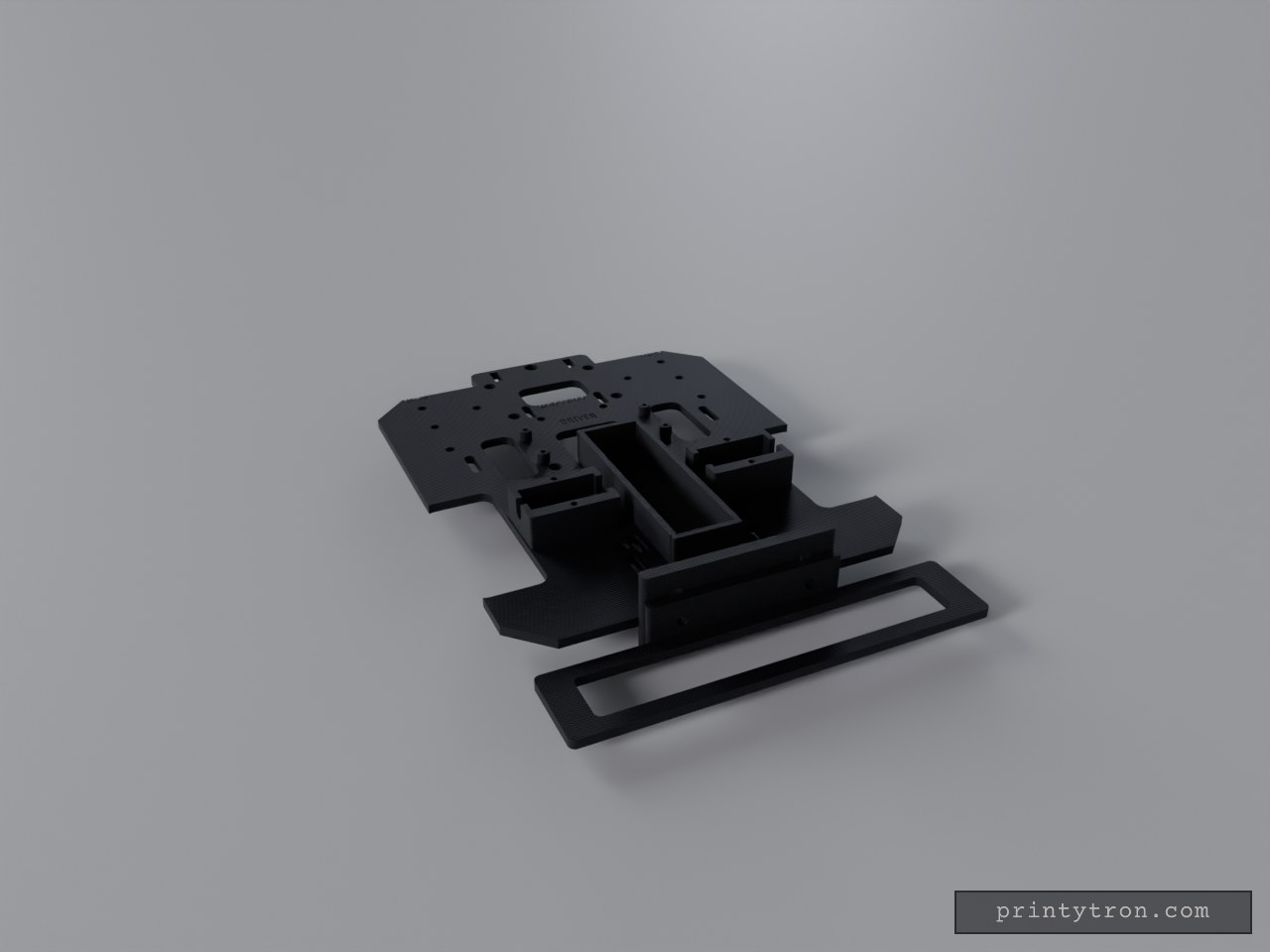
Line Follower Chassis, N20 Drive
What it's for A line-follower chassis plate with N20 motor cradles, an adjustable-height front sensor tray, an ESP32 mount, a battery holder, a driver mount, a rear caster tab and an LED hole. Dimensions Overall: about 130 × 198 mm, under 25 mm tall (the plate sits 8 mm off the ground). Motor cradles: 12.2 × 24.7 mm pocket for a 12 × 10 × 24.5 mm N20, with a shaft notch and two M2 holes each. Wheel cutouts: sized for 34 mm wheels with more than 2 mm clearance to the plate. Sensor tray: 126 × 26 mm board shelf, two vertical M3 slots in the riser for height adjustment. ESP32: four standoffs for a 48 × 26 mm board, plus two zip-tie slots. Battery: 68 × 18 × 19 mm pocket along the axle line, two strap slots. Driver: two zip-tie slots for a 21 × 18 mm module. LED: 5 mm hole near the rear edge. Wiring: two 10 mm slots between the motor mounts and the electronics. Remix ideas Add a cover clamp across each motor cradle using the M2 holes. Change the caster tab hole spacing for a different caster. Add a second sensor tray for a different board width.