Pizza Spinner Fidget Print Set
Created today
Description
What it's for
A pizza-shaped fidget spinner that turns freely on a central hub. The pepperoni and olives are separate snap-on toppings, each with a split pin that clicks into a socket. Each topping also has a marked seat in the sauce, so the right position is easy to find.
Dimensions
- Pizza: 62 mm diameter, bumpy crust, sauce with slice grooves
- Hub: protrudes on both sides, 0.5 mm clearance to the pizza
- 6 pepperoni: 10 mm, seat 10.6 mm
- 9 olives: 5 mm, seat 5.6 mm
- Pins: 3.4 mm split pins into 3.5 mm sockets
Print notes
- Toppings print upside down, pin facing up, no supports needed.
- Olives are small; a standard 0.4 mm nozzle will soften the details.
- Pieces print in separate colours and can be mixed freely.
Remix ideas
- Add mushrooms or peppers using the same pin and seat.
- Change the topping layout by moving the seat positions.
- Make the hub longer for a better grip.
Images
More like this
Explore more in Desk & Tech →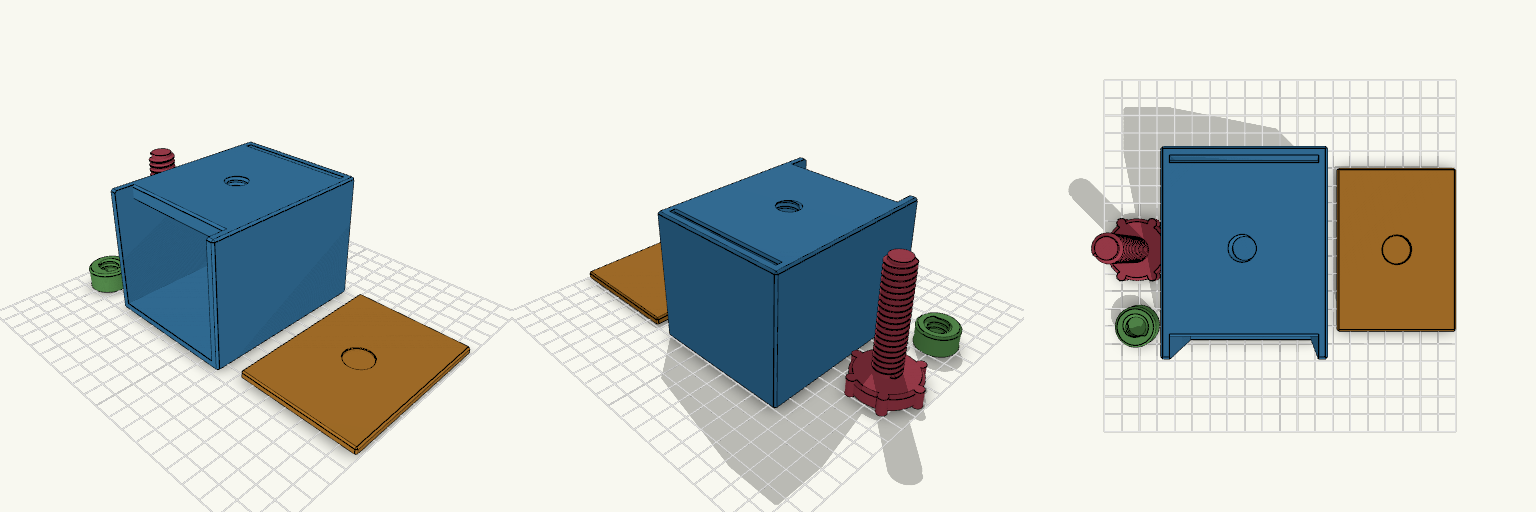
Card Press met Schroefdop
Een persbakje voor Pokémon-kaarten, bestaand uit vier losse printdelen: een bakje, een persplaat, een draaischroef en een schroefdop. Het bakje is dicht aan de achter- en zijkanten, heeft een vingeruitsparing aan de voorkant en een brug met schroefdraad over de bovenkant. De plaat ligt op de kaarten en heeft een ronde inzinking in het midden. De draaischroef zet de plaat onder druk. De schroefdop draait op de punt van de schroef en heeft een ronde voet die in de inzinking past. Binnenruimte bakje: 68 × 93 mm Schroefdraad: 14 mm, spoed 3 mm Inzinking in de plaat: 16 mm doorsnede Schroefdop: 15 mm voet, 22 mm doorsnede Print de dop met de voet naar beneden, zonder support
Tiny Keycap Set For Tact Switches
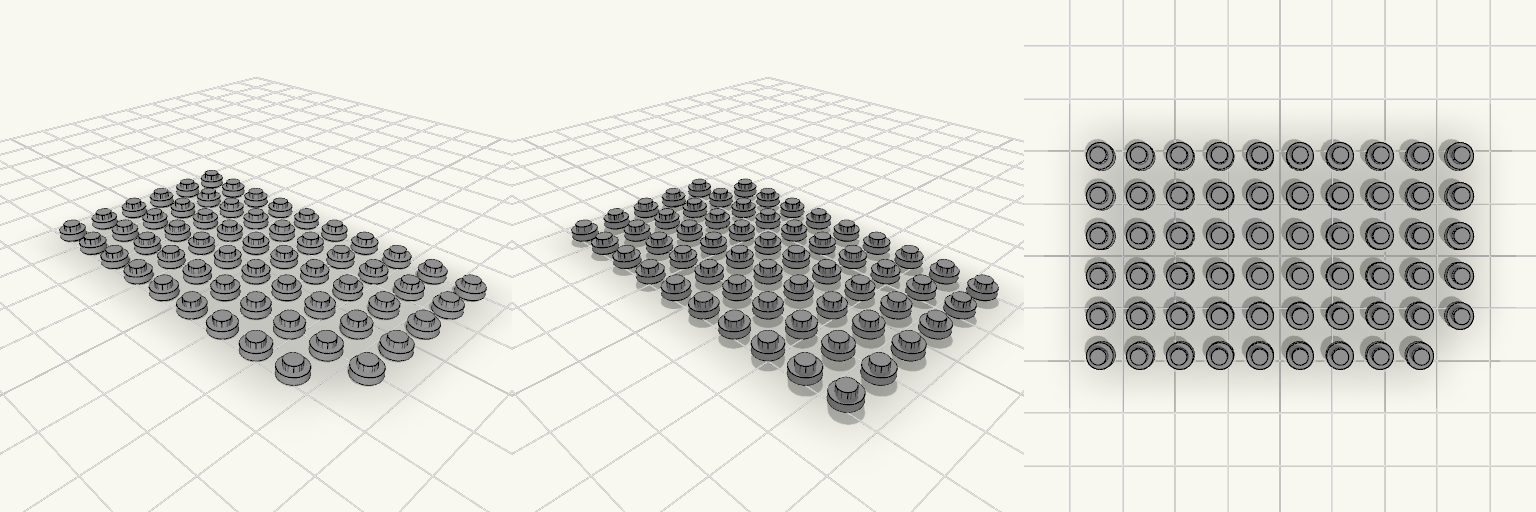
A sheet of 59 miniature round keycaps in the spirit of a tiny typewriter keyboard, sized to dress up tactile switches. Each cap is 5 mm across and 1.6 mm thick, with a short 3 mm glue post and an engraved legend: letters, digits, arrows and common symbols. 26 letters A–Z and digits 0–9 Four arrow caps (right, up, left, down) 19 common symbols 3 mm post, 1.4 mm tall, for gluing to the switch Printed face-down, so no supports are needed Use a fine layer height (0.2 mm or less) so the small engraved glyphs stay legible.
ReplixHD Gaming Desk Organizer
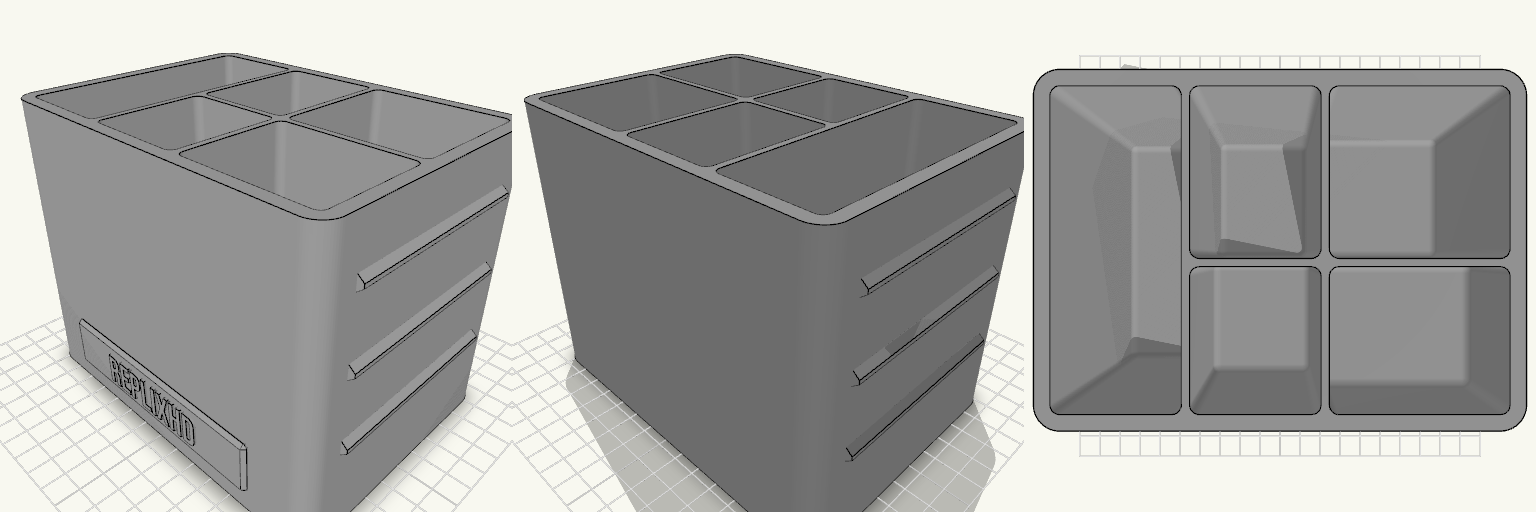
A five-pocket desk organizer for a 150 × 110 × 120 mm footprint, with "ReplixHD" embossed on a raised front plate. Fit Scissors slot: 40 × 100 mm, 105 mm deep. Pen slot: 40 × 52 mm, 100 mm deep. Pencil slot: 55 × 52 mm, 90 mm deep. Marker slot: 40 × 45 mm, 70 mm deep. Small slot for clips and erasers: 55 × 45 mm, 40 mm deep. Walls are 2.5 mm and dividers are 2.5 mm. The pockets' floors sit above the 3 mm base, which is thicker where the pockets are shallower. Check before printing Pen and pencil slots are about 40–55 mm across, so measure any oversized markers against that. Scissors need a handle under 40 mm wide. Print notes One solid body, with no supports needed. The side ridges are sloped at about 60° so they print cleanly. It does not fit anything that needs a closed lid or a drawer.
Case ESP32 + LoRa com Display e Cooler
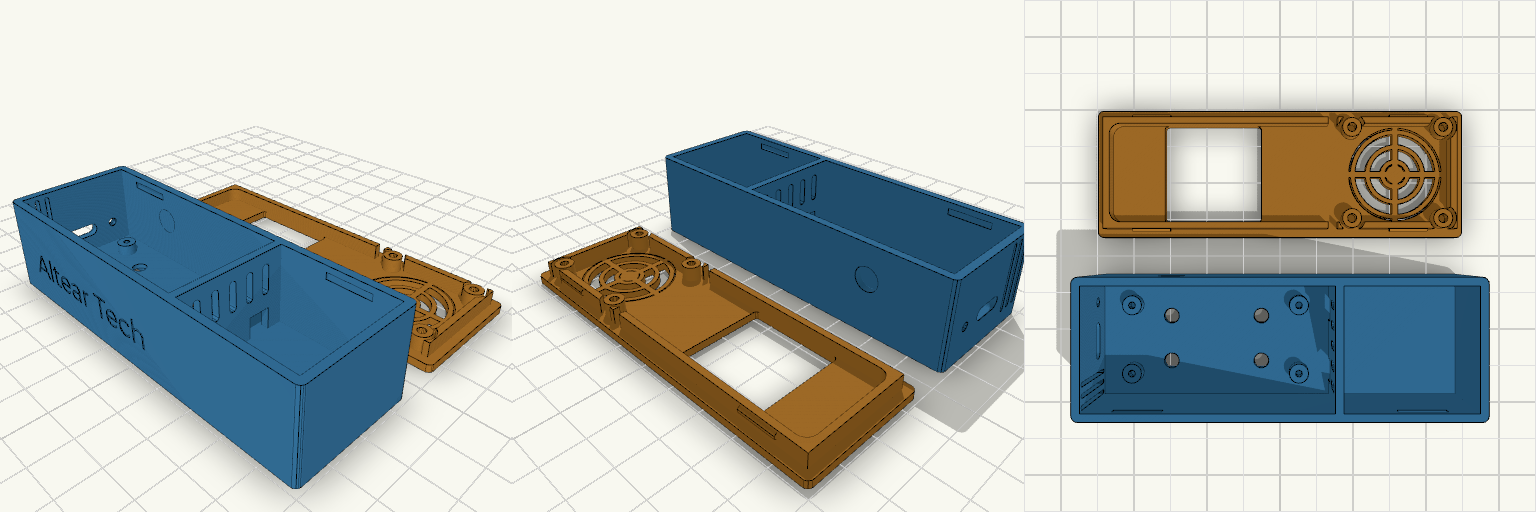
Case compacto para ESP32 e módulo LoRa SX1278, com tampa de encaixe por pressão, janela para display TFT 1.44" e cooler na tampa. Ganchos para remix Altura interna (IH = 21 mm): altura total de 24 mm. Aumente se o LoRa ficar justo. Furação do cooler: quadrado de 24 mm com pinos de 5 mm e furo de 2,4 mm. Ajuste para outro tamanho de cooler. Janela do display: 26 × 26 mm na tampa. Combina com um suporte interno para o módulo. LoRa: sem canaletas internas. Dá para adicionar suportes na medida da sua placa. Ranhuras inferiores: duas ranhuras de 4 mm para cabos entre as placas.
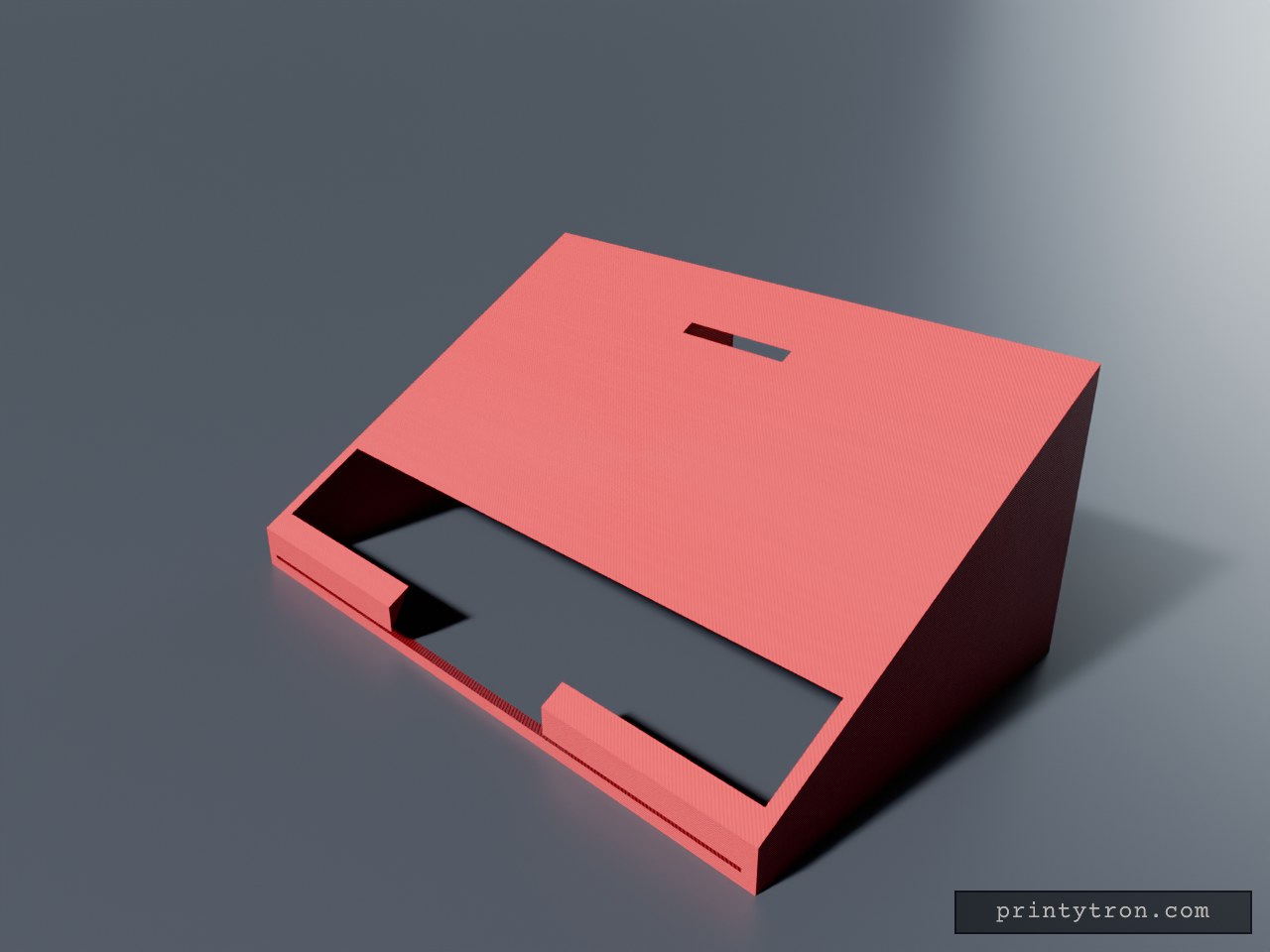
30° Tilted Stand for 118x84mm Keypad
Wedge-style desk stand that holds a 118x84mm macro keypad at a 30° tilt, so the keys face the user instead of lying flat. The pad sits in a recessed pocket that grips its base on all four sides to stop it creeping during use. A finger notch at the front edge lets the pad be lifted out. A cable slot at the back edge routes the cord away from the desk surface. Specs Pad size: 118 x 84 mm Pocket clearance: 0.3 mm per side (0.6 mm total on each axis) Tilt angle: 30° Overall footprint: about 124 x 80 mm, roughly 53 mm tall at the rear Wall thickness: 2.5 mm Front notch: 40 mm wide finger cut-out for lifting the pad Cable slot: 24 mm wide, centered on the back edge Underside: flat; add rubber feet or tape for grip on smooth desks Print orientation: flat side down, no supports needed Notes Check the pocket depth and cable slot position against the actual pad before printing. If the cable exits somewhere other than the center of the back edge, the slot position needs to be moved.
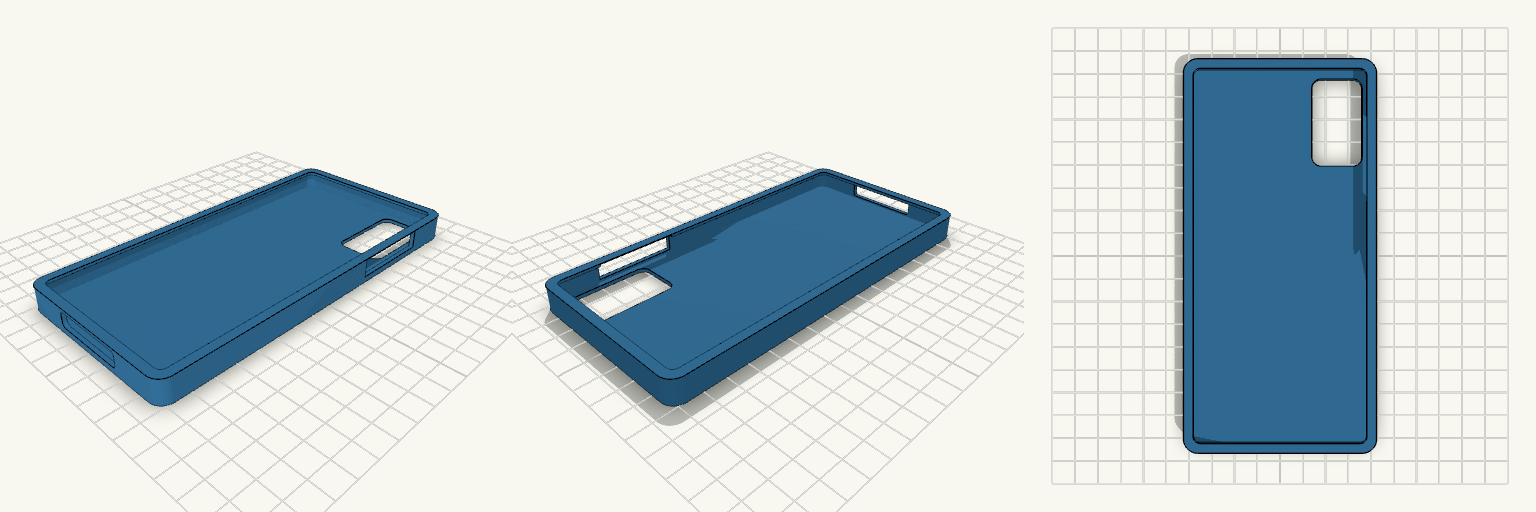
Samsung S24 FE Snap-In Bumper Case
A one-piece snap-in bumper case for the Samsung S24 FE, sized from the 162.0 × 77.3 × 8.0 mm phone spec with 0.2 mm clearance. The open front leaves the screen clear, and the walls are 1.8 mm with a 1.5 mm back and a 1.2 mm lip that catches the screen edge. Camera cutout on the back Button slot along one side Bottom slot for USB-C and the speaker Prints back-down with no supports One piece, no assembly The case is rigid, so the phone presses in from one corner. PLA works, but a flexible filament such as TPU is easier on the phone and less likely to crack the lip. The camera and button positions are estimates, so check them against your phone before printing the whole case.