Schlafmützchen: Butterdose mit schlafender Bulldogge
Created 12 days ago
Description
Schlafmützchen: Auf dem Deckel dieser Butterdose hat sich eine kleine französische Bulldogge niedergelegt – große Ohren aufgestellt, kurze Schnauze, geschlossene Augen, die Vorderpfoten nach vorn gestreckt. Ringsum zieren kleine Pfotenabdrücke die Längsseiten von Schale und Deckel. Die Butterdose ist bewusst süß, schlicht und harmonisch gehalten: eine flache, stabile Schale und ein abnehmbarer Deckel mit weich abgerundeten Ecken.
Auf einen Blick
- Zwei separate Teile: Schale und Deckel mit Bulldogge
- Innenraum für ein normales 250-g-Stück Butter; Schale ca. 128 × 72 × 30 mm
- Pfotenabdrücke 0,8 mm tief, je drei an beiden Längsseiten
- FDM-geeignet: flach liegend, ohne Stützen druckbar; Deckel mit Bulldogge nach oben drucken
Die Bulldogge bleibt kompakt und ruhig, die Ohren laufen nach oben schmal zu. Der Deckel sitzt mit leichtem Spiel auf der Schale und liegt auf deren Rand auf.
Images
More like this
Explore more in Kitchen & Bathroom →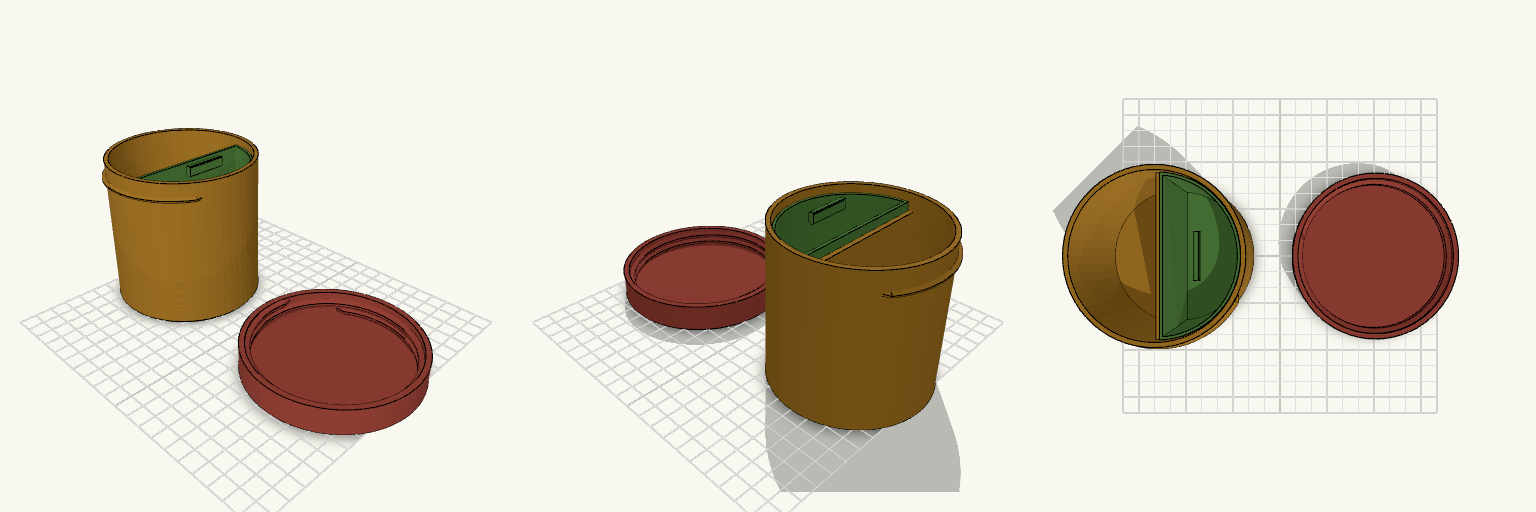
Zylindrischer Sonnenblumenkern-Becher mit Deckel und abnehmbarem Mülleimer
Wofür es gedacht ist Der zylindrische Becher ist eine mobile Snackbox für Sonnenblumenkerne. Eine Hälfte nimmt die Kerne auf, die andere den abnehmbaren Mülleimer für die Schalen. Der Deckel wird aufgeschraubt und ist vollständig geschlossen, ohne Einwurföffnung. Zum Entnehmen der Kerne und zum Einwerfen der Schalen in den Mülleimer wird der Deckel abgeschraubt. Feste Trennwand teilt den Becher in zwei Hälften Eine Hälfte für Sonnenblumenkerne Andere Hälfte mit abnehmbarem Halbmond-Mülleimer und Griffleiste Aufschraubbarer, vollständig geschlossener Deckel Aufbau Becher, Mülleimer und Deckel sind eigene Teile. Der Becher trägt oben ein Außengewinde mit 5 mm Steigung, der Deckel das passende Innengewinde; die Deckelwand ist um das Gewinde herum stabil ausgeführt. Der Mülleimer lässt sich nach dem Abschrauben des Deckels zum Entleeren herausziehen. Zum Drucken werden die Teile getrennt angeordnet; der Deckel liegt mit der Oberseite nach unten neben dem Becher und wird im Gebrauch aufgeschraubt. Becher mit fester Trennwand und Außengewinde (5 mm Steigung) Herausnehmbarer Mülleimer Separater, geschlossener Deckel mit Innengewinde (5 mm Steigung) Maße Becher: rund 92 mm Durchmesser, 90 mm hoch Mülleimer: ca. 40 × 84 mm Grundfläche, 88 mm hoch Deckel: ca. 101 × 101 mm, 17 mm hoch Remix-Ideen Zusätzliche Klappe über der Kernseite ergänzen Größere oder kleinere Zylindervariante für andere Portionen Gewinde und Deckelpassung anpassen Mülleimer mit größerem Griff oder anderer Öffnung versehen
Zylinderschale „Mama“ mit Gravur
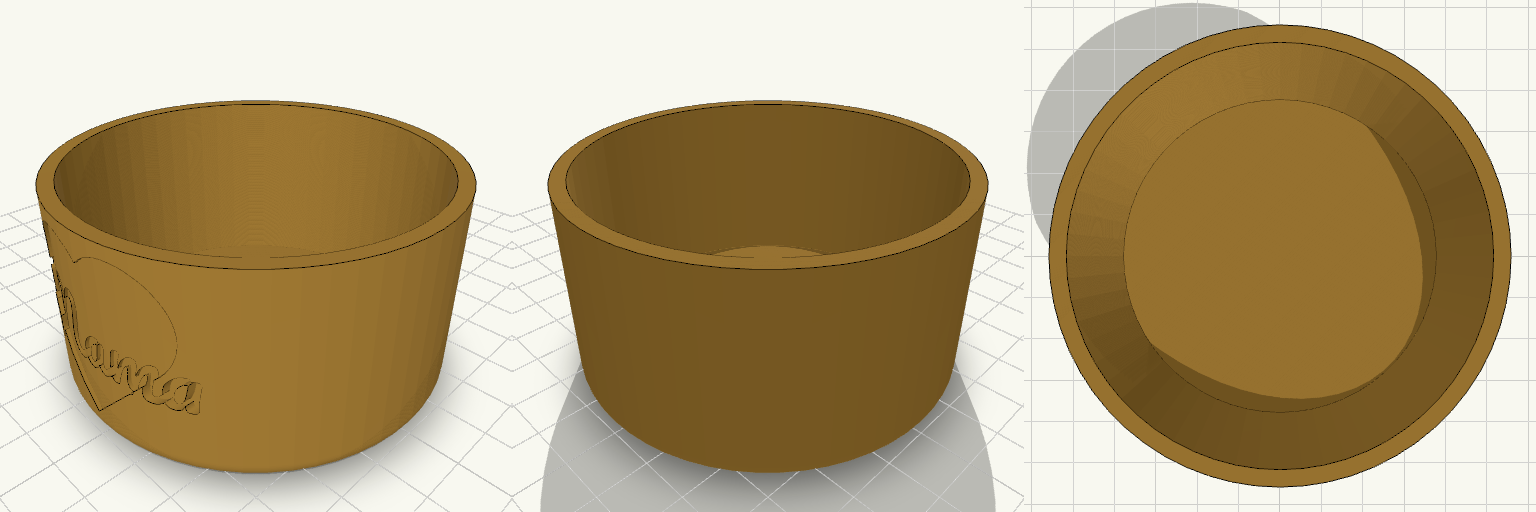
What it's for Zylindrische Erdnussschale mit eingravierter Schrift „Mama“ an der Vorderseite. Als Snackschale oder kleines Geschenk geeignet. Dimensions Durchmesser: 80 mm Höhe: 42 mm Wandstärke: 3 mm, Boden 3 mm Gravurtiefe: 1,5 mm Remix ideas Anderer Name oder andere Schriftart Gravur auf der Rückseite ergänzen Höhe oder Durchmesser anpassen
Square Bioplastic Tile Mold with Corner Pins
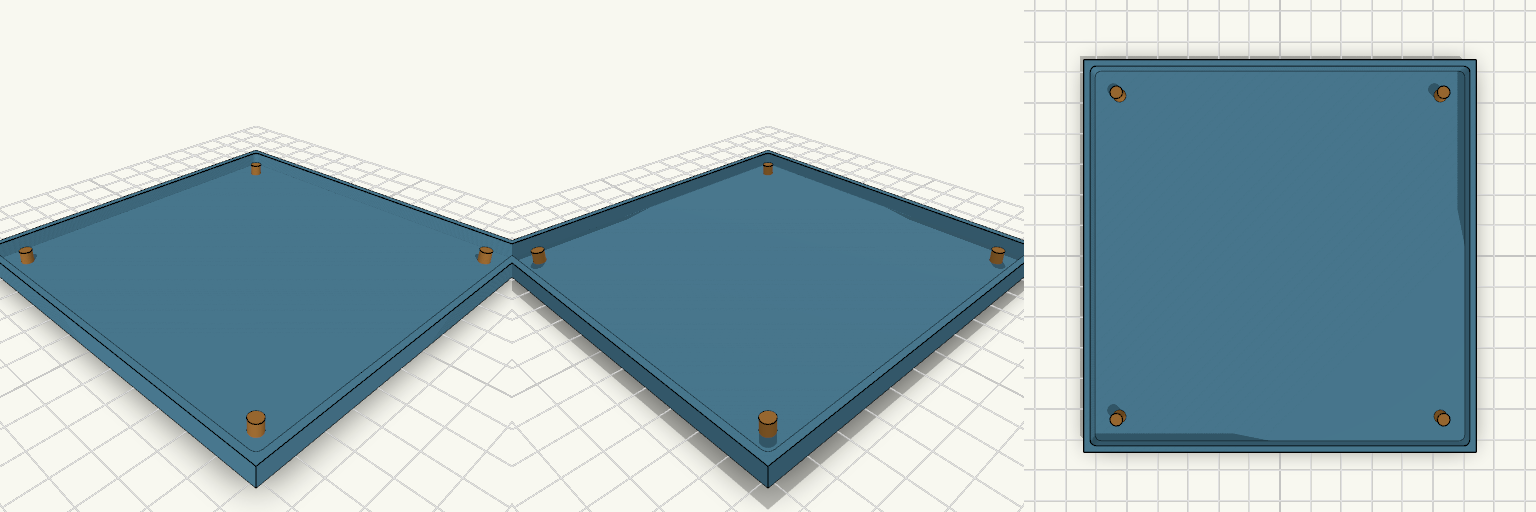
What it's for A square casting mold for thin, translucent starch-based bioplastic tiles. Four pins inside the cavity leave a hole in each corner of the cast tile, so neighbouring tiles can be tied together with fishing line into a stained-glass-style hanging grid. Dimensions Cavity: 120 × 120 mm, 2 mm radius inside corners Outer size: 124 × 124 mm, total height 6.2 mm Walls: 2 mm thick, 5 mm above the floor Floor: 1.2 mm, continuous and flat underneath Pins: 4 mm diameter, 4 mm tall above the floor, centred 8 mm from both adjacent inner walls, clear of the walls Print notes One solid piece, no supports, flat underside Pins are fused into the floor Low filament use thanks to the thin floor and walls Remix ideas Change the pin spacing for larger or smaller holes Add mid-edge pins for extra connection points Scale the cavity for rectangular or smaller tiles
Brim — Flat-Bottom Rounded Bowl
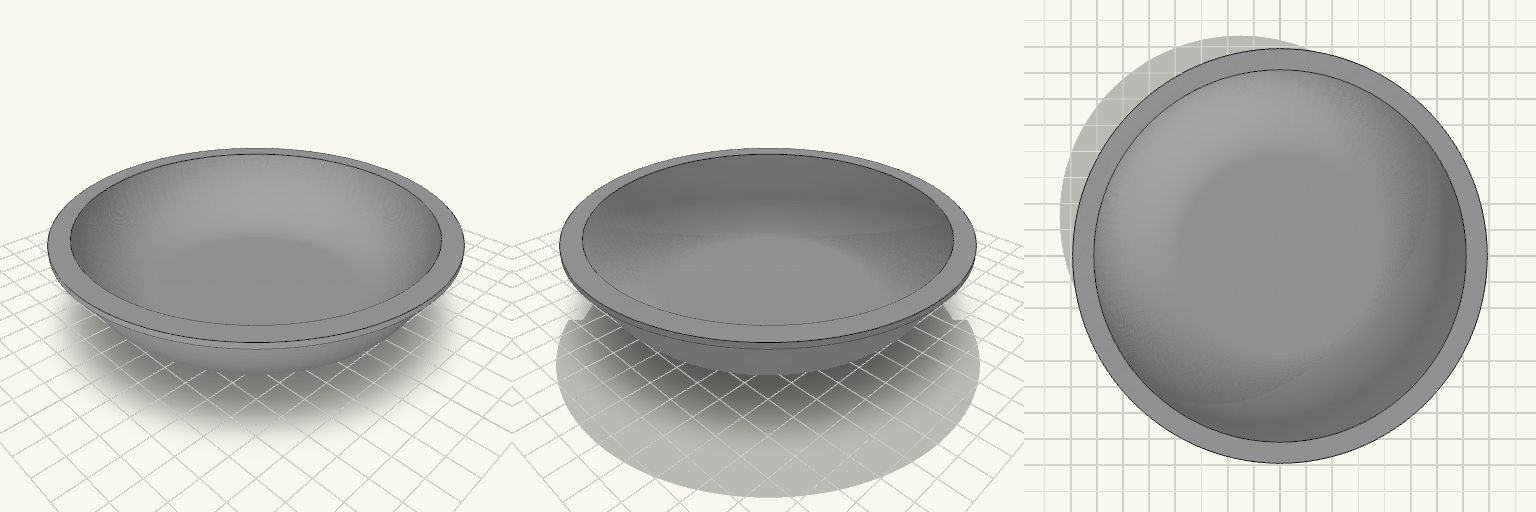
Brim is a shallow serving bowl with a flat 75 mm base that sweeps up in a smooth curve to a wide, flat rim. The flat base keeps it stable on a table and easy to print without supports on the bottom face. Dimensions Outer rim diameter: 138 mm Rim width: 5 mm, flat and horizontal Opening inside the rim: 128 mm Depth: 30 mm Flat bottom diameter: 75 mm Wall thickness: 2 mm throughout Print notes Print rim-up or base-down; base-down is the natural orientation. The steepening curve near the rim may need supports or slow cooling.
Caneca porta-latas com alça em peça única
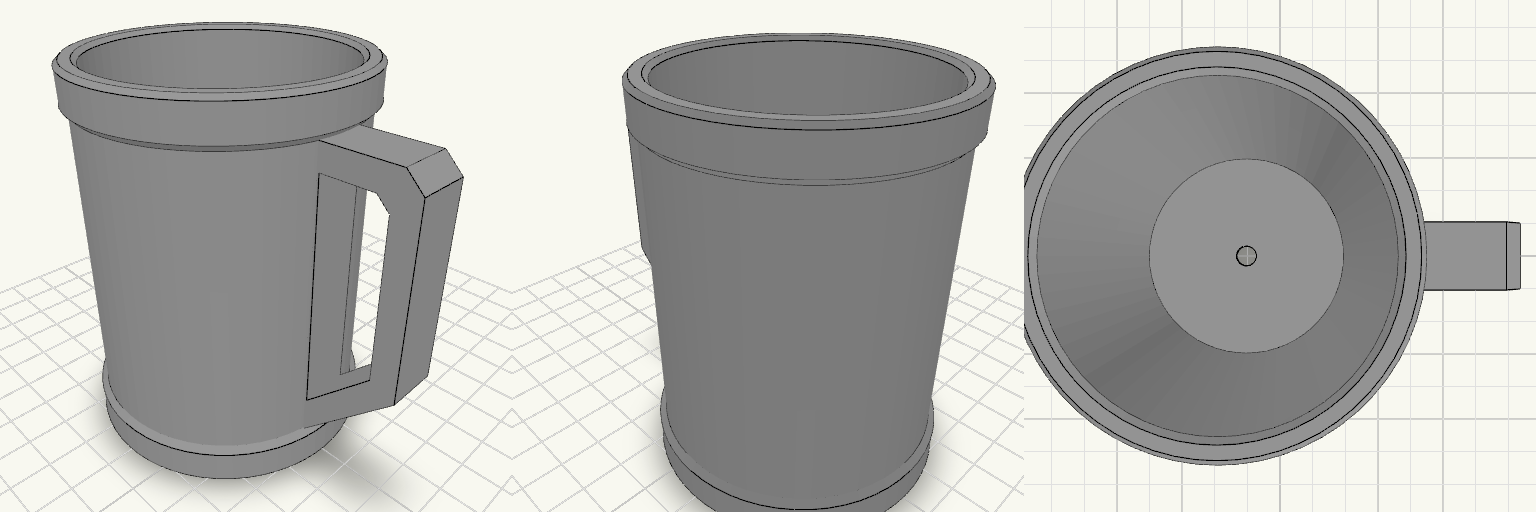
Caneca porta-latas em peça única para latas de 269 ml. O corpo cilíndrico tem Ø externo de 64,6 mm e 90 mm de altura, com cavidade reta de Ø 58,6 mm e 87 mm de profundidade útil. A parede tem 3,0 mm e o fundo 3 mm; um furo de Ø 6 mm no centro do fundo alivia o ar, e um chanfro de 1 × 45° na borda interna do topo guia a entrada da lata. Duas faixas salientes de Ø 67,6 mm reforçam o desenho: uma na base, de Z=0 a 10, e outra no topo, de Z=80 a 90, ambas com chanfros de 45°. Entre Z=10 e Z=80 o corpo é liso, para receber adesivo. A alça fica em um dos lados, com 12 mm de largura e avanço até X=54. Ela sobe até Z=80, encostando no início da faixa superior, e mantém topo plano com barra vertical na ponta; a diagonal de 45° fica embaixo. As barras do perfil têm cerca de 6 mm, e as quinas externas e as do furo são chanfradas a 45°. O vão interno acompanha o perfil, com teto em Z=74; o chanfro na quina ajuda a impressão, mas o trecho ainda forma uma ponte e pode pedir suporte. Altura total: 90 mm Pegada na mesa de impressão: 87,8 × 67,6 mm Cavidade: Ø 58,6 mm por 87 mm de profundidade útil Parede de 3,0 mm e fundo de 3 mm Furo de alívio de ar: Ø 6 mm Faixas salientes: Ø 67,6 mm, base de Z=0 a 10 e topo de Z=80 a 90 Alça: 12 mm de largura, até X=54, topo em Z=80, barras de cerca de 6 mm e chanfros de 45° Vão da alça: teto em Z=74, com chanfro na quina; pode pedir suporte sob a ponte
Sentinel Cylinder Candy Dispenser
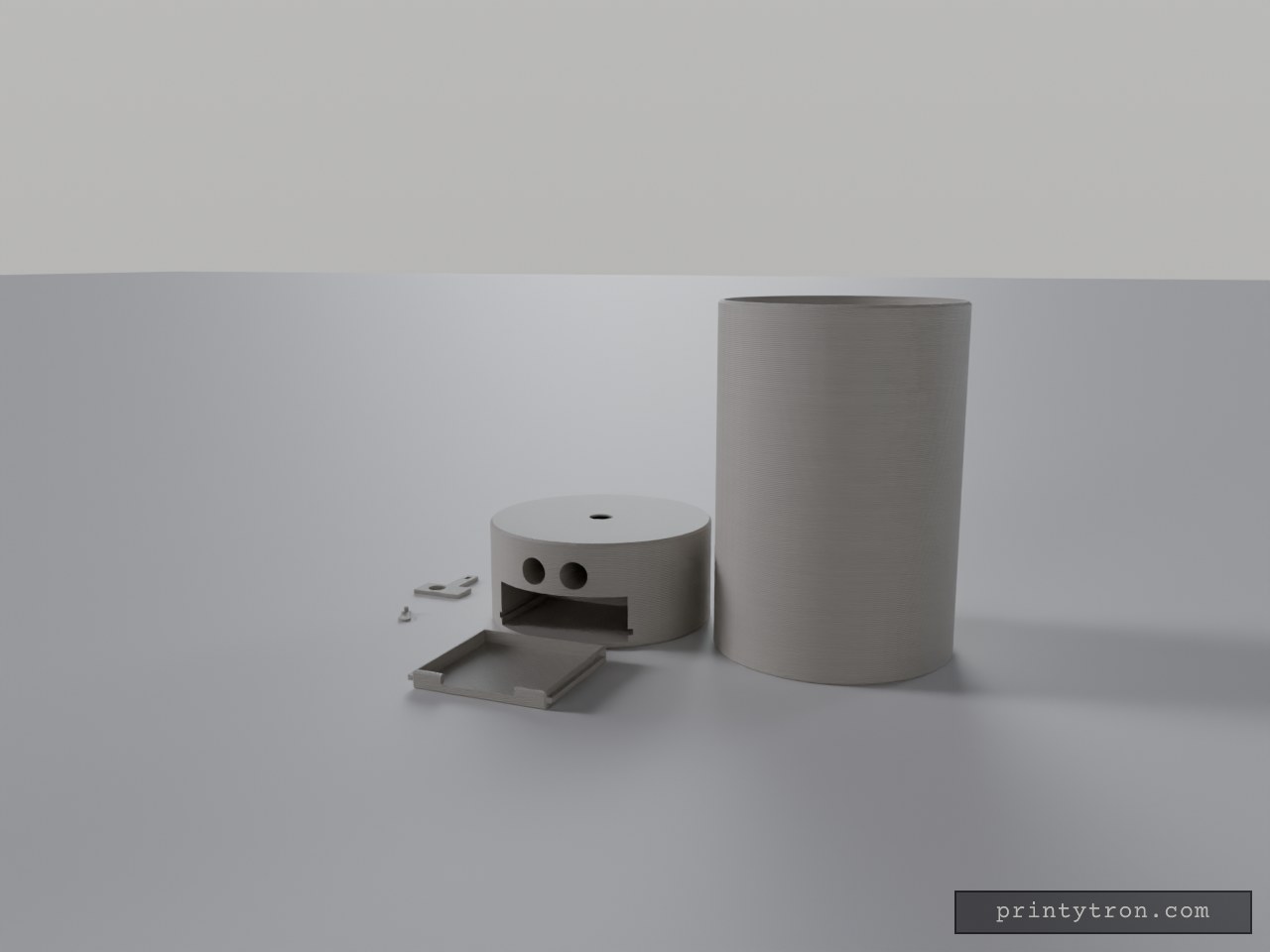
A candy dispenser with a watchful streak: the body stands as one straight 105 mm cylinder from foot to rim, and two eye holes on the front give it the look of a sentinel standing guard over the opening below. Those eyes are through-holes opening into a pocket for an ultrasonic sensor, so a wave of the hand can trip the servo below the gate slot and slide the gate open, dropping candy into the hand opening below. That opening is a genuine hole cut clean through the front wall, about 63 mm wide and 21 mm tall, sized for an average hand rather than a large one. A retractable catch tray rides on side rails on its floor, just under the outlet, with a low notch at the front so you can scoop the candy out with your fingers. A cone at the floor of the candy cylinder funnels the sweets down to the outlet, and the whole thing stands 200 mm tall — a tall column that holds a serious load of candy while keeping a modest footprint on the counter. All five pieces are laid out separately on the plate, each oriented for printing without supports. The candy cylinder is silk white, the base pink, the catch tray light blue, and the gate slider and servo horn white. The printed parts Base Housing — a round 105 mm pink body, 48 mm tall. The hand opening sits at the front bottom, open through the wall. The two sensor eye holes sit just above it, also cut clean through, so the sensor has a clear line of sight out the front. The servo bay is sized for an SG90: the servo slides in from the back wall, shaft up, with its mounting ears resting in a slot cut into the housing. A round recess above the body lets the shaft boss sit so the horn runs flush under the gate. The wider body leaves room to open the sensor pocket to full size. Candy Cylinder — a 105 mm open cylinder, 152 mm tall, in silk white, with roughly 3 mm walls, flush with the base so the body reads as one uninterrupted column. A wide, shallow cone at its floor feeds the outlet; everything above it is candy storage. Gate Slider — a flat 26.3 × 33.8 × 2.3 mm white plate that slides sideways in a slot across the outlet, just under the candy cylinder floor. A solid bar covers the outlet when closed; a 12 mm hole lines up when open. Its tail has a slot for the servo horn pin, and about 60° of servo sweep moves the gate roughly 13.6 mm — enough to fully open or close the outlet. Servo Horn — a 10.1 × 13.3 × 3.2 mm white horn with a pin that rides in the gate’s tail slot. The servo below the gate slot turns it to shift the gate. Catch Tray — a 64.5 × 57 × 7.5 mm light-blue tray that slides into the hand opening on two side ribs set in matching grooves, and sits directly under the outlet. Its back and side walls are about 1.5 mm thick, the front wall carries a low scoop notch, and the front edge stands about 1.5 mm proud of the housing as a pull tab. The rails are 3 mm wide with about 0.5 mm clearance in the grooves. There is no end stop, so the tray pulls out completely; a small snap bump would add a stopping point. It prints flat and needs no supports. Before you print The servo pocket matches an SG90: about 12.6 mm wide and 23 mm tall, with a mounting-ear slot. The sensor pocket and eye holes are undersized for an HC-SR04. Open those up while keeping the outside dimensions, or plan on a smaller sensor. The wall between the servo bay and the hand opening is thin, about 0.6 mm at final scale. Print the base with extra perimeters. The 152 mm cylinder is a tall, thin-walled tube — print it upright as laid out, and print it slowly. Check that it fits your printer’s height; if not, split it into two stacking rings. The gate slot has only about 1.4 mm of material above it before the cylinder floor, and the wall between the hand opening and the sensor pocket is thin. Print the base with extra top layers and extra perimeters for strength. Keep the gate plate flat on the bed so it slides cleanly through its slot, and keep the tray flat so its side rails and walls stay square. The base and candy cylinder have no locating lip, so glue or tape them together. Test-fit a real SG90, ultrasonic sensor and tray before final assembly. Wire the sensor and servo to the same controller. When the sensor sees a hand, the controller turns the servo to open the gate, waits, then turns it back to close. Remix hooks — cap the 105 mm cylinder with a lid, open the outlet up for faster dispensing, open the sensor pocket to HC-SR04 size now that the round base has the room, widen the hand opening, deepen the catch tray, add a small snap bump to give the tray a stopping point, or add a shallow funnel lip around the outlet for easier loading.