Swiss Army Silhouette Key Organizer
Created 3 months ago
Description
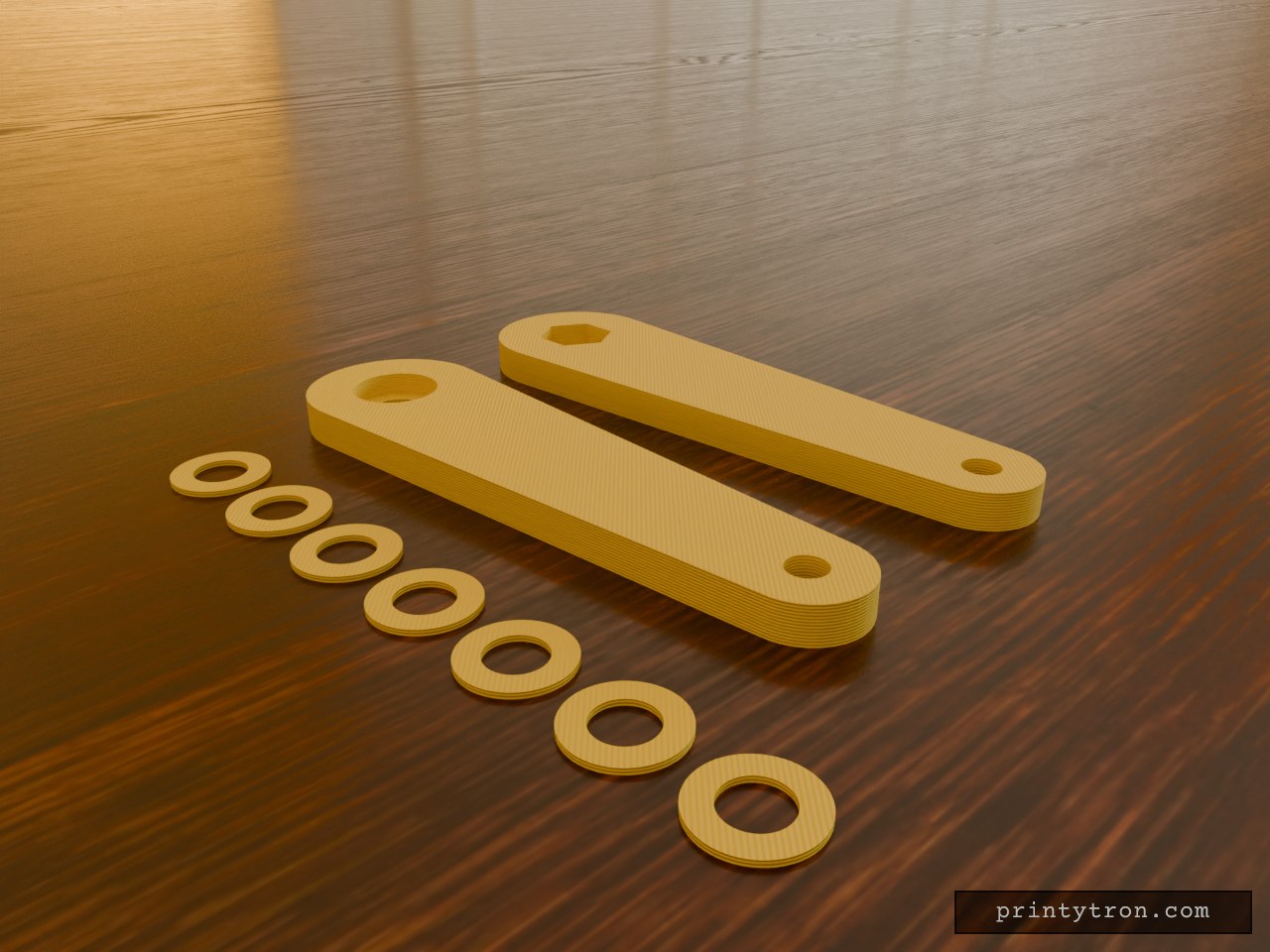
Adopting the classic folding silhouette of a Swiss Army knife, this pill-shaped organizer stacks up to six standard house keys into a single, pocket-safe unit. By clamping the keys between two 75mm plates on a threaded bolt, it eliminates the metallic jingle and stops loose key teeth from shredding fabric.
Design Notes
- Adjustable Tension: The printed threaded bolt and nut allow precise control over friction, so keys can be locked tightly in place or fanned out smoothly.
- Friction Management: Includes seven thin spacer rings to interleave between the keys, preventing them from grinding together on the pivot.
- Lanyard Loop: A secondary hole at the tail end accommodates a standard keyring for fob attachments or car keys.
Images
More like this
Explore more in Keychains & EDC →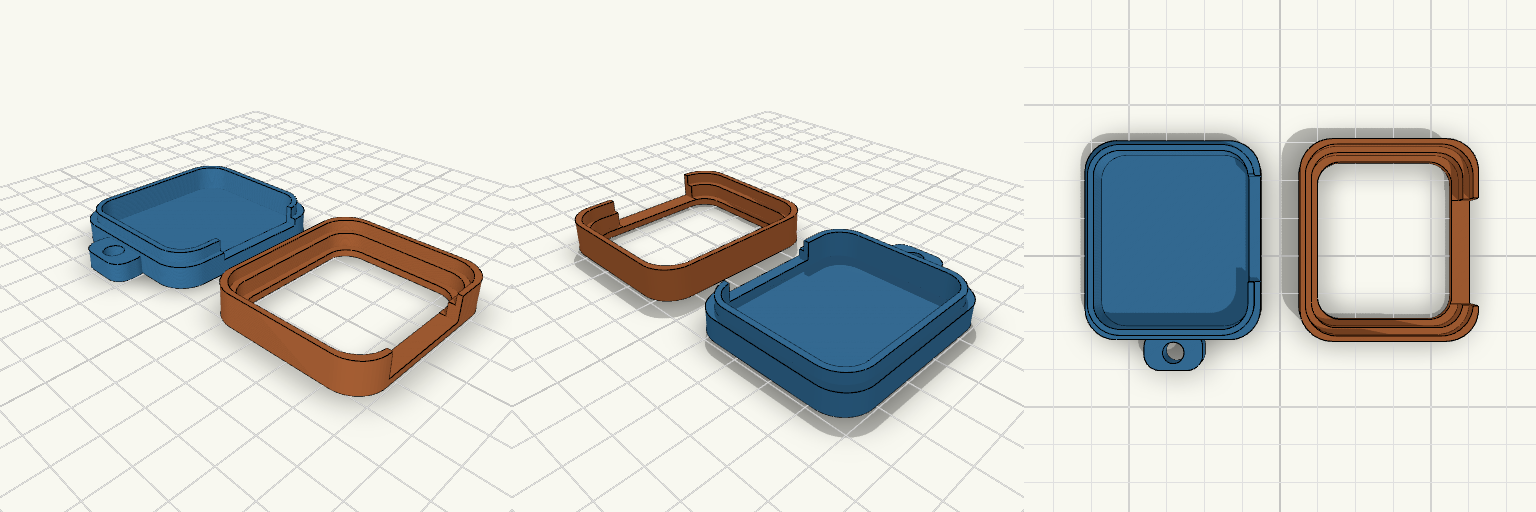
Apple Watch SE 44mm Keychain Case
What it's for A two-piece case that turns a 44mm Apple Watch SE (1st gen) into a keychain fob, with no wrist strap. A back shell cradles the watch and carries the key-ring lug. A front bezel fits over it and holds the watch in, leaving the screen open. Dimensions Cavity: 38.6 x 44.6 mm, sized for a 44mm watch body with about 0.3 mm of clearance Outer size: about 44.6 x 50.6 mm, plus the lug Wall thickness: 3 mm Key-ring hole: 5.5 mm Side window on the crown/button edge: 27 mm long, so the Digital Crown and side button stay usable Screen opening: about 1.75 mm of lip around the display Print notes Both parts are laid out separately on the plate. The bezel is flipped so its lip prints flat. Print in PETG or PLA. Check the fit on the stepped joint and sand it if it is tight. The halves are a press fit, and a drop of glue will make the joint permanent. Remix ideas Add a lanyard slot or a carabiner notch. Emboss initials on the back. Make a version for 40mm watches by shrinking the cavity.
Fanlock — 6-Key Pivot Organiser
Fanlock is a compact pivot organiser that stacks up to six keys between two side plates on a single bolt. Keys fan out when needed and stay put when closed, so they stop jingling and stop wearing through pockets. The nut sets the tension, so keys can be held at whatever angle they are swung to. The plates are 75 mm long, sized for house keys, with a tapered free end and a rounded pivot end. One plate has a round recess that hides the bolt head. The other has a hex recess that captures the nut. Both sit flush with the outer faces. Seven thin spacers keep the keys from rubbing on each other or on the plates. Dimensions Plate length: 75 mm Plate width at the pivot: 20 mm Plate thickness: 4 mm Pivot hole: 5.5 mm, set 8 mm from the end Spacers: 10 mm outer diameter, 0.6 mm thick, 7 included Second 4 mm hole near the free end of each plate, for a lanyard or split ring In the box 1 head-side plate 1 nut-side plate 7 spacers Hardware needed 1 × M5 × 25 mm bolt 1 × M5 nut Print notes All pieces print flat with no supports. The stack assumes keys about 2 mm thick. Six keys, seven spacers and two plates come to roughly 24 mm, which leaves very little thread past the nut. With thicker keys, switch to an M5 × 30 mm bolt.
Bharat Key — Mini Number Plate Keychain
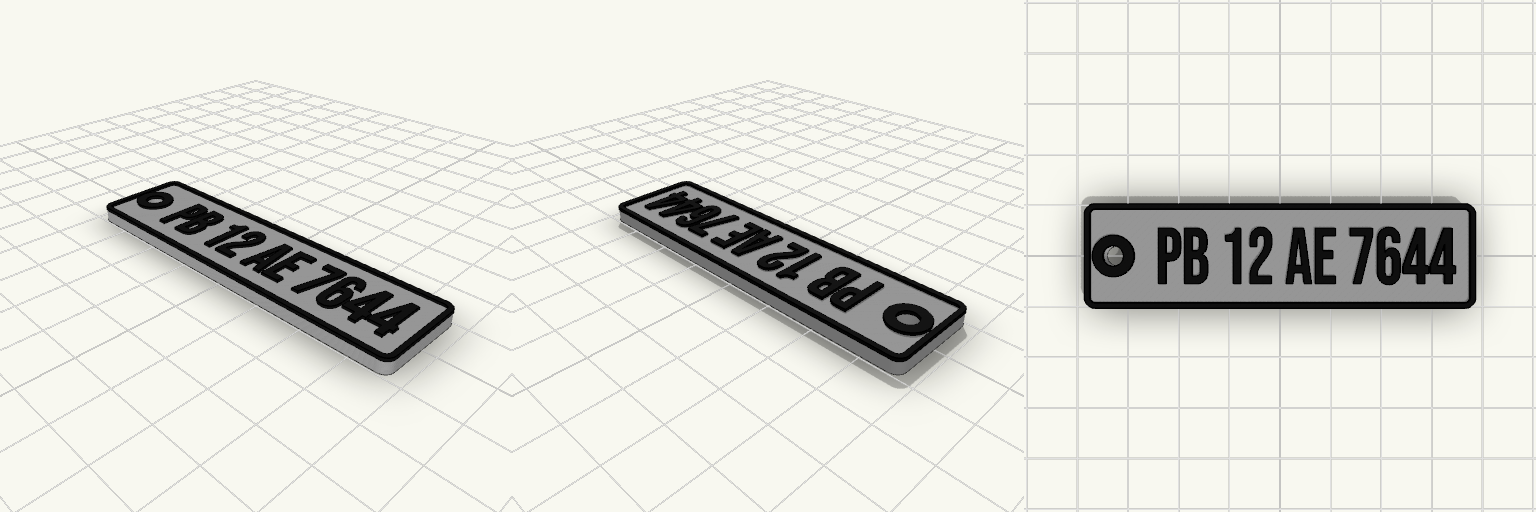
Bharat Key is a miniature Indian-style number plate keychain made to carry the exact registration PB 65 BK 3388. The long, slim plate uses a light grey/white base, a thin raised black border, and bold black lettering raised on one horizontal line. The single keyring hole sits at the extreme left with a raised ring around it for strength, while the registration stays centred in the remaining space. No blue IND strip, flag, extra colour or decoration is present, so the tag keeps a clean plate look while staying sturdy enough for a keyring. Dimensions Plate: 75 × 20 × 2.5 mm Raised border and text: 0.6 mm above the base; border 1 mm wide Lettering block: about 57 × 11 mm, fitted to the space right of the hole Keyring hole: 4 mm diameter, cut fully through at the extreme left Hole ring: raised black ring around the hole for extra strength Features Exact registration text: PB 65 BK 3388 on one horizontal line Bold black lettering raised above a light grey/white base Thin raised black border around the whole plate One circular keyring hole at the extreme left, fully through the plate Raised black ring around the hole to reinforce the keyring area Flat rectangular body with slightly rounded corners and a smooth flat backside Light grey/white base and black details only — no blue, no flag, no logos or decorations Print notes Print flat on the back; no supports are needed. The raised border and lettering sit 0.6 mm above the base and read clearly at miniature scale. Keep the 4 mm hole clear so the plate hangs cleanly on a keyring.
Staircase Slim Card Wallet
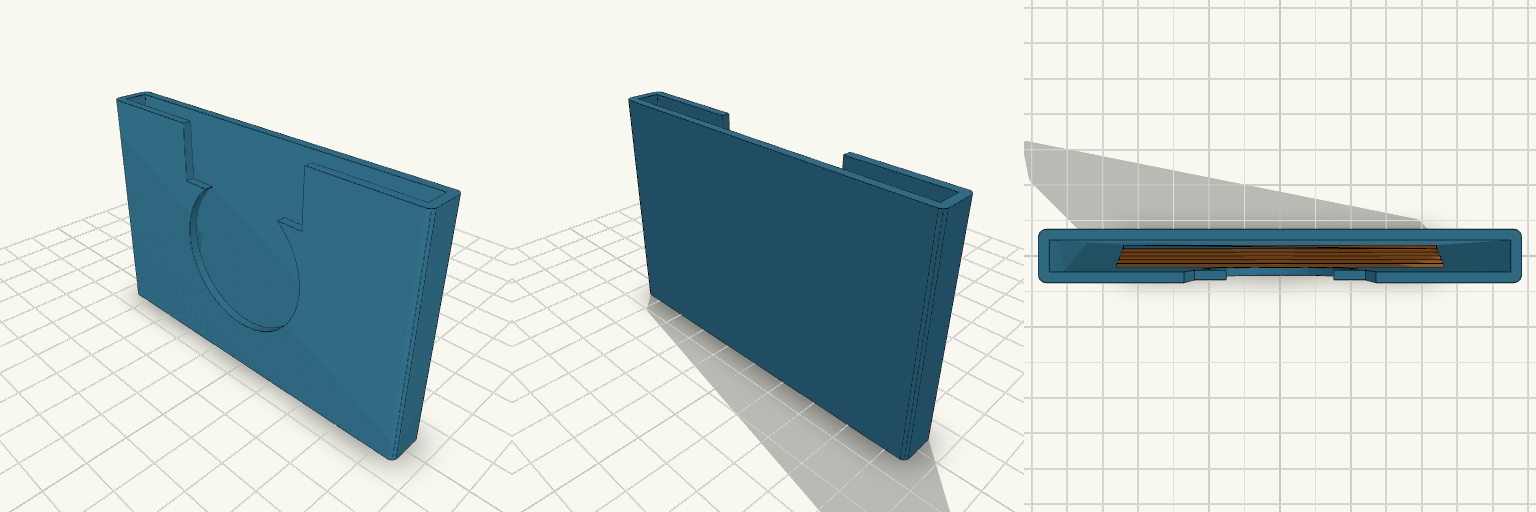
A card wallet with the silhouette of a tiny amphitheatre: six standard cards sit in a tall open pocket, and the floor climbs toward the front in 1.5 mm steps so the front card rides highest. A rounded thumb cutout in the front wall lets you push the stack up and out, and the front card pops clear of the rest for a quick grab. The pocket is sized for standard credit cards (85.6 x 54 x 0.76 mm) with a little breathing room, in a slim 90.5 x 10 x 58 mm body. The stepped floor is a separate colour region in the preview so the staircase is easy to read. Design notes Pocket: 86.5 x 55 x 6 mm, open at the top Floor: six steps, each 1.5 mm higher than the one behind, so the front card sits about 7.5 mm above the back one Thumb cutout: round-bottomed notch through the front wall, 36 mm wide Vertical corners rounded at 1.5 mm for a comfortable pocket feel Prints upright or flat; no supports are needed for the main body Remix hooks Taller or shorter steps for a different stagger A narrower thumb notch for a stiffer front wall Fewer steps and a thinner pocket for a 3 or 4 card version
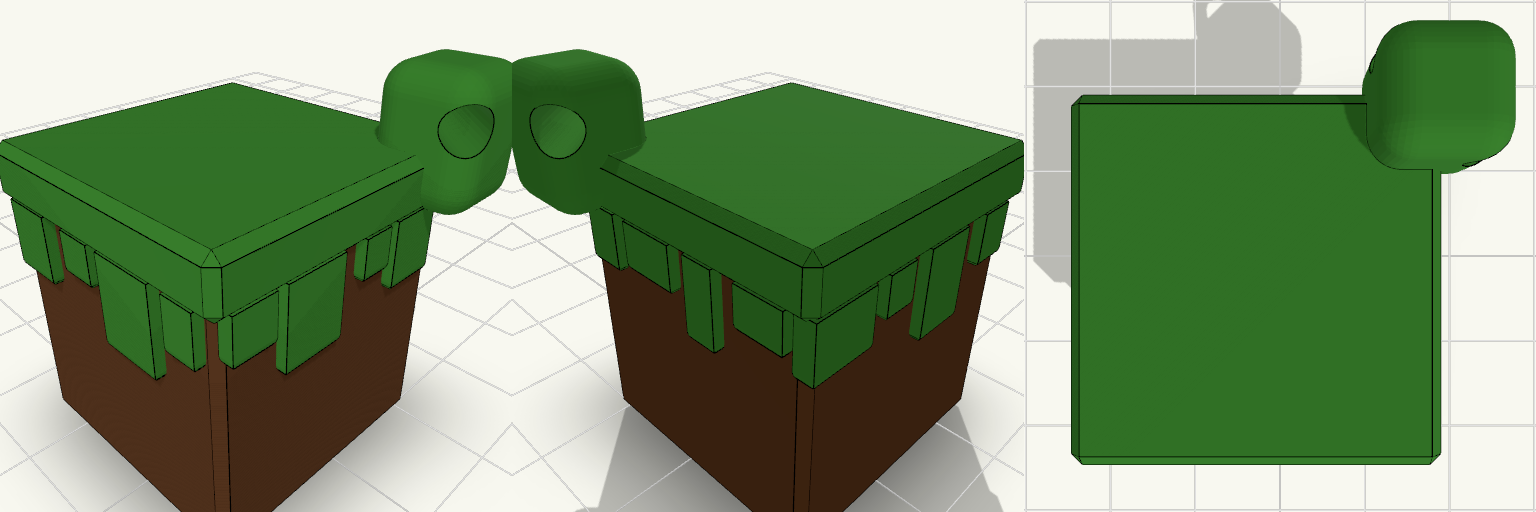
Minecraft Grass Block Keychain
What it's for A keychain shaped like a Minecraft grass block: smooth brown dirt body, green grass cap that overhangs slightly, and blunt, irregular grass drips on all four sides. A sturdy corner loop takes a key ring. Dimensions Approx. 27 × 27 × 28 mm Cap about 5 mm thick; drips 3.5–8 mm long Loop hole about 4 mm, at one top corner Remix ideas Swap colours for mycelium or snow blocks Change drip layout Enlarge the loop hole for a lanyard
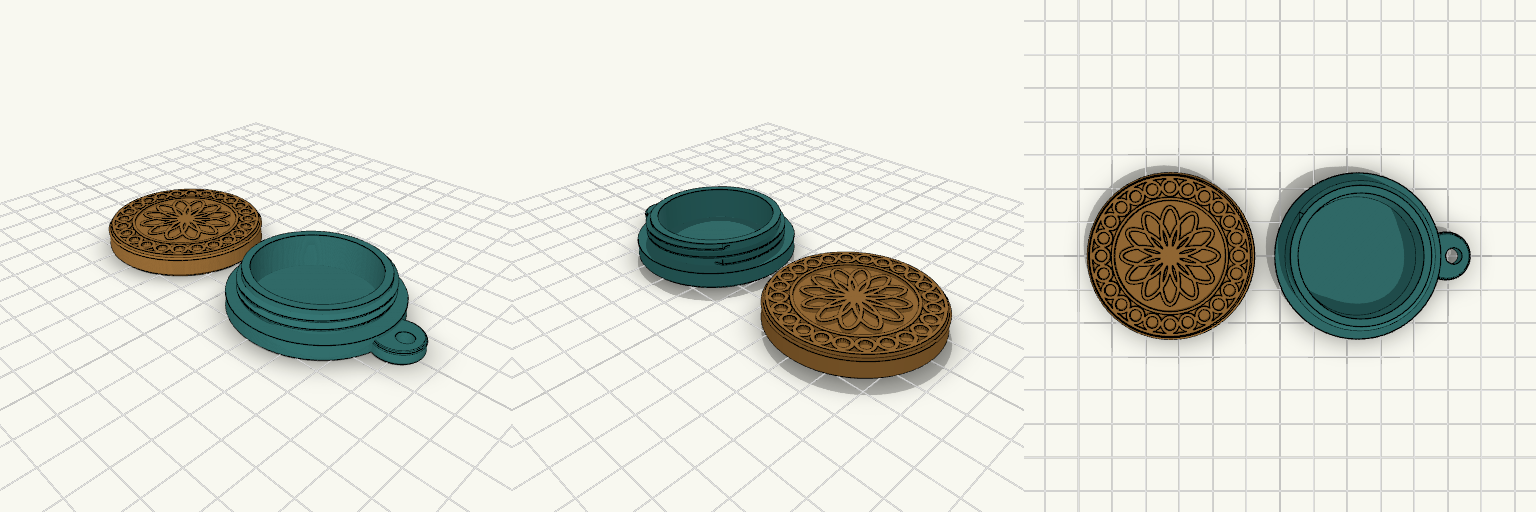
35 mm Threaded Keychain Container, Rosette Lid
Round screw-top keychain container: a deep base with a 35 mm bore and a thin matching lid with an ornamental rim and a twelve-petal rosette centre. Fit Bore: 35 mm diameter, 10 mm deep. Thread: 42 mm major diameter, 2.5 mm pitch, lid cut 0.7 mm oversize. Outer diameter: 48 mm on both pieces. Keyring tab: 4.8 mm hole, on the outside of the base. Check before printing Measure how your printer holds the 35 mm bore. Print the lid first to test the thread fit. Not included No Arabic calligraphy. The lid uses a geometric rosette and scalloped border.