Tape Measure Holster with Label Window
Created today
Description
A belt-worn holster cup for a 5 m tape measure, sized for a body of about 75 × 75 × 35 mm with 2 mm of total clearance. A vertical window in the front lets you read the size label without pulling the tape out, and a round thumb scoop at the top edge makes it easier to grip and lift. A loop on the back takes a belt.
The cup is open at the top and covers the lower 80% of the tape (60 mm). Outer size is 82 × 42 mm, with 2.5 mm walls and a 2.5 mm floor.
Remix hooks
- Tape size: the tape width, height and thickness (75 / 75 / 35 mm) and the 2 mm clearance are the main numbers. Change them and the cup, loop and window all follow. Other tape brands or 3 m / 8 m sizes are a quick swap.
- Cup height: set at 80% of tape height (60 mm). Lower it for easier draw, raise it for a more secure hold.
- Label window: 30 mm wide, with rounded ends, centred on the front. Widen it for a bigger label, or move it to the side for a tape with an offset label.
- Thumb scoop: 26 mm diameter cut at the top front. Shrink it for a snugger hold.
- Belt loop: the slot is about 5 mm deep and the loop spans the back at 70 mm wide. Thicker or wider belts need a deeper slot, which is the first thing worth testing against your own belt.
- Wall thickness: 2.5 mm. Go thicker for rigidity, or thinner to save material.
Pairs well with
- A flexible filament such as TPU for a grippier cup, or PETG for a stiffer loop.
- A second window on the back or side if you want to read the metric scale as well.
- A small retention tab or friction bump inside the cup rim if the tape needs a firmer hold.
Images
More like this
Explore more in Workshop & Tools →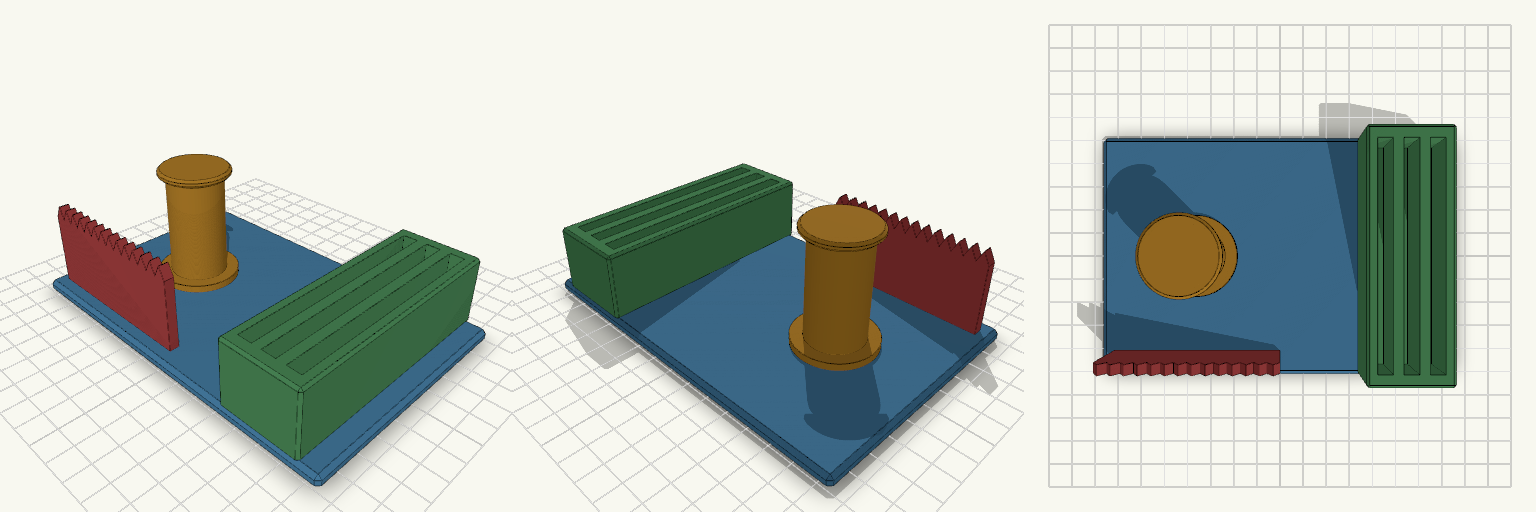
Tape Spindle and Zip Tie Bench Caddy
Bench caddy that keeps a tape roll and a bundle of zip ties in one fixed spot on the bench. A 24 mm spindle holds a roll with a 25 mm core. A serrated tear bar runs along the front edge so tape can be pulled across the teeth and torn. A block on the right has three slots for zip ties up to 90 mm long. Specs Base: 150 × 100 × 5 mm plate with 1.5 mm chamfered edges Spindle: 24 mm diameter, about 46 mm tall, with a 34 mm foot and a 30 mm top flange. Sized for a 25 mm core with 1 mm clearance. Tear bar: 70 mm long, 4 mm thick wall with 14 serrated teeth. It sits along the front (-Y) edge, beside the spindle. Tie trough: 34 × 100 mm block, 28 mm tall, with three 6 mm wide slots, each 90 mm long, in a row across X. Overall height: about 54 mm, measured at the top of the spindle flange. Material: PLA or PETG. Print flat on the base with no supports. Notes Fit has not been tested against a physical roll. If the roll is tight on the spindle, reduce the spindle diameter slightly. Slot width suits standard narrow zip ties. Wider ties need wider slots.
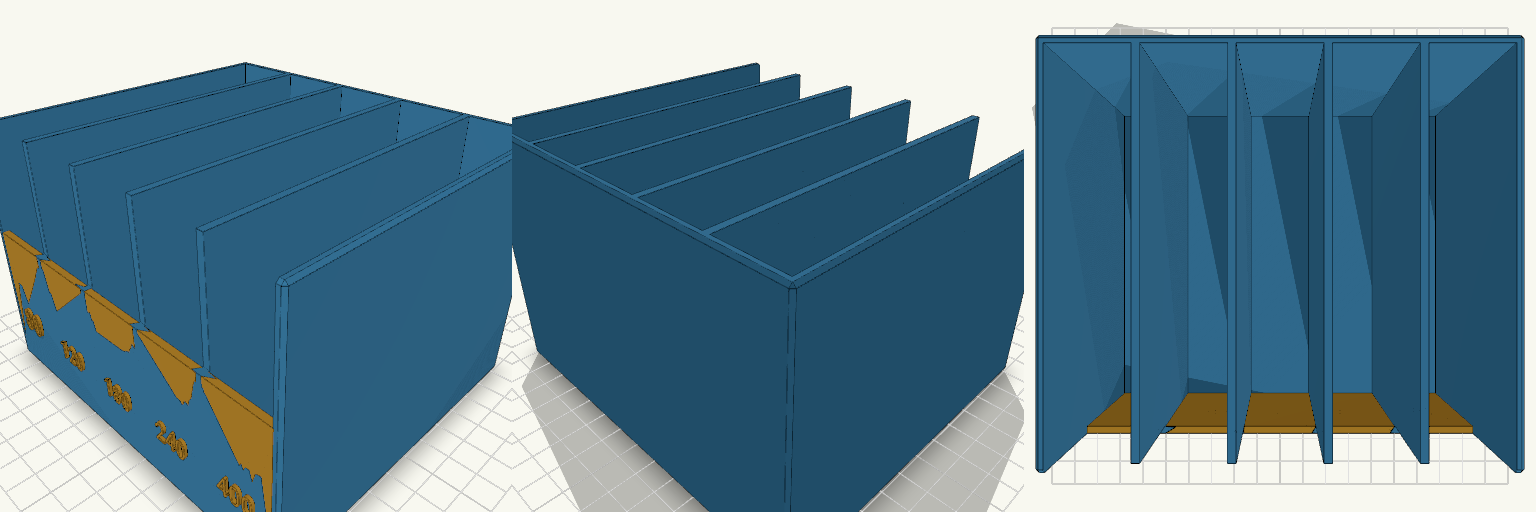
GritHouse — Five-Slot Sandpaper Rack
GritHouse is a bench-top sorting rack that gives every grit of sandpaper its own slot, so a 400 never gets pulled out when a 40 was the target. Five upright slots hold quarter-sheets, and each slot has a front tab with its grit number embossed in raised, easy-to-read digits: 80, 120, 180, 240 and 400, left to right. A tall back wall keeps sheets standing, while the lower front tabs leave room to grip a sheet and pull it out. Features Five slots, each 25 mm wide and 120 mm deep, sized for quarter-sheets Embossed grit labels on the front tabs: 80, 120, 180, 240, 400 Back wall 95 mm tall, front tabs 55 mm tall for easy grabbing Finger scoops cut into the front of each slot Chamfered outer edges for a cleaner print Two colour regions: the rack body and the front tabs with numbers Dimensions Overall: about 139 × 126 × 95 mm (W × D × H) Slot interior: 25 × 120 mm Divider and outer wall thickness: 2.4 mm Floor thickness: 3 mm Print notes Prints upright on its base with no supports needed for the main body. Raised numbers face forward; a 0.2 mm layer height keeps the digits crisp. Use a contrasting filament for the tabs to make the grit numbers stand out.
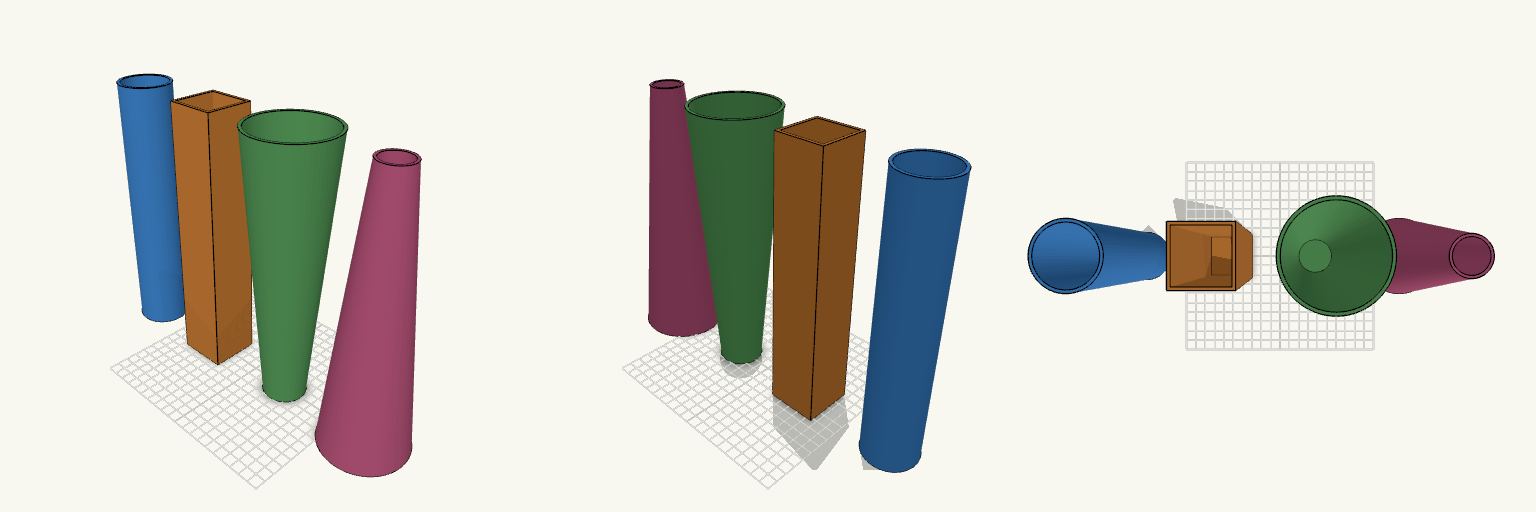
Fire høje åbne beholdere til væsketryk
Fire åbne beholdere i forskellige former, 250 mm høje, til et fysikforsøg hvor trykket i væskesøjlen måles i forskellige dybder. Formålet er at vise, at trykket afhænger af dybden og ikke af beholderens form. Hver beholder printes stående uden support, og trykmålerens slange sænkes ned fra toppen. Mål Cylinder: Ø50 mm Firkantet prisme: 46 × 46 mm Kegle med bred top: Ø40 mm i bunden, Ø80 mm i toppen Kegle med smal top: Ø80 mm i bunden, Ø15 mm i toppen Højde 250 mm, væg 2,4 mm, bund 3 mm Remix-muligheder Højde (250 mm): Bambu Lab P1S og P2S har 256 mm i Z, så 250 er næsten loftet. Sænk den for mindre vandvægt og mere stabilitet. Væg (2,4 mm): Øg til ca. 3 mm for flere perimetre i PETG, hvis væggene skal være ekstra tætte. Topdiameter på keglerne: Ændr forholdet mellem top og bund for stejlere eller fladere sider. Hold hældningen under ca. 45° for print uden support. Variant: Tilføj en målestuds i siden til slange eller føler, eller en bredere fod til de smalle beholdere, så de står stabilt. Passer sammen med: en trykmåler med slange, en målestok langs siden og farvet vand for aflæsning.
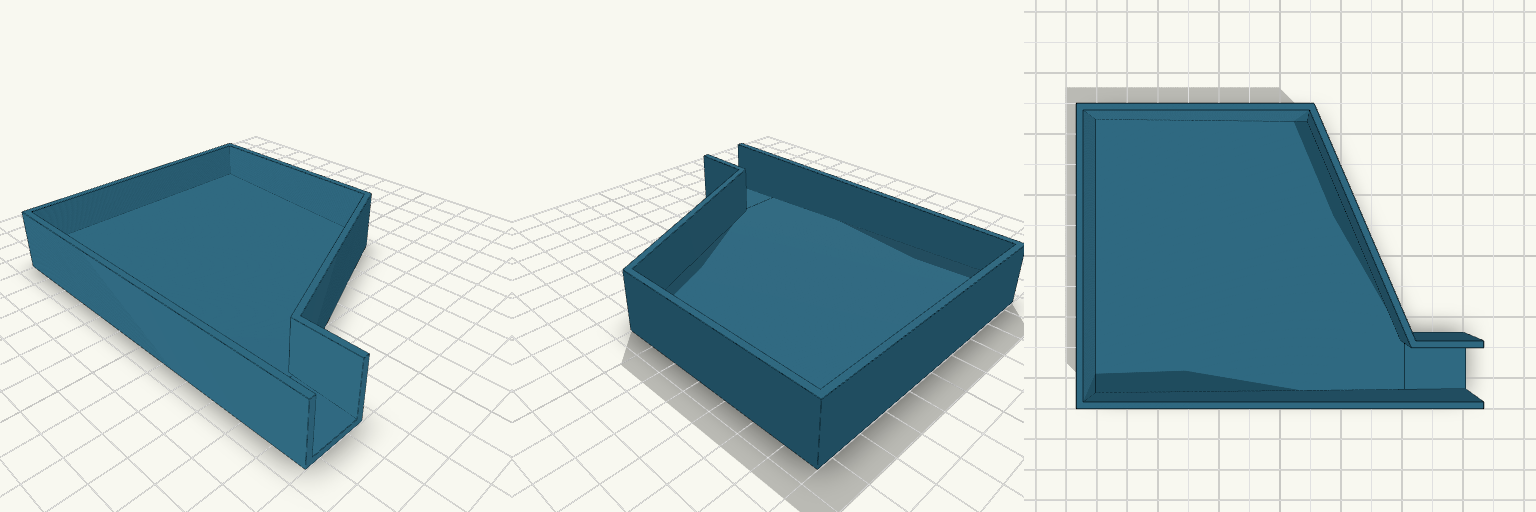
Funnelpour — Screw Sorting Tray
Funnelpour is a shallow sorting tray built for one job: tip a handful of loose screws in, pick out what you need, then pour the rest back into the jar without scattering them across the bench. The floor slopes toward a single open spout in one corner, and the walls taper inward to funnel everything into a 20 mm pour opening. Features Sloped floor: about 8 mm thick at the far end, falling to 2 mm at the spout, so screws roll toward the pour edge. Funnelled walls: the back-right wall angles inward from the main body down to the spout. Open spout: a 20 mm wide opening with no lip, sized to feed a jar mouth. Wall height: 20 mm walls with 2 mm wall thickness keep screws contained while sorting. Dimensions Overall footprint: 120 × 90 mm Height: 20 mm Spout width: 20 mm Print notes Prints flat on the base with no supports needed. The slope runs along the length rather than diagonally, so a slight tilt of the tray helps clear the far back corner when pouring.
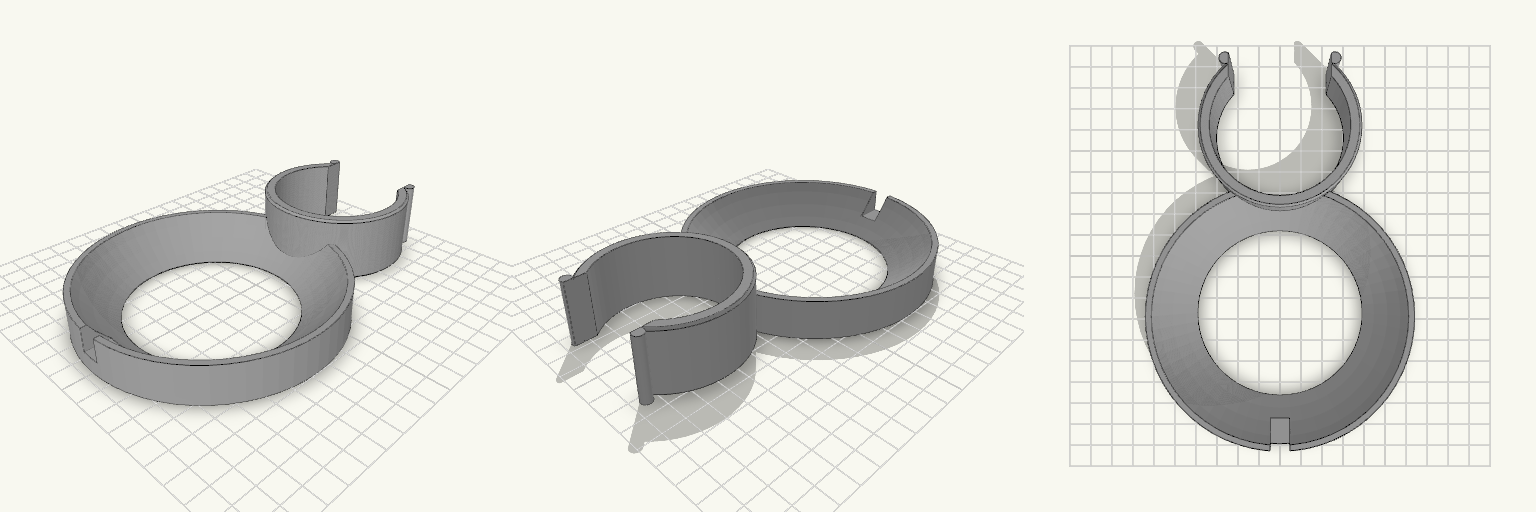
Drill Press Column Tray with Key Slot
A C-shaped clip that snaps around a 60 mm drill press column, with a 120 mm round dished tray attached at the front. The tray holds drill bits, chuck keys and small parts within reach while you work. The clip opening is narrower than the column, so it snaps on and grips by spring tension. Lead-in lips on both sides of the opening guide it onto the column. A slot on the front rim of the tray holds the chuck key, so it stays off the floor. Clip: fits a 60 mm column, 30 mm tall, 5 mm wall Tray: 120 mm diameter, 18 mm tall, with a 3 mm floor and a dished cavity Key slot: on the front rim, 9 mm wide, sized for a chuck key shaft Print the clip upright with the tray on the plate. PETG or ABS gives the clip better flex and durability than PLA.
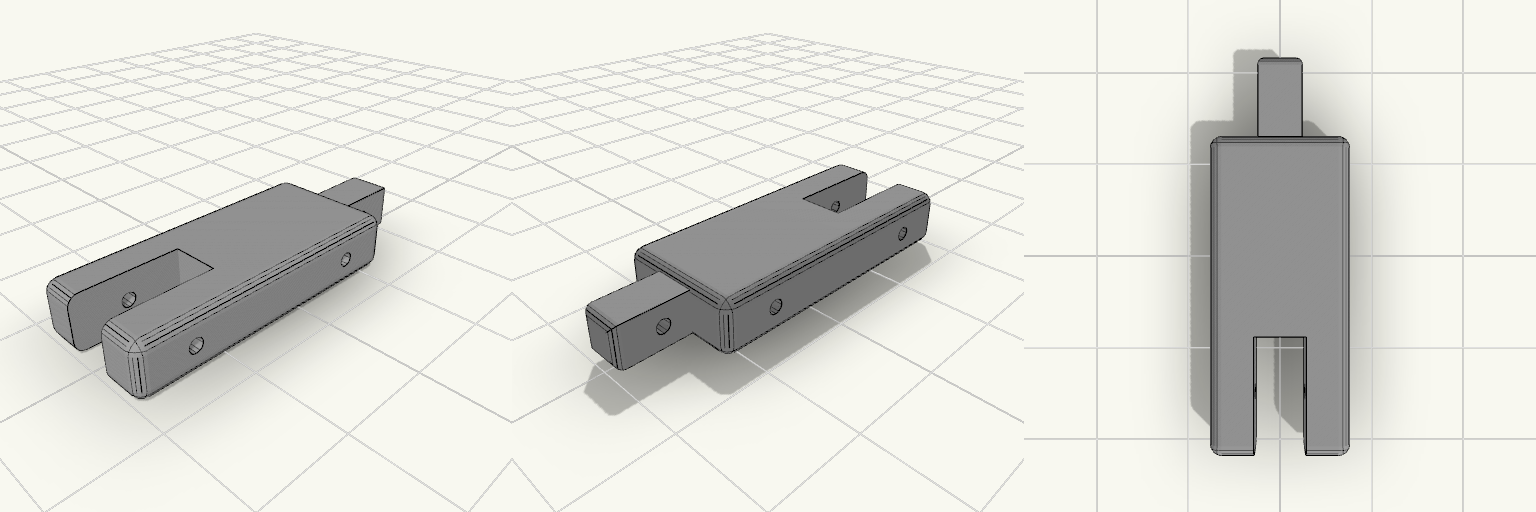
Bracelet Link Fit Gauge Block
A bracelet repair print that turns out too tight or too loose wastes hours. This fit gauge block is a 15-minute test piece that checks the fork slot and pin bores before the real part gets printed. Key numbers Block: 14 x 32 x 6 mm, origin at center, 1.2 mm edge fillets Fork slot: 5.2 mm wide, 12 mm deep, open at the -Y end, flat end wall at Y = -4 Prongs: 4.4 mm wide each Bores: Ø1.6 along X at Y = -10 (through both prongs) and Y = +10 (solid section) Tongue sample: 4.4 x 4.6 mm, 8 mm long on the +Y end, 0.9 mm end fillets, Ø1.6 bore at Y = +19 (40 mm overall) Printing Flat on the bed, PLA or PETG, 0.4 mm nozzle, 0.2 mm layers 4+ walls, 100% infill, 3 mm brim, no supports, 40 mm/s or slower Ream both bores once by hand with a 1.5 mm drill bit Checks A bracelet tongue link should enter the slot with slight friction. An original pin should slide through the -Y bore.