Four-Bay Workshop Study Table
Created today
Description
A utilitarian steel-and-ply desk in the spirit of a workshop bench: a 54 × 36 × 30 in frame of 1-inch square pipe, split into four side-by-side bays along its length, topped with 12 mm plywood. The lower frame forms a U (back and both sides) so a chair slides straight in from the front.
Layout
- Dividers across the width: 8 mm round bar at 1/4 length, 1-inch square pipe at centre, 8 mm round bar at 3/4 length.
- Small flat tabs on the round bars give the plywood something to screw into.
- Legs 750 mm, lower rails 150 mm above the floor.
- Pipe wall thickness (1.6 mm) is an assumption and needs checking on the actual pipe.
Photos
Technical views
More like this
Explore more in Home & Fixtures →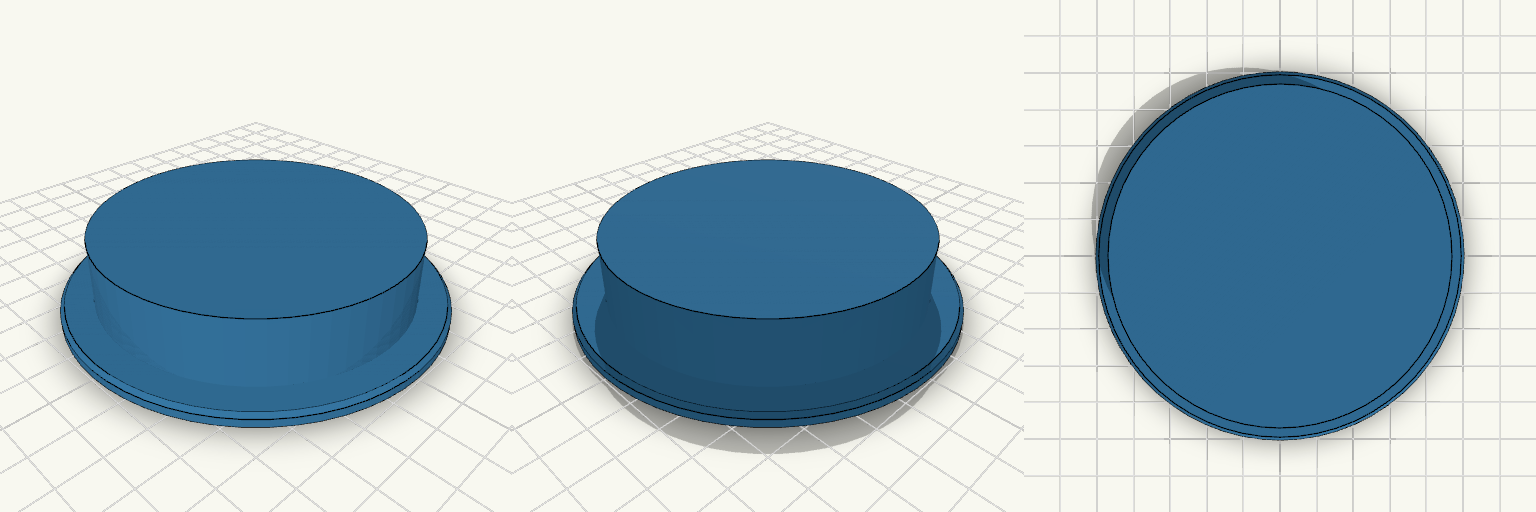
83mm Desk Grommet with Sealed Hollow Body
A one-piece desk grommet for an 83 mm hole. The barrel drops through the desk and the flange rests flat on the surface, closing off the hole at both ends with 3 mm caps. The interior is a sealed hollow rather than solid material, so the part uses little filament for its size. There is no cable passage through this version — the centre is closed, so it works as a clean hole cover rather than a cable outlet. Desk hole: 83 mm Barrel: 82.6 mm outside diameter, 20 mm tall Flange: 99 mm diameter Wall and cap thickness: 3 mm Interior: sealed hollow cavity Fit: desk tops up to about 17 mm thick Print: one piece, no supports; the enclosed cavity will bridge internally near the top of the void Overall footprint on the plate: 99 × 99 × 20 mm
Veranda End Railing Bay
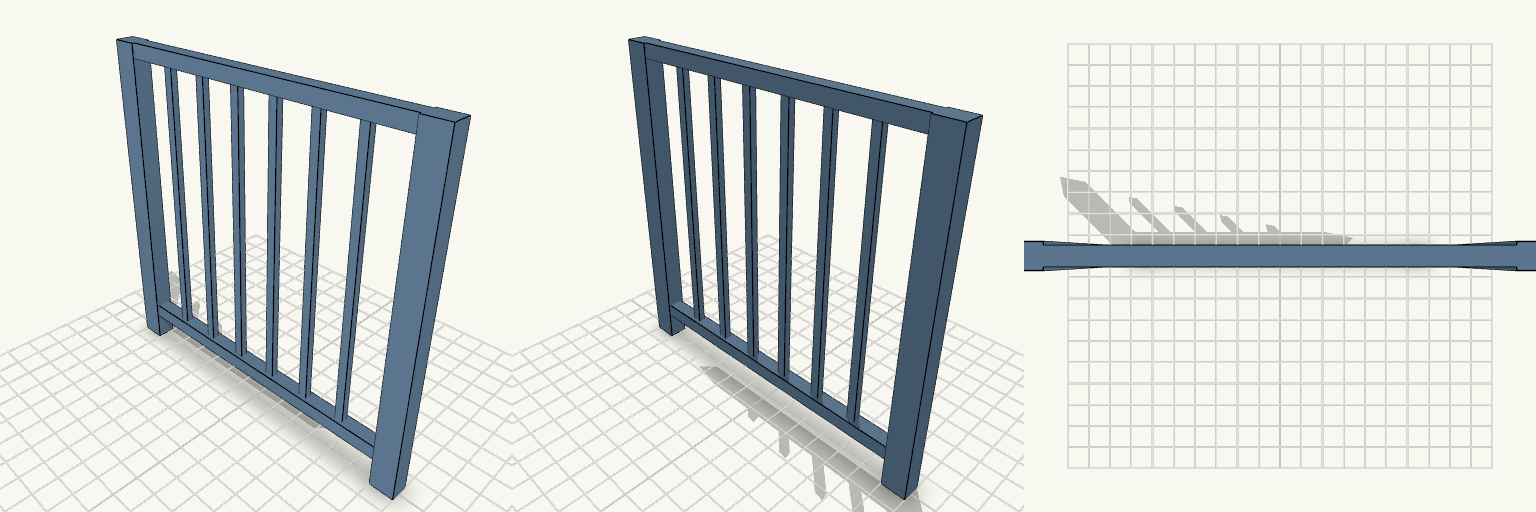
A single-span railing bay for the short end of the veranda, with a post at each corner, a top rail, a lower rail and vertical pickets spaced about 110 mm apart at full scale. One continuous bay with no centre post Pickets run only between the lower and top rails Posts sit flat at deck height for gluing onto the deck Same scale and position as the other veranda files, about 140 mm wide at print size
30° Ceiling Vent Air Deflector
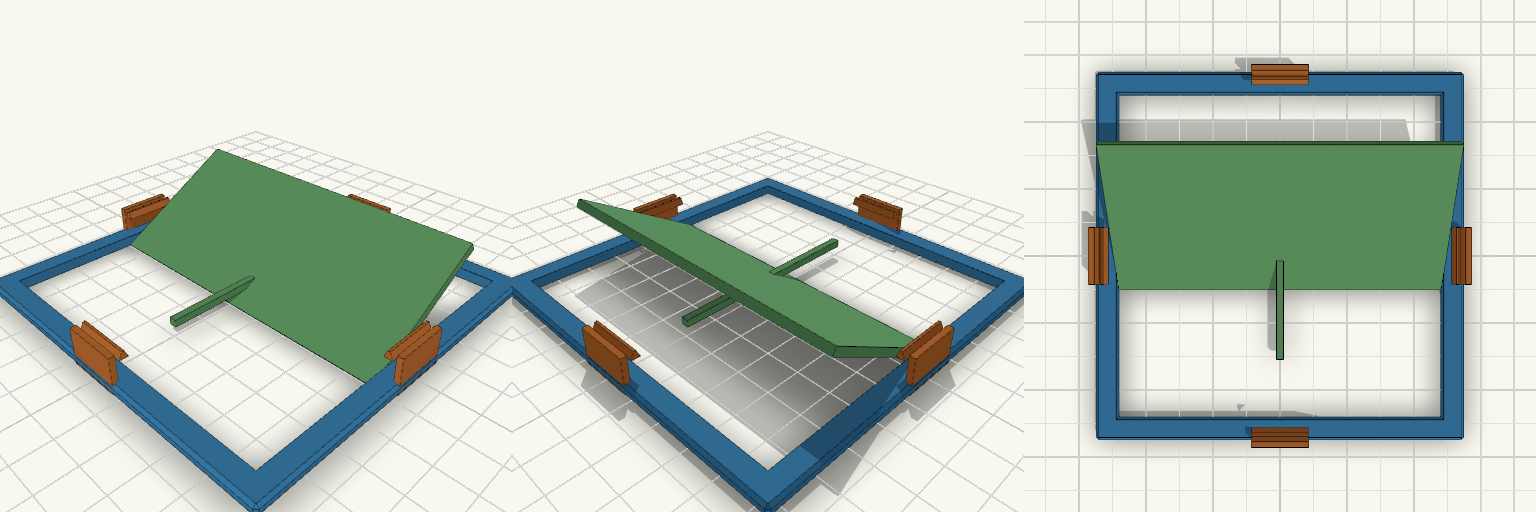
A clip-on deflector for a 10 x 10 cm ceiling vent. A blade tilted 30° redirects cold air sideways across the room instead of straight down onto a desk. Four spring tabs grip the vent edges and flex over a 5 mm thick lip. What it's for Redirects airflow from a square ceiling vent away from a desk or seat. Mounts without screws or adhesive: the four tabs snap over the vent lip. The blade spans the opening at a fixed 30° angle. Dimensions Frame: 108 x 108 mm outer, 96 x 96 mm opening, 3 mm thick. Spring tabs: four, one per side, 16 mm wide, with a 5.4 mm gap under the hook for a 5 mm lip. Tabs reach about 10.4 mm above the frame base. Blade: 96 mm wide, 2.4 mm thick, tilted 30°. Overall height is about 22.6 mm. Assumes a 100 x 100 mm vent opening with the frame sitting around it. Print notes PETG is the better choice, since the tabs flex and PLA is more likely to snap. Print the frame flat, with its base on the bed. Check the lip thickness on your vent. Adjust the tab gap if it is not 5 mm. Remix ideas Change the blade angle for a steeper or shallower sweep. Make the tabs wider or thicker for a firmer grip. Resize the frame for a different vent size. Add a second blade to split the airflow in two directions.
10 mm Bore Screw-Together Coupler
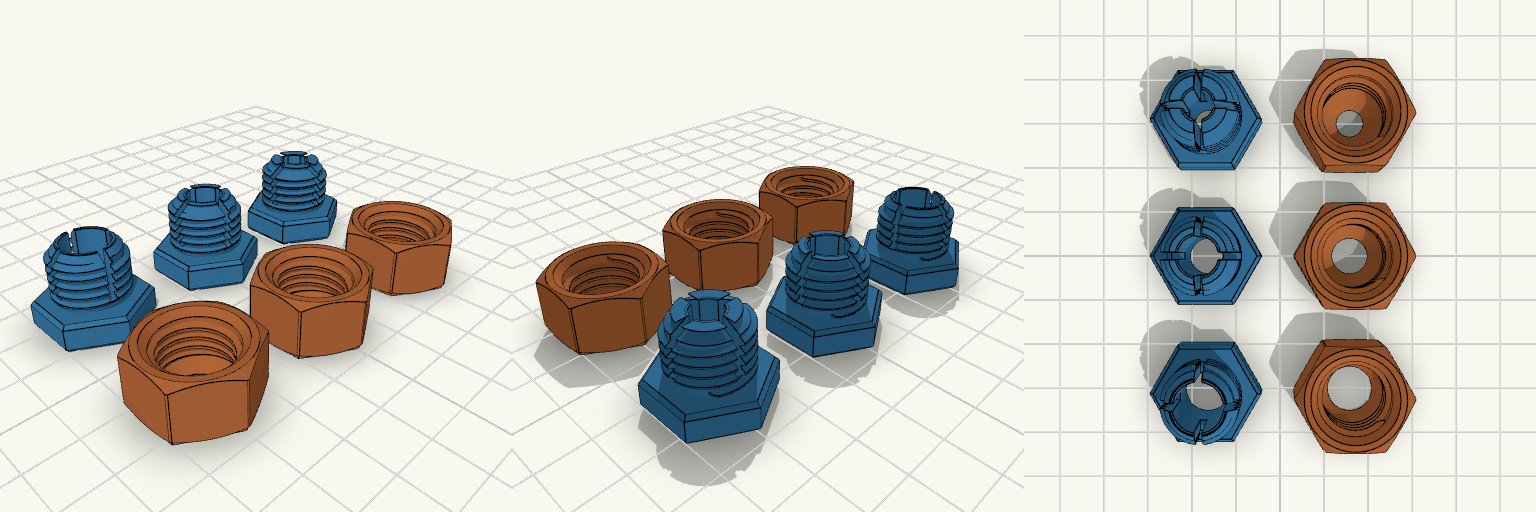
Złączka skręcana z zaciskiem, w trzech rozmiarach: na rurkę lub pręt 10 mm, 8 mm i 6 mm. Każdy zestaw to dwie drukowane części — część z gwintem zewnętrznym ma cztery szczeliny tworzące sprężyste palce, a nakrętka ma w dnie stożek. Dokręcanie nakrętki nasuwa stożek na skosy palców i zmniejsza otwór, więc złączka zaciska materiał zamiast tylko go przepuszczać. Korpus, sześciokąt i gwint 16×2 mm są takie same we wszystkich trzech rozmiarach. Zmienia się tylko otwór oraz stożek zacisku w nakrętce. Dopasowanie Host: zwykła okrągła rurka lub pręt o nominale 10, 8 albo 6 mm. Otwór w spoczynku: 10,5 mm / 8,5 mm / 6,5 mm. Gwint: 16 mm średnicy zewnętrznej, skok 2 mm; pasuje tylko do nakrętki z tego zestawu. Korpusy: sześciokątne, do klucza. Montaż: dwie drukowane części na rozmiar, skręcane razem. Zamienność: korpus i gwint są wspólne, ale stożek w nakrętce jest dobrany do rozmiaru — do prawidłowego zacisku używaj pary z tego samego zestawu. Sprawdź przed drukiem Zmierz rzeczywistą średnicę zewnętrzną rurki lub pręta. Materiał większy niż nominalny albo żebrowany nie wejdzie do otworu; materiał mniejszy może nie zostać zaciśnięty. Dokładna wartość zmniejszenia otworu podczas dokręcania nie jest sprawdzona w druku, więc przetestuj zacisk na złomowym materiale. Przy 6 mm palce zaciskowe są grubsze, więc zacisk jest sztywniejszy i może wymagać mocniejszego dokręcenia. Nie pasuje Gwint M10 ani pręt gwintowany; to otwór na gładki materiał, nie połączenie gwintowe. Standardowe gwinty rurowe metryczne lub BSP; gwint 16×2 mm jest specyficzny dla tej pary. Złączki do węża. Zastosowania ciśnieniowe; drukowany gwint nie tworzy uszczelnienia. Mieszanie rozmiarów: zestaw 10 mm nie jest do rurki 8 mm ani 6 mm, a zestawy 8 mm i 6 mm nie przyjmą rurki 10 mm.
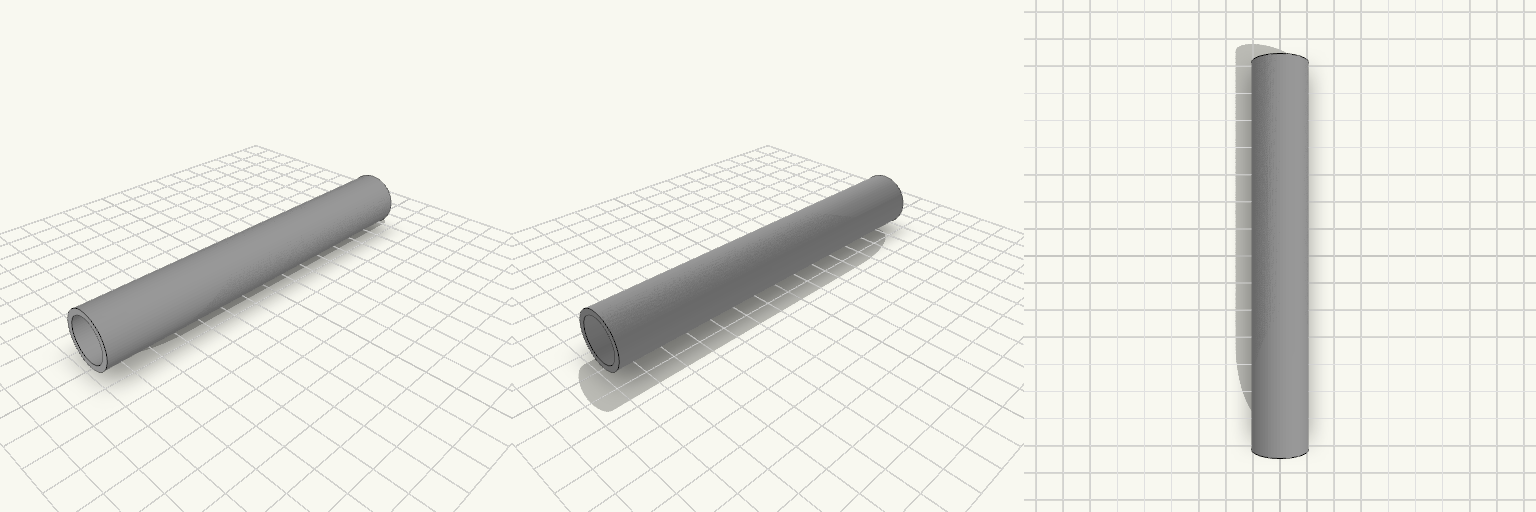
20 mm Round Hollow Pipe, 136 mm Long
A round hollow pipe with a 20 mm outer diameter, a 16 mm bore and an even 2 mm wall, 136 mm long and open at both ends. It serves as a sleeve, spacer or bushing stock, or as a straight run in small frames, racks, handles and standoffs. At 136 mm it prints as one piece on a common print bed, with the length running along the plate. Specs Outside diameter: 20 mm Bore: 16 mm, centered Wall thickness: 2 mm, even all round Overall length: 136 mm Both ends open, full length through Rests on the build plate with the length along the plate Printing notes 136 mm length fits standard beds without splitting into segments. Vertical orientation needs no support inside the bore; horizontal orientation holds truer round but needs support in the bore. The bore is centered, so the wall is even all round where concentricity matters.
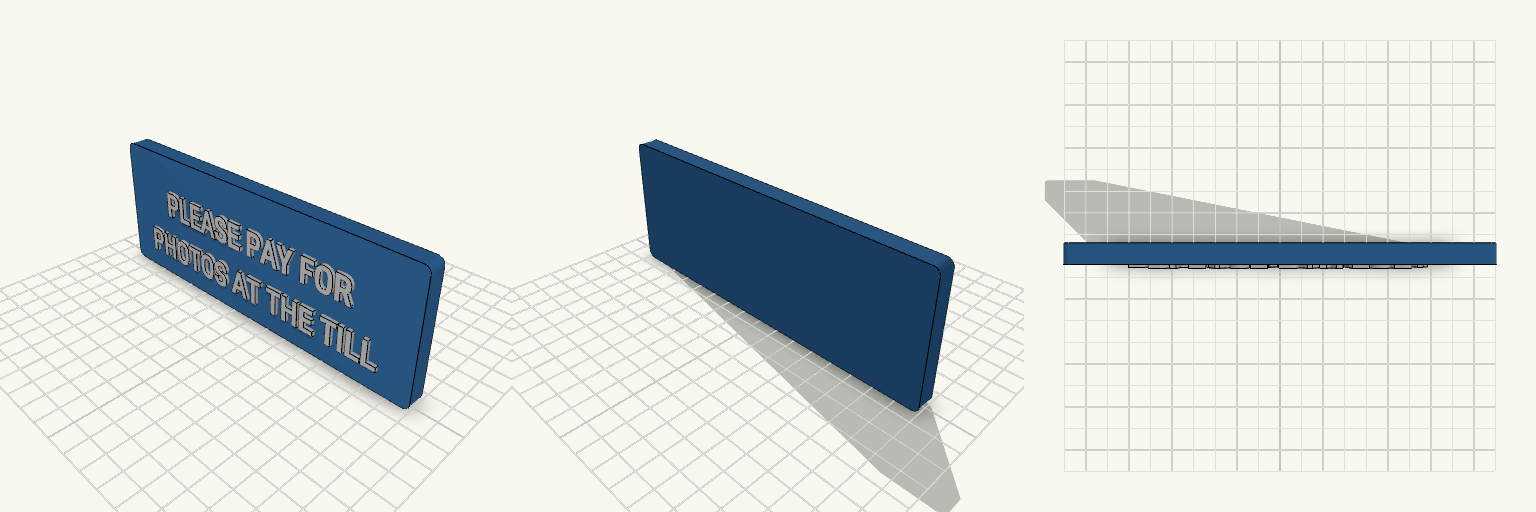
Pay For Photos At Till Sign
A "Please pay for photos at the till" sign for counters and shop windows, where customers walk off with prints without paying. Raised white lettering on a flat blue plate reads clearly from a distance. Print details Plate: 160 × 60 × 8 mm, rounded edges Lettering: two lines, raised 1.2 mm from the front face Print flat on its back; switch filament for the letters, or paint them No supports needed Attach with double-sided tape or foam pads