10 mm Bore Screw-Together Coupler
Created 13 days ago
Description
Złączka skręcana z zaciskiem, w trzech rozmiarach: na rurkę lub pręt 10 mm, 8 mm i 6 mm. Każdy zestaw to dwie drukowane części — część z gwintem zewnętrznym ma cztery szczeliny tworzące sprężyste palce, a nakrętka ma w dnie stożek. Dokręcanie nakrętki nasuwa stożek na skosy palców i zmniejsza otwór, więc złączka zaciska materiał zamiast tylko go przepuszczać. Korpus, sześciokąt i gwint 16×2 mm są takie same we wszystkich trzech rozmiarach. Zmienia się tylko otwór oraz stożek zacisku w nakrętce.
Dopasowanie
- Host: zwykła okrągła rurka lub pręt o nominale 10, 8 albo 6 mm.
- Otwór w spoczynku: 10,5 mm / 8,5 mm / 6,5 mm.
- Gwint: 16 mm średnicy zewnętrznej, skok 2 mm; pasuje tylko do nakrętki z tego zestawu.
- Korpusy: sześciokątne, do klucza.
- Montaż: dwie drukowane części na rozmiar, skręcane razem.
- Zamienność: korpus i gwint są wspólne, ale stożek w nakrętce jest dobrany do rozmiaru — do prawidłowego zacisku używaj pary z tego samego zestawu.
Sprawdź przed drukiem
Zmierz rzeczywistą średnicę zewnętrzną rurki lub pręta. Materiał większy niż nominalny albo żebrowany nie wejdzie do otworu; materiał mniejszy może nie zostać zaciśnięty. Dokładna wartość zmniejszenia otworu podczas dokręcania nie jest sprawdzona w druku, więc przetestuj zacisk na złomowym materiale. Przy 6 mm palce zaciskowe są grubsze, więc zacisk jest sztywniejszy i może wymagać mocniejszego dokręcenia.
Nie pasuje
- Gwint M10 ani pręt gwintowany; to otwór na gładki materiał, nie połączenie gwintowe.
- Standardowe gwinty rurowe metryczne lub BSP; gwint 16×2 mm jest specyficzny dla tej pary.
- Złączki do węża.
- Zastosowania ciśnieniowe; drukowany gwint nie tworzy uszczelnienia.
- Mieszanie rozmiarów: zestaw 10 mm nie jest do rurki 8 mm ani 6 mm, a zestawy 8 mm i 6 mm nie przyjmą rurki 10 mm.
Images
More like this
Explore more in Home & Fixtures →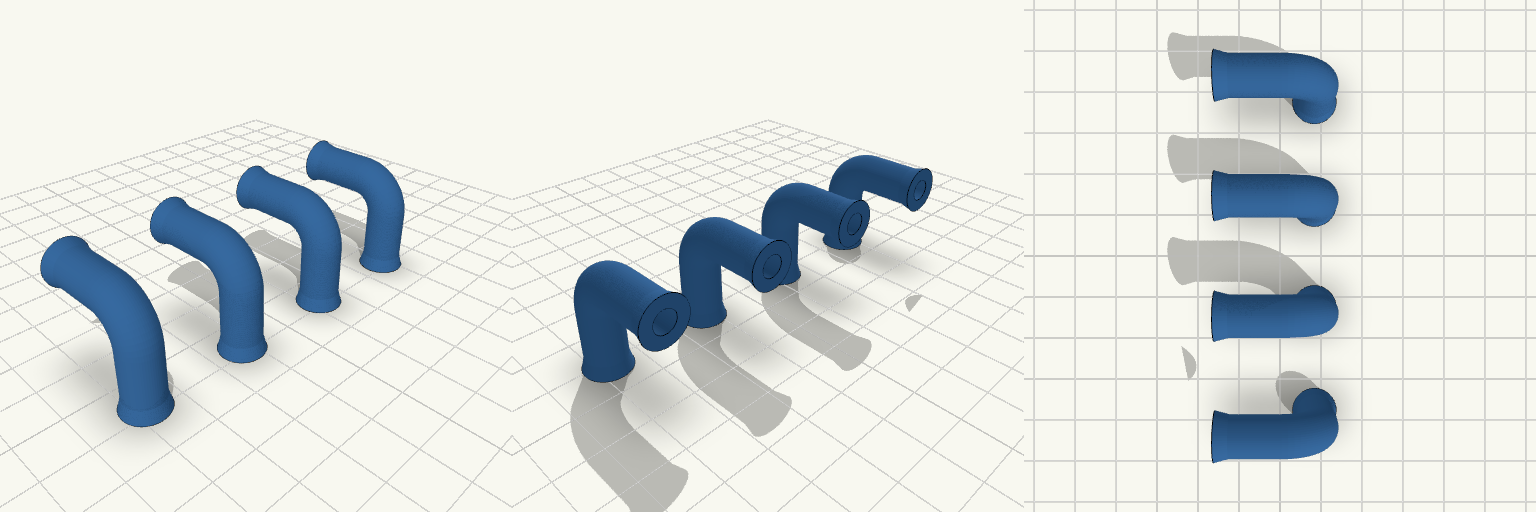
90 Degree Water Elbow, 5 mm Bore
A set of four identical 90 degree elbow fittings for water lines, each with a 5 mm inside diameter and a 2 mm wall. Each elbow has a smooth curved bend and two straight 14 mm legs. A small ridge at each leg end helps hold a tube in place. Inside diameter: 5 mm Outside diameter: 9 mm (2 mm wall) Leg length: 14 mm each Bend radius: 8 mm at the centreline Quantity: 4 identical elbows, spaced 25 mm apart
100 mm OD Flange, 45 mm Bore
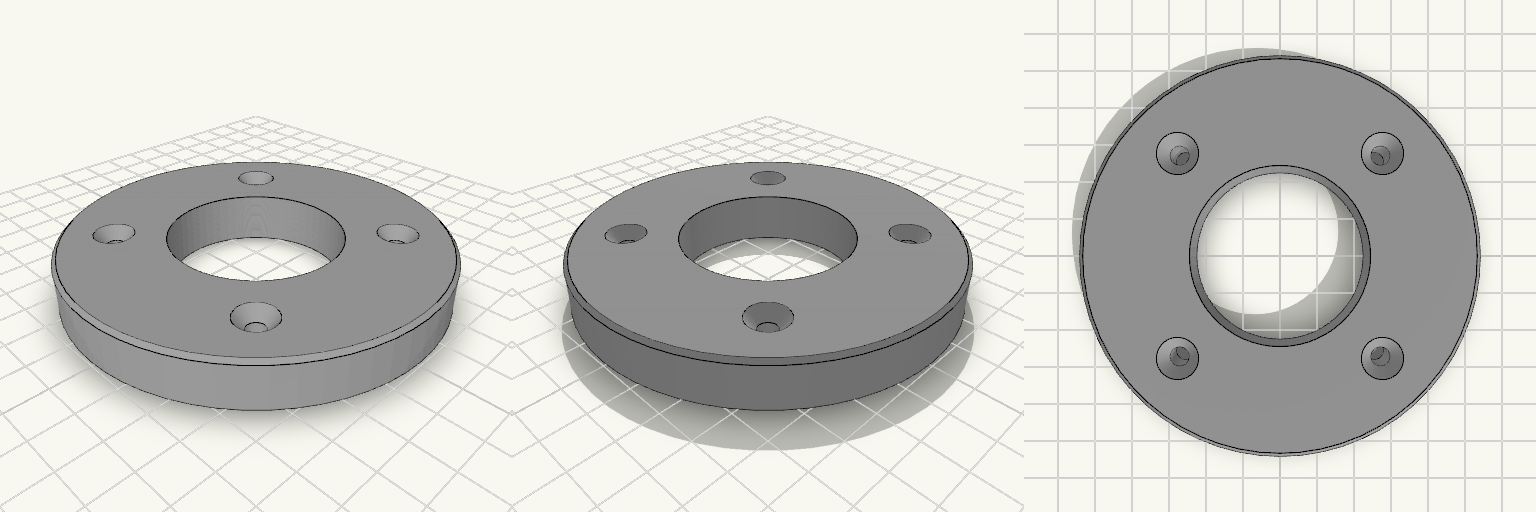
A flat round flange, 100 mm outside diameter and 13 mm thick, with a 45 mm bore straight through the middle. Four 5 mm holes sit on a 72 mm bolt circle at 45°, 135°, 225° and 315°, countersunk from the top face and 10.5 mm across at the rim. The outer edges carry a 1 mm chamfer, so there is no sharp rim to catch on. What it fits Bore: 45 mm nominal — measure the shaft, tube or spigot it goes over with calipers first. A printed 45 mm bore comes out undersized on most machines, so plan on reaming or drilling to size. Bolt pattern: four holes on a 72 mm bolt circle, at the diagonal positions rather than at 12/3/6/9 o'clock. Confirm the orientation of the mating part before drilling anything. Fasteners: 5 mm clearance with a countersink 10.5 mm across, sized around M5 flat-head screws so the heads sit at or just below the top face. Longer screws will not sit flush, and the 13 mm body sets how much thread you have to play with. Face: the 100 mm diameter leaves roughly 27.5 mm of material between the bore edge and the outer edge. What it does not have No hub and no raised face — it is a plain flat disc, so it will not self-centre on a register. No thread, no taper and no keyway in the bore. No O-ring groove or gasket recess; sealing has to come from the mating faces or a separate gasket. No second bolt pattern — if the part you are mating to has six or eight holes, or a circle other than 72 mm, this will not bolt on. Before you print Measure the bolt circle and the hole positions on the part you are mating to, centre-to-centre, and check that the four-hole diagonal layout matches. Also check that 13 mm of thickness clears whatever sits behind the flange, since the countersinks eat into the top face and leave less material under the heads than a plain 13 mm plate would suggest. Prints flat on the bottom face with no supports; the chamfer and the bore both come out clean laid down that way, and the countersinks form on the top surface without bridging.
T-Post Cap With 3-Inch Round Platform
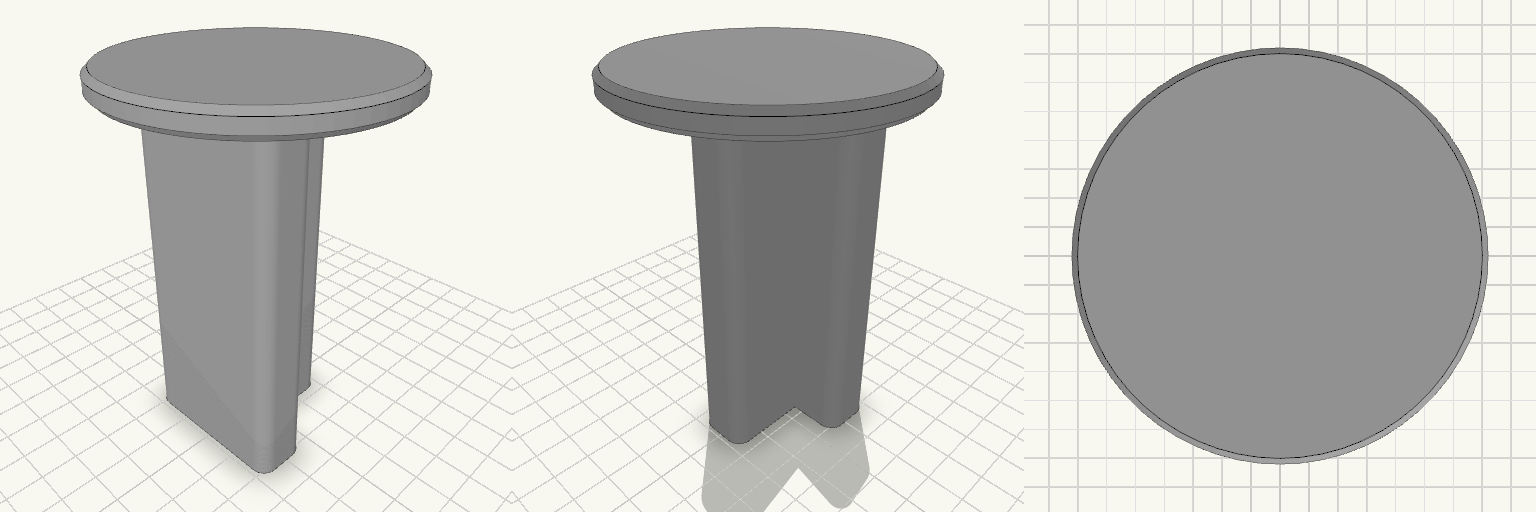
A slip-on cap for a steel T-post: 4 in tall, with a T-shaped socket that drops over the post and a 3 in round platform, 1/4 in thick, on top. Fits Steel T-posts, matched to the T-socket below. The socket is a T: a 36 mm crossbar, 7 mm wide at the stem entry, with a 7 × 30 mm stem running down, and a 4 mm wall following that T all the way around. Takes the place of a plain post cap and adds a flat, 3 in round surface on top of the post. Check before printing The socket is the whole fit, and its numbers are a starting size, not a standard — T-posts differ in flange width and web thickness between manufacturers and post weights. Measure the post you intend to use across the crossbar, across the stem, and across the full depth, then set the socket to those sizes plus a little clearance for paint and burrs before you commit filament. Nothing else on the part affects fitment. Does not fit Round posts, wooden 4x4 posts, or any post without a T cross-section. T-posts whose crossbar or stem is wider than the socket above — T-post profiles are not interchangeable, so do not assume a fit from the post name or the post weight alone. The cap prints as a single piece, 76 × 76 × 102 mm overall.
Barbed End Plug for 1-Inch PEX
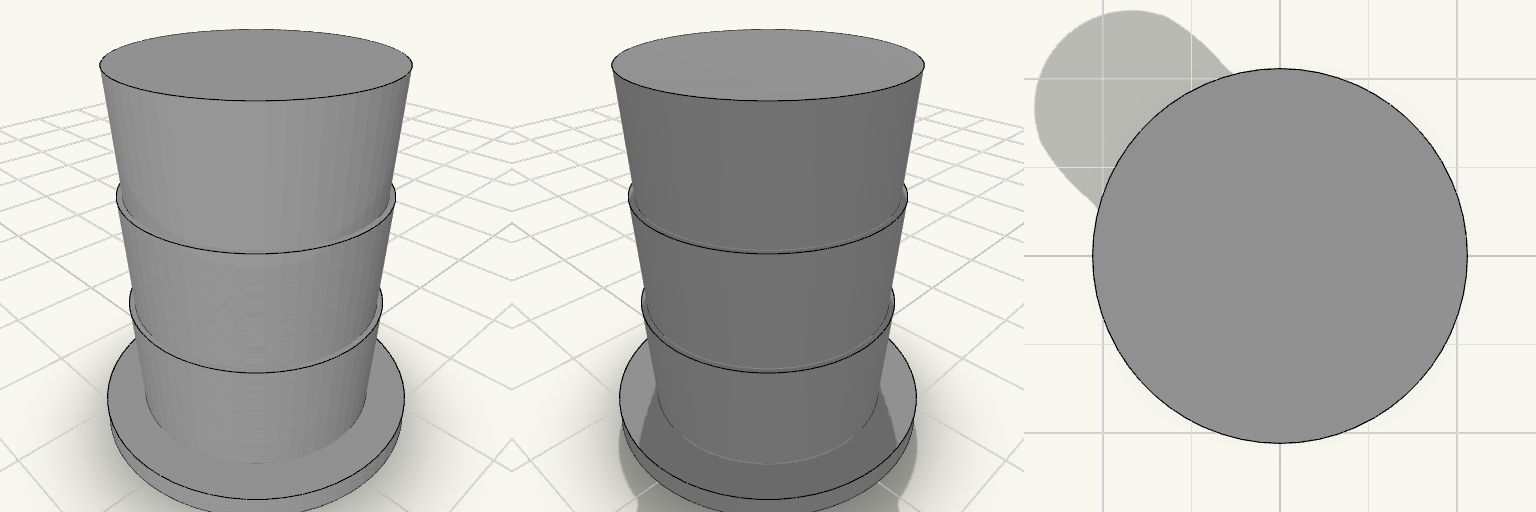
A barbed end plug that dead-ends a 1-inch PEX line. Three tapered barbs rise from a solid 28 mm collar cap, stacked directly on one another so each ring sits flush against the next with no gaps, and they taper from 21 mm to a 22 mm maximum diameter to suit pipe with roughly a 22 mm inner diameter. The collar is a 28 mm cylinder, 3 mm thick, with a 1 mm chamfer on the bottom outer edge, and it is the cap as well as the pipe stop — only about 3 mm of it shows past the barbs, so the stop is shallow. There is no bore: the plug is solid through, about 33 mm tall, sits flat on the plate, and prints as one piece as a 28 × 28 × 33 mm body. Because it seals rather than joins, check the barb fit against your actual pipe before committing to a full run. Remix hooks Barb profile: three tapered barbs stacked flush as one sawtooth suit roughly 22 mm inner diameter pipe. Change the count or soften the taper for harder or softer tubing, but keep the spacing equal to the barb height so the gaps between rings do not come back. Collar: 28 mm across and 3 mm thick, it is only just wider than the barbs. Widen or thicken it for a firmer insertion stop; the bottom outer edge carries a 1 mm chamfer, which can be enlarged or removed to change entry feel. Height: 33 mm overall is a compact cap; stretch the straight run above the barbs if you need more insertion room or a deeper seat. Barb diameter: 21–22 mm is the number to change first for other pipe sizes. The collar and barb spacing can stay put while only the taper moves. Ends: the solid cap is the safe baseline. Extending the same barbed profile out the other side turns it back into a straight coupling, and an elbow or tee is a body swap rather than a barb redesign. Fit check: barb dimensions are nominal, so test against your actual pipe before printing a full run. Pairs with: 1-inch PEX runs that need a temporary or permanent dead end, pressure testing, and capping a line before fixtures go on.
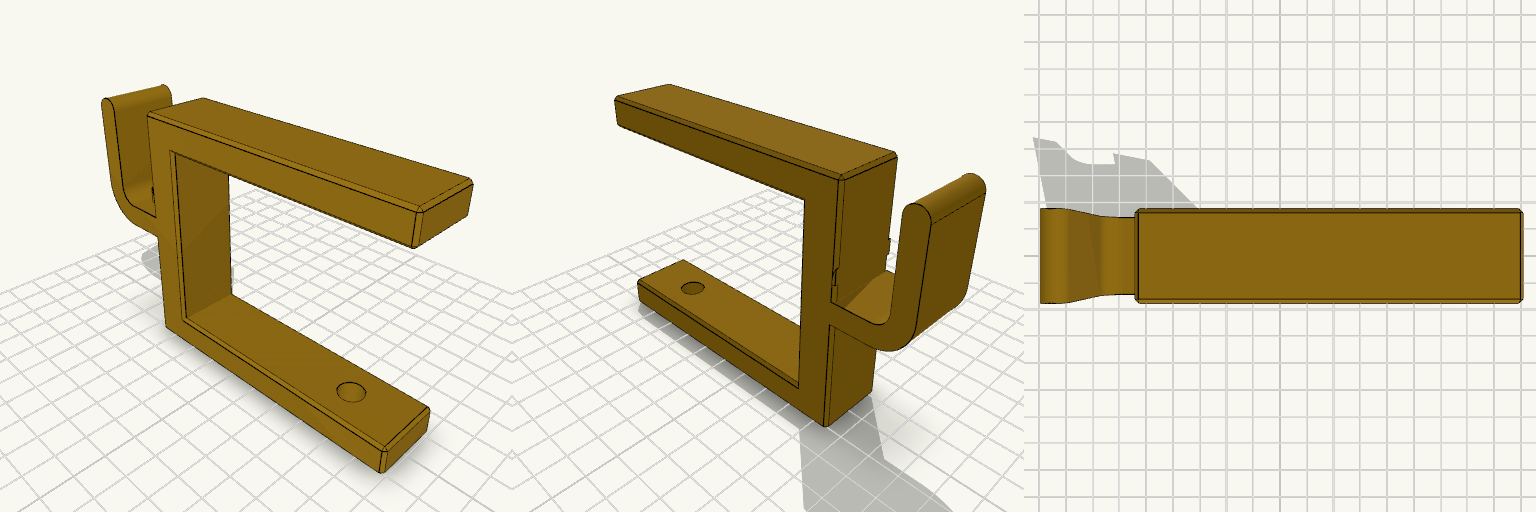
Mantel Clamp with Single Stocking Hook high no thread lenght lower
A clamp-on mantel bracket for hanging a stocking, garland or wreath without drilling. The gold C-shaped frame slips over the mantel edge, and a single rounded J-hook on the back carries the decoration. A standard M8 bolt passes through the lower arm and tightens up against the underside of the shelf to lock the clamp (hardware you supply — bolt and nut). The lower arm reaches back far enough to clear a decorative moulded edge, and the frame measures about 119 × 23 × 80 mm on the print plate. The hook is a compact rounded J — 23 mm wide, projecting about 24 mm, with a 5.5 mm inner cradle — raised so its round tip finishes level with the top of the frame at 80 mm; the cradle floor sits about 38 mm up the spine. The frame prints as one piece; the bolt and nut are separate hardware. Starting dimensions Clamp frame: 119 × 23 × 80 mm on the plate, one piece, no supports needed on the arms Opening between the arms: 60 mm (about 2.4 in) — suits a 2 in gap or a 1.5 in mantel with room to spare Arm reach back from the spine: 95 mm (about 3.75 in), sized to clear a decorative edge Hardware hole: plain 8.5 mm clearance for an M8 bolt, 75 mm back, through the 10 mm lower arm — a nut underneath does the clamping Hook: rounded J, 5.5 mm inner cradle, 23 mm wide, projecting about 24 mm, cradle floor about 38 mm up the spine, 26 mm lip with its tip level with the frame top Remix hooks The hardware hole is the first thing to tune: 8.5 mm suits a plain M8 bolt with a nut under the arm; drop it to about 7 mm and tap it if you want the bolt to bite the plastic, add a hex pocket to trap the nut, or resize for M6 if your mantel is light. The 60 mm opening and the 95 mm arm reach are a pair worth changing together — a shallow mantel with a chunky decorative edge wants more reach and less opening, a thin shelf the reverse. Hook geometry is the free variable: stretch the 24 mm projection for deep garland, widen the 5.5 mm throat for thick loops, tighten it for wire wreath frames, or slide the cradle down the spine if a stocking sits too high for your mantel. Frame depth (23 mm) sets how far the clamp stands off the mantel face — trim it for a slim profile, add to it for heavier loads. Duplicate the frame along the shelf for a full swag of garland, or scale it down for a miniature display mantel. Pairs well with a wreath hanger or a matching hook set in the same finish; print the frame in PETG or ASA if it will hang outdoors over the season, and in gold filament to match the finish shown.
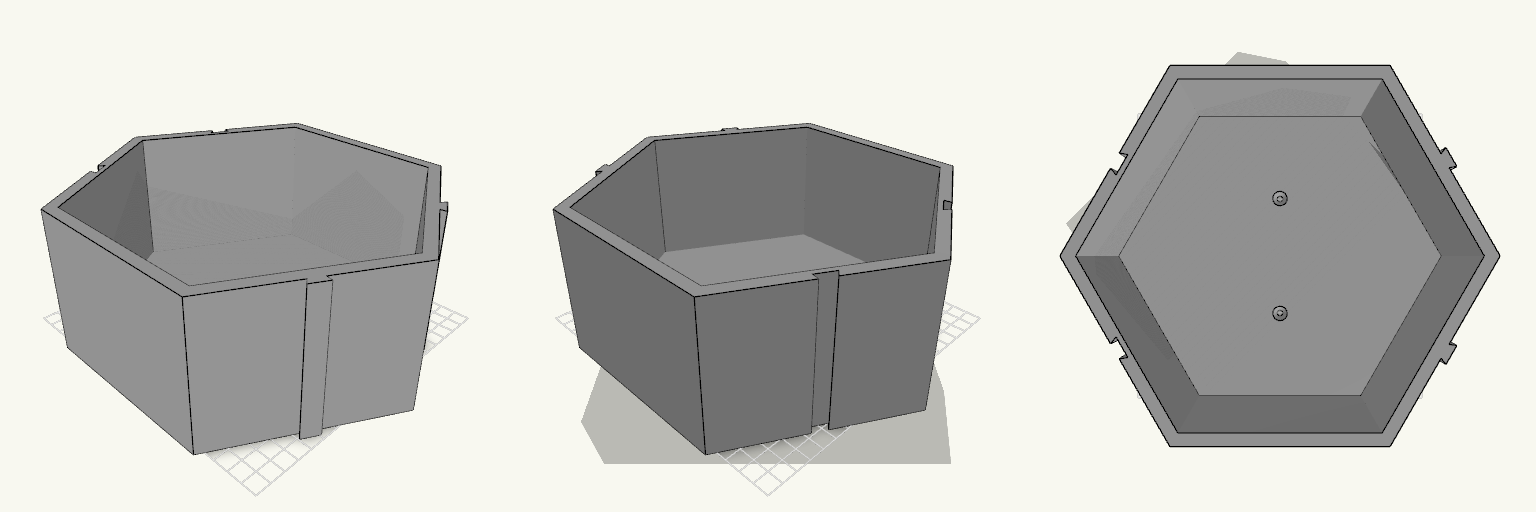
Flat-Printing Interlocking Hexagonal Wall Shelf
A hexagonal wall shelf that locks to matching units through dovetail keys and slots, so several can form a honeycomb. The back plate has two countersunk screw holes for wall mounting, and the front is open and flush. 170 mm flat-to-flat height, 95 mm deep 8 mm walls, 5 mm back plate Dovetail keys and slots with 0.5 mm clearance per side Printed lying on the back plate, fits a Creality K2 bed PETG recommended, with supports for the dovetails Test one pair of faces first to confirm the fit.