Ribbed Milk Bottle Cap with Tube Adapter
Created today
Description
A screw cap for a 2L milk bottle with a 16 mm hole through the lid, a ribbed outer grip for easy tightening, and a separate flanged tube adapter that fits through the hole from the inside.
- Cap: 44 mm body, 18 mm tall, internal thread, 16 mm lid hole
- Grip: 24 rounded vertical ribs around the outside, adding about 1.5 mm to the radius
- Adapter: 30 mm long, 4 mm flange 24 mm across, tube tapering from 15.9 mm to 14 mm
- Bore: 10 mm through the adapter
Check the thread against your bottle neck before printing, as neck sizes vary by brand.
Images
More like this
Explore more in Kitchen & Bathroom →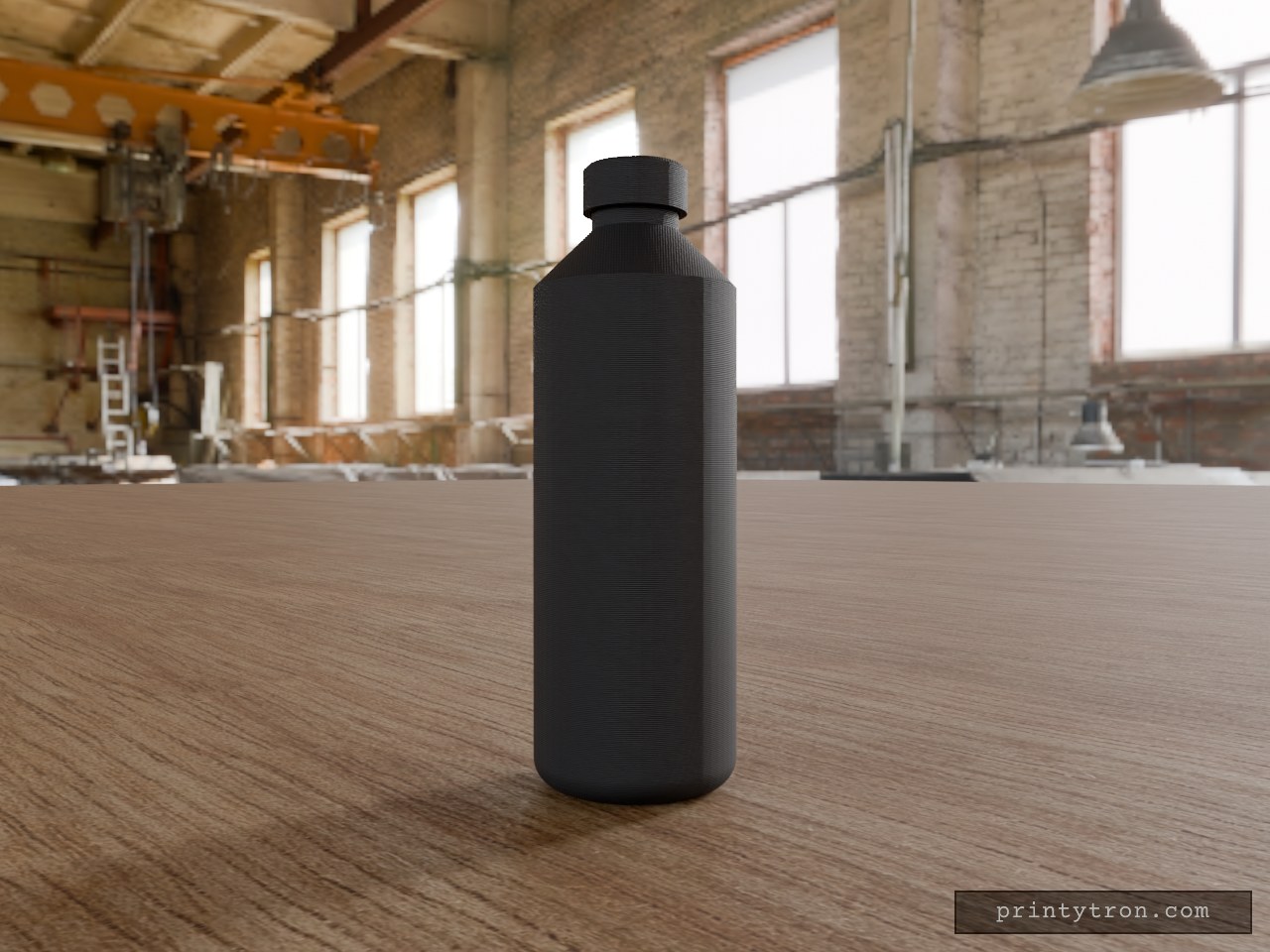
Round Water Bottle With Cap
A round water bottle with a tapered shoulder, a 24 mm mouth and a separate slip-on cap. Printed as a hollow vessel with 3 mm walls. Remix hooks Body diameter and height: 70 mm wide, 170 mm straight section. Change these to resize capacity. Wall thickness: 3 mm. Raise it for watertight prints in PLA, or lower it with vase mode in mind. Neck: 24 mm bore, 30 mm outside. Swap the plain cap for a threaded one using a threaded rod and nut. Pairs with: a silicone gasket, a carry loop through the neck ring, or a sleeve that fits the 70 mm body. The cap is a friction fit and not a sealed closure. Test before filling.
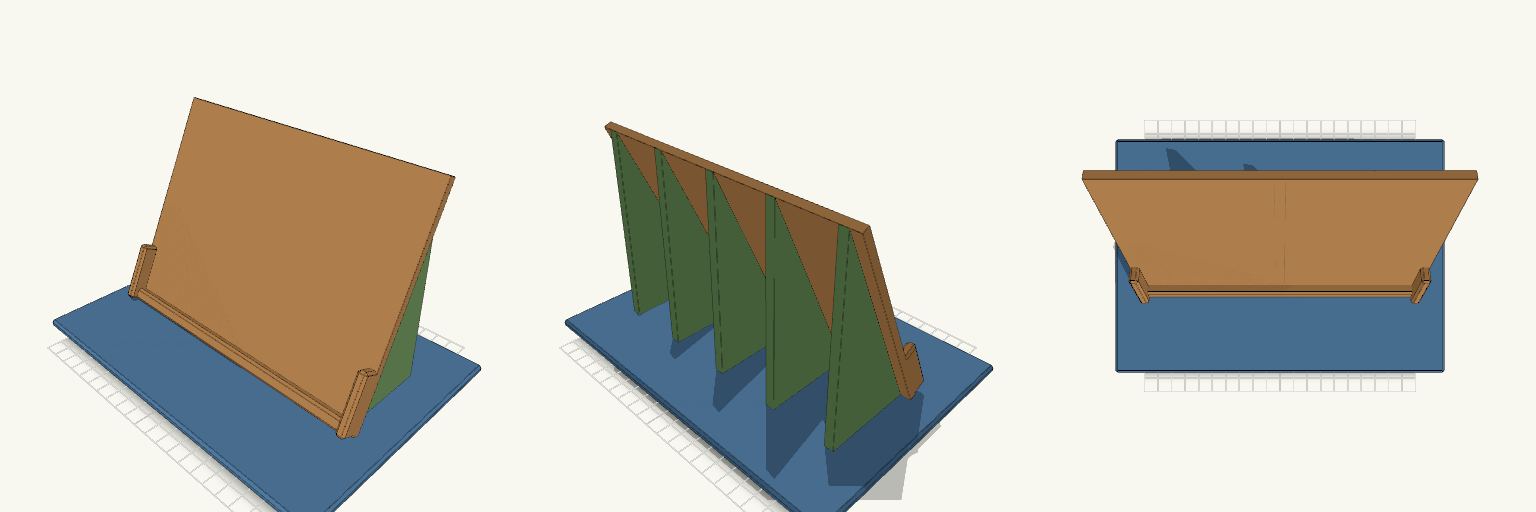
65° Kitchen Counter iPad Stand
A wide, flat iPad stand for kitchen counters. The cradle sits at 65° from horizontal, a steep reading angle for recipes while standing. The underside of the base has a shallow recess that leaves a perimeter rim, so the edge seals against the counter and crumbs and flour are less likely to creep under. What it's for Reading recipes on an iPad at standing height without bending over. Use on a kitchen counter, where the wide base resists tipping. The stopper at the bottom of the cradle holds the iPad's lower edge, and the two side tabs keep it from sliding sideways. Dimensions Base: 240 × 170 × 5 mm, with 1.5 mm chamfered edges. Underside recess: 228 × 158 mm, 1.6 mm deep, leaving a rim around the perimeter. Cradle plate: 200 × 150 × 5 mm, tilted at 65° from horizontal. Bottom stopper: 8 mm deep and 11 mm tall, measured from the plate. Side tabs: 6 mm wide, 40 mm long and 16 mm tall, one on each side. Supports: five ribs, each 6 mm thick, spaced 45 mm apart under the cradle. Overall height: about 143 mm. Print notes Print the base face-down on the bed. The underside recess then faces up and needs no supports. PETG or ASA suits a kitchen better than PLA, which softens in heat. The cradle prints as one piece with the base and ribs, so no assembly is needed. Remix ideas Add a raised lip on top of the base to catch spills. Change the tilt angle for a lower or steeper view. Narrow the cradle and tabs for a smaller tablet. Add a cable slot in the stopper for charging while reading. Stick a thin rubber or silicone pad inside the rim for extra grip.
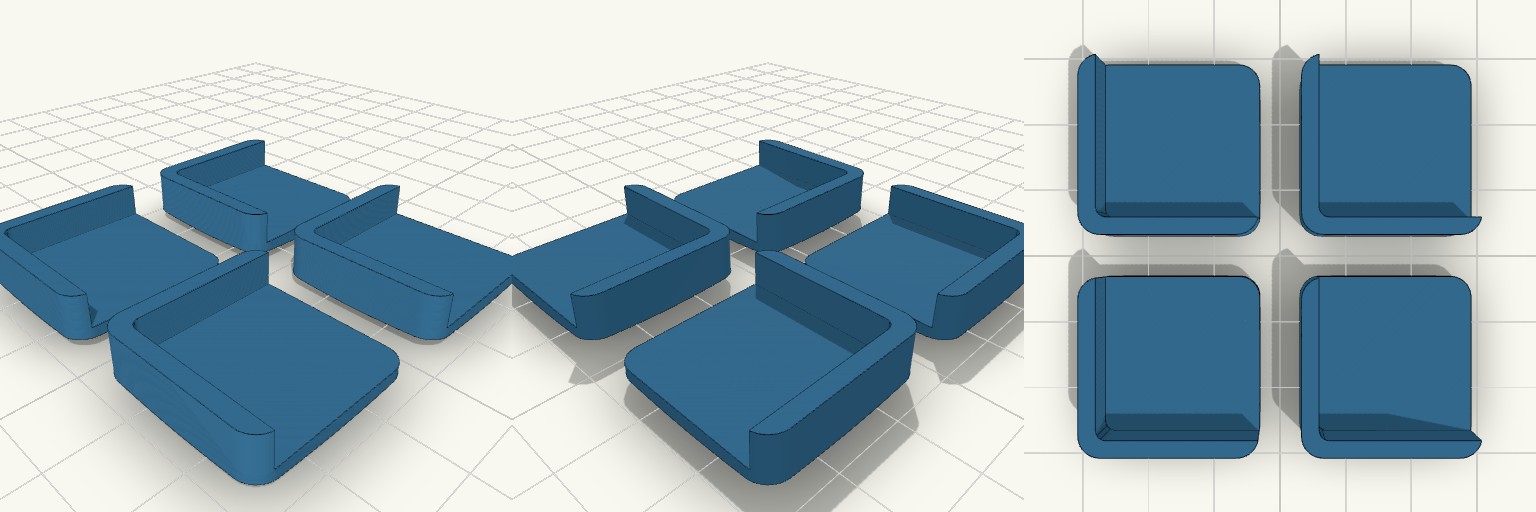
Cutting Board Corner Grip Feet
A set of four corner cups that slip over the corners of a cutting board and grip the counter, so the board stays put under a knife. Each foot is a 25 mm square cup, 8 mm tall, with a corner socket on top and a gently domed, nubbed underside. The socket has 2.4 mm walls on the two outer sides and a 2.5 mm floor, so it is 5.5 mm deep. The two inboard sides are open, so the board corner slides in and the outer walls hold it. The underside rises about 1.2 mm toward the centre and carries 1 mm grip nubs on a 2 mm pitch. Remix hooks Socket depth: the floor is 2.5 mm, which leaves 5.5 mm of grip. Thinner floor or taller cup means a deeper hold. Heavy or thick boards benefit most. Cup footprint: 25 mm is a choice, not a constraint. Go larger for more adhesive area or a wider stance. Wall thickness: 2.4 mm on the outer sides. Raise it for a stiffer clamp, lower it toward 1.6 mm for more flex. Nub size and pitch: 1 mm nubs at 2 mm spacing. Larger, sparser nubs give more bite on rough counters. Finer ones suit smooth laminate. Dome rise: 1.2 mm. Set it to 0 for a flat base with the same texture. Closed-corner variant: add walls on the inboard sides for a full pocket, with a slightly oversize opening for easy loading. Notes for printing and pairing TPU is the sensible material, since PLA nubs will not grip much. A dab of adhesive in the socket helps on heavy boards. Pairs with non-slip shelf liner or rubber pads under the cup as a second grip layer. The 4 feet are laid out in a 2 by 2 grid with 6 mm gaps.
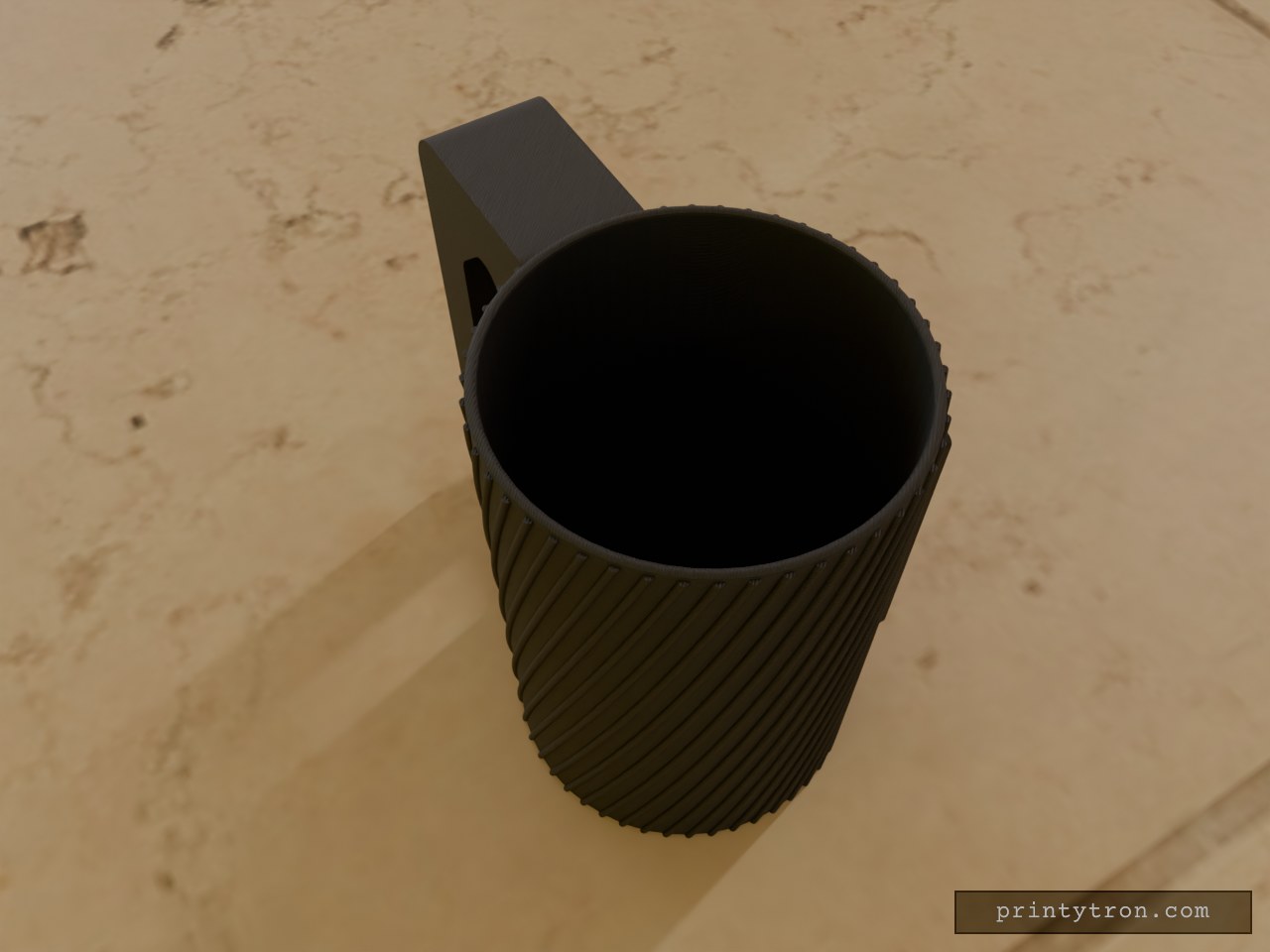
Obsidian — Ribbed Can Cooler with Handle
Obsidian is a matte-black-ready can cooler for standard 330 ml cans, with a reinforced side handle, diagonal grip ribs and a flat front panel reserved for names or logos. The handle opening has a peaked top so it prints upright without supports. Dimensions Inside diameter: 68 mm Inside height: 105 mm (above a 3 mm base) Wall: 2 mm, base: 3 mm Overall height: 108 mm; footprint about 115 × 74 mm including handle and panel Features Diagonal ribs outside, perfectly smooth bore inside Rounded top rim Broad, rounded handle, 24 mm wide Flat front panel, 40 × 66 mm Print notes Print upright, base on the plate, PETG, 0.4 mm nozzle, 0.2 mm layers No supports expected; fits a 180 mm build volume
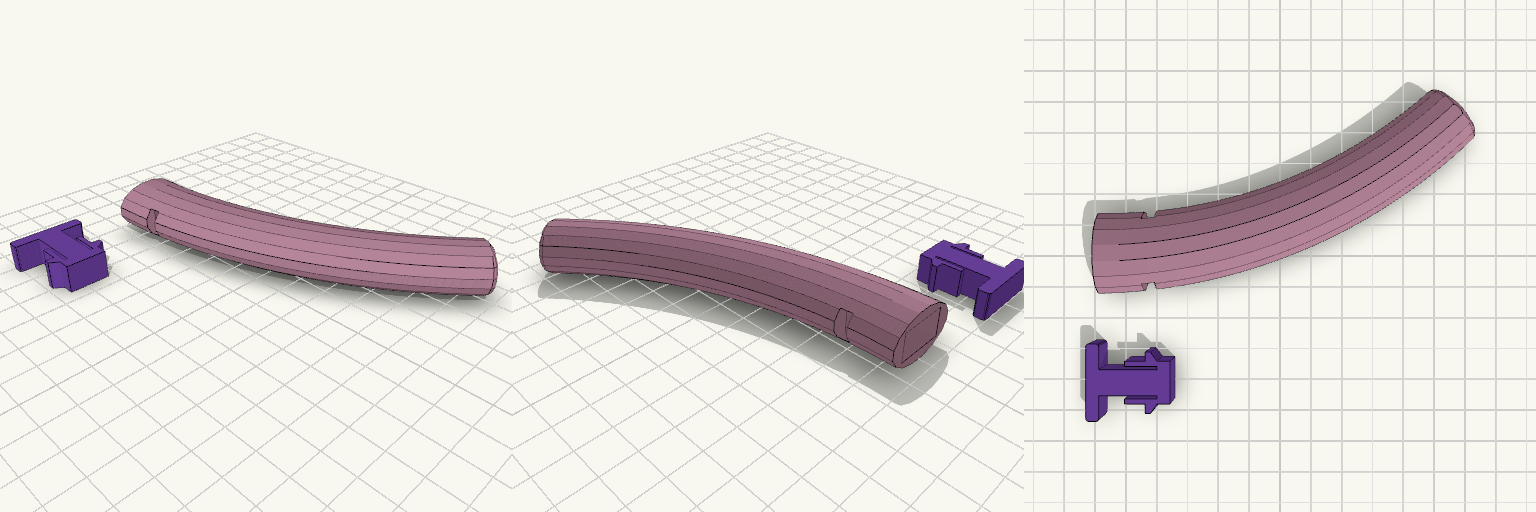
Cucharilla de dos piezas con conector
What it's for Mango curvo tipo banana y conector independiente con dos pestañas flexibles. El conector encaja con un clic en el alojamiento del mango y se retira pellizcando las pestañas a través de las ventanas laterales, sin herramientas. Dimensions Mango: 120 mm de largo, 25 mm de ancho en la base y 20 mm en la punta, 16 mm de grosor. Alojamiento: 16 × 6 mm, 23 mm de profundidad. Conector: núcleo de 22 mm, 5,6 mm de grosor, brazos de 1,6 mm con resalte de clic. Ventanas laterales de 4 mm donde se aloja el resalte. Remix ideas Añadir una cabeza de cuchara en la pestaña tope del conector. Ajustar el grosor de los brazos (1,6 mm) para un clic más suave o más firme. Cambiar el radio de curvatura del mango.
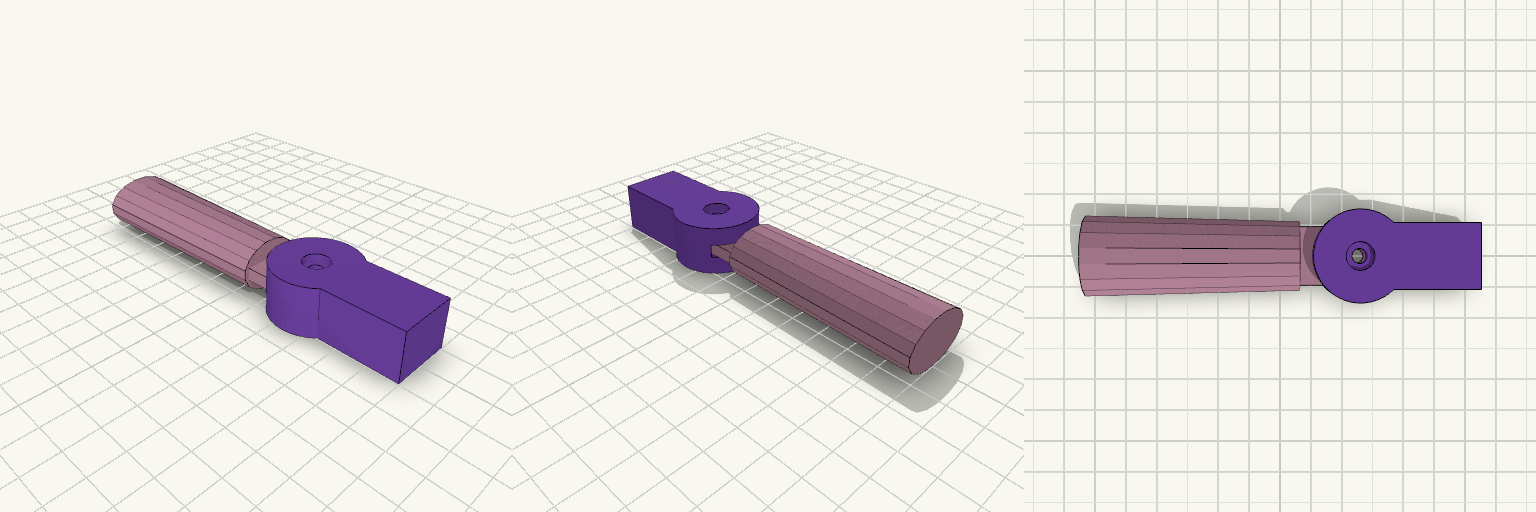
Mango recto con soporte giratorio
Mango recto con soporte giratorio para cuchara, de 12 cm de largo total, 2,8 cm de ancho y 1,6 cm de alto. Se compone de dos piezas independientes unidas por un tornillo M4 vertical y una tuerca hexagonal en la parte inferior. El soporte abraza una lengüeta circular del mango y pivota alrededor del tornillo, de modo que la cuchara se orienta a derecha o izquierda y se fija al apretar. Largo total: 12 cm Mango: unos 9,4 cm, se afina hacia el extremo Lengüeta de 4 mm con disco de 20 mm y orificio de 4,6 mm Soporte con ranura de 4,4 mm y alojamiento para cabeza de tornillo y tuerca M4 Tornillo y tuerca no incluidos