Untitled model
Created 1 months ago
Description
A thick-walled, two-part protective enclosure dimensioned specifically for the SanDisk Cruzer Blade.
The assembly consists of a main retaining shell and a sliding captive lid.
- Fitment: Internal cavity measures 42.3 x 18.4 x 8.0 mm (allowing 0.5 mm clearance around the drive).
- Retention: Dual 0.4 mm internal Z-axis ribs provide friction fit against the drive housing. A solid rear wall prevents push-through.
- Mechanism: The left-side lid operates on dual 1.5 mm Y-axis rail grooves, featuring spherical detents at both ends of travel for locked open and closed states.
- Construction: 2.5 mm exterior walls in all directions. The top face includes a 1 mm recess for labelling and a subtracted diagonal chevron pattern.
Images
More like this
Explore more in Storage & Organization →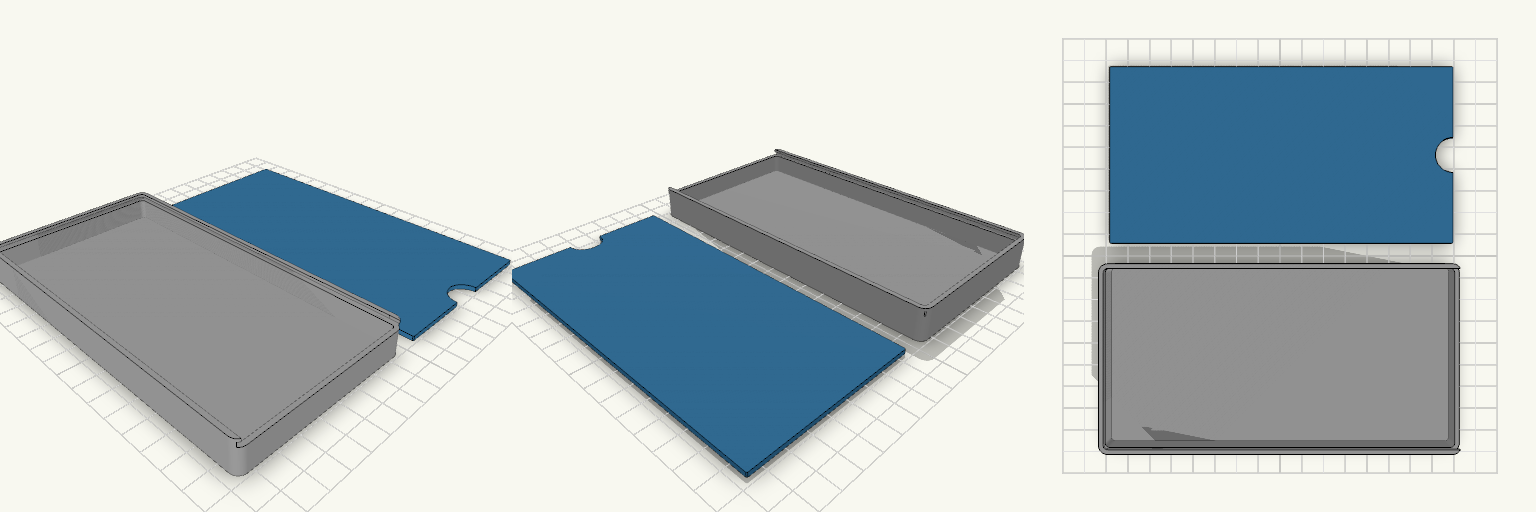
Sliding Lid iPhone 11 Box
A two-piece protective box for an iPhone 11. The base holds the phone; a flat lid slides in from one end along grooves cut into the long walls, with a round thumb slot to push it open. Remix hooks Cavity: 154 × 79 × 13 mm open space (phone is ~151 × 76 × 8.3), 2 mm walls and floor. Change the cavity numbers for other phones. Groove fit: grooves are 1 mm deep and 2.2 mm tall, lid is 2 mm thick, about 0.2 mm clearance each side. Tune for your printer. Thumb slot: 16 mm diameter at the open end; make it larger or swap for a slot. Pairs with: a foam or felt liner, or a detent bump to stop the lid sliding open. Print both pieces flat, no supports needed.
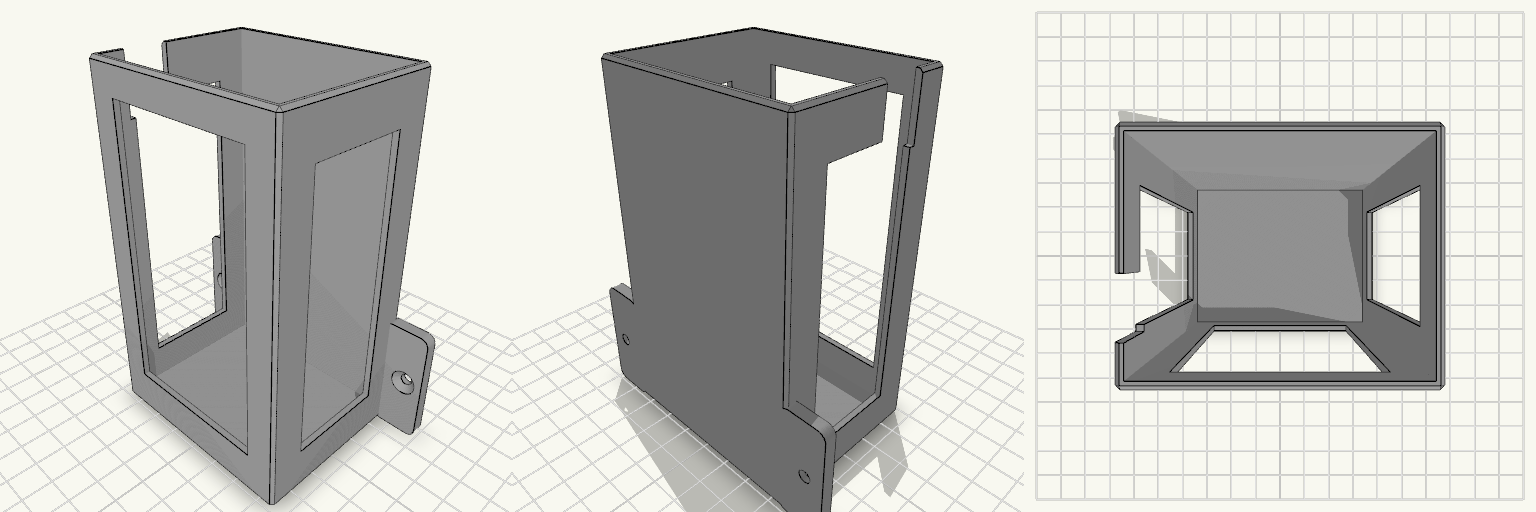
Mister Box Holder with Open Front
A wall-mounted cradle for a 2.25" x 4.75" x 2" mister box, sized with extra width clearance and a little extra depth so the box slots in easily but can't tip forward out of it. The front is open below a solid top rim so the buttons stay reachable, and a low lip along the bottom front edge holds the box in. Two identical ears on the back face carry countersunk screw holes for mounting to the side of furniture. Full 4.75" (120.65 mm) wall height 10 mm width gap, 3 mm depth gap Cord notch in the left rim only, 15 mm wide, centered 1.5" from the inside back wall, open at the top Window cutouts on the sides to save filament Two back ears with countersunk screw holes
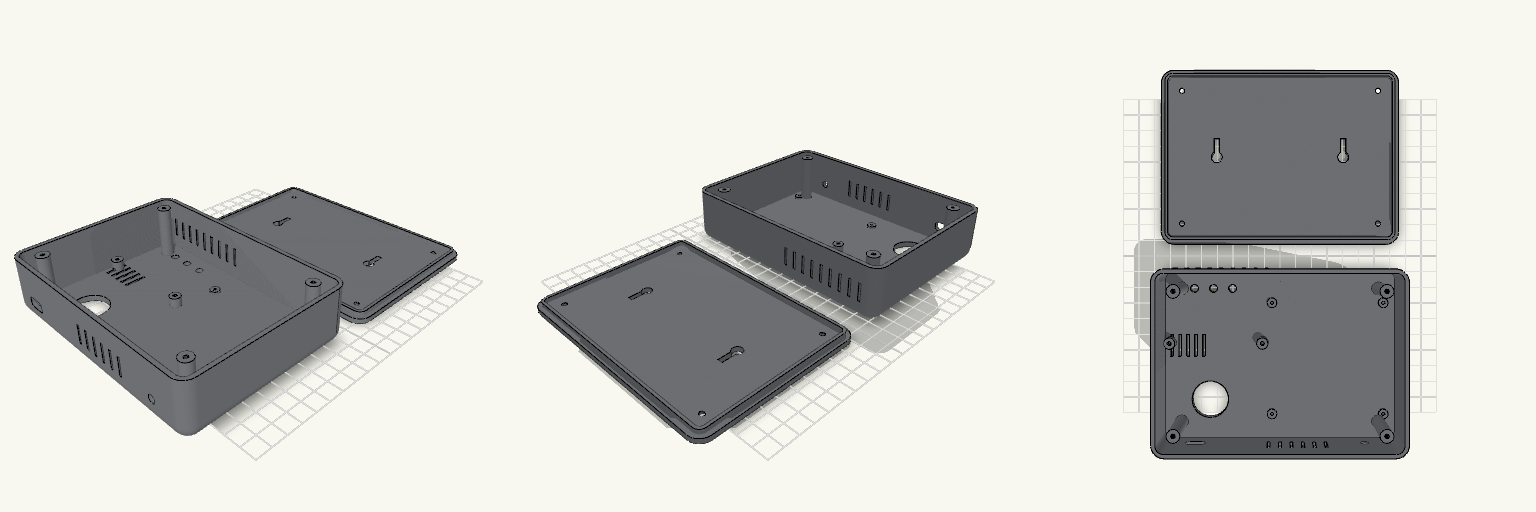
Caregiver Check Station Enclosure, Gray and Red
A caregiver check-in box with no obvious place to tap, and a back panel that fights you at every repair. This enclosure puts a large red TAP HERE panel on the front and a screw-on back cover behind it, so the electronics come out without disturbing the front. Size: 150 × 110 × 36 mm body, with a 3 mm back cover. NFC panel: 64 × 64 × 2 mm red panel, replaceable, behind a 1.5 mm lip. It is held by a separate holder with four M2.5 screws. Back cover: four M3 × 12 screws into body posts, with a 0.3 mm clearance skirt. Two keyhole slots handle wall mounting. Openings: PIR window 23 mm, three 5 mm LED holes (green, yellow, red), BME280 air slots, 12 × 6.5 mm USB-C slot, 5 mm reed-switch cable hole, and top and bottom vent slots. Printing: body and panel face-down, cover outside-down. PLA, no supports, 3 walls, about 15% infill. Not final: every board position is a placeholder. Measure the ESP32, PN532, PIR and BME280 before fixing the internal layout.
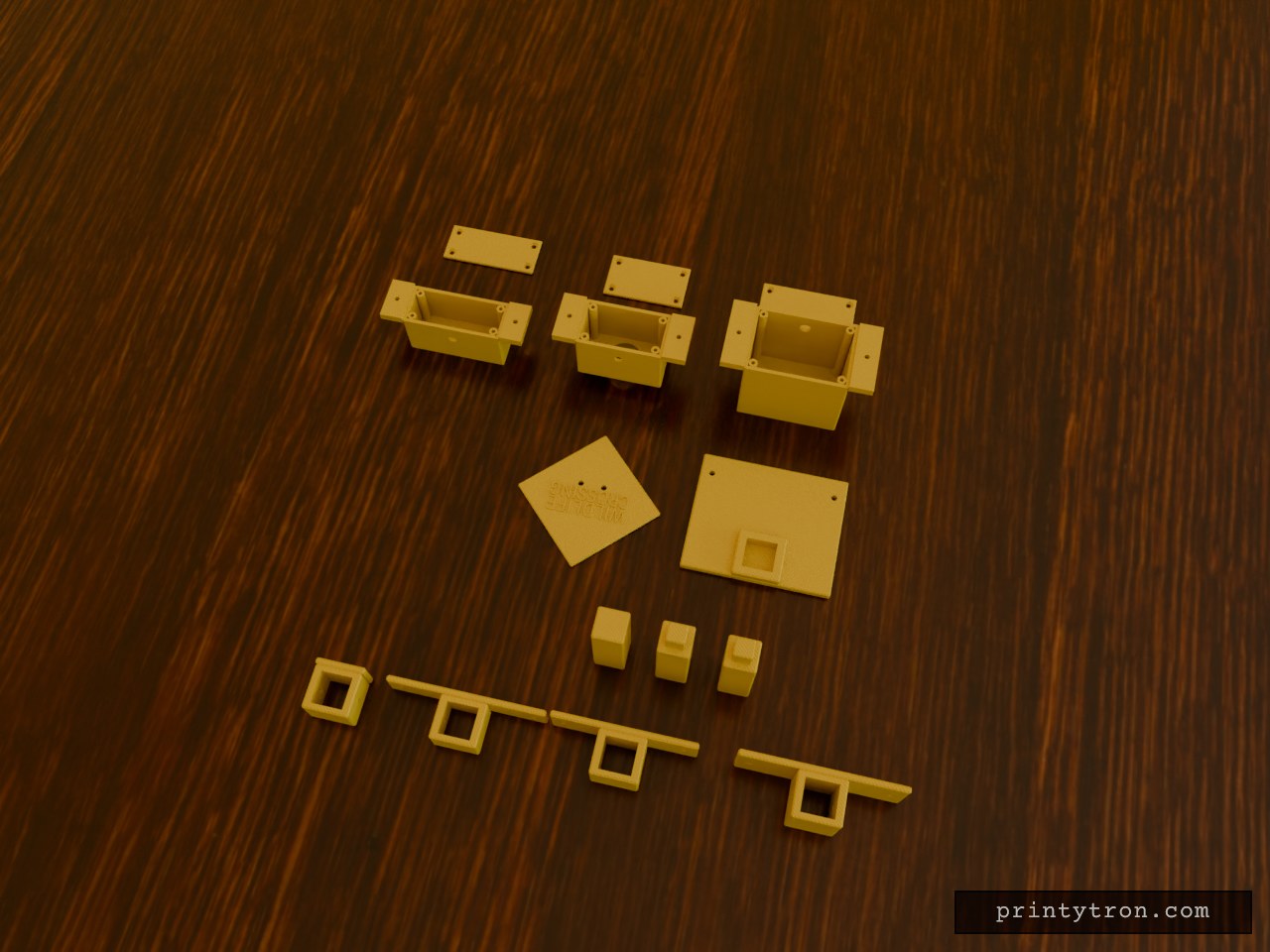
Tabletop Wildlife Alert, 100 mm Diamond Sign
Modular tabletop wildlife-warning prototype printed as separate parts that bolt together: base, three pole sections, four brackets, electronics enclosure with lid, PIR sensor housing with rain hood and lid, amber light housing with lid, and a diamond sign reading WILDLIFE CROSSING with no graphic. The stack runs bottom to top: electronics enclosure, PIR sensor facing forward, two amber LED openings, then the sign. Each housing screws to its own bracket, and each bracket clamps onto the pole with one cross-screw. Dimensions (mm, outside) Electronics enclosure: 70 × 60 × 50, interior about 65 × 57 × 45, with lid PIR housing: 60 × 40 × 35, 23 mm lens opening, rain hood, with lid Light housing: 70 × 35 × 30, two 8 mm LED openings, with lid Sign: diamond 100 point to point, 3 mm thick Base: 100 × 84 × 6 Pole: three sections, 20 × 20 × 58 Overall height: about 224 To confirm before printing Controller board size (a full Uno will not fit the interior) PIR lens diameter and LED diameter (23 mm and 8 mm are placeholders) Printer build area Electronics are untested
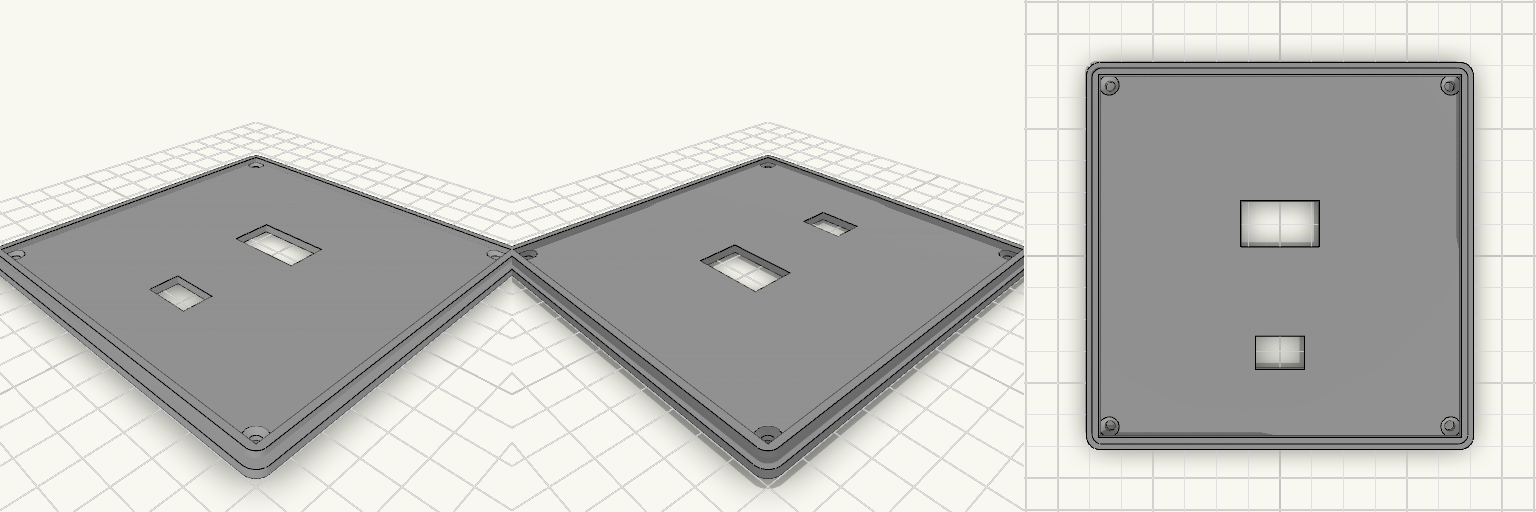
Caixa 120x120x50 mm Estação Meteorológica
Caixa quadrada de 120 × 120 × 50 mm com paredes de 2 mm e tampa separada, fixada por quatro parafusos M3 nos cantos. Possui abertura para display, chave gangorra, entrada USB-C e fendas de ventilação, além de duas fendas para alça na parte superior da lateral. Parafusos: 4 colunas de canto, furo de 2,8 mm na base e 3,4 mm com escareado na tampa Display: abertura de 24,4 × 14,4 mm na tampa Chave gangorra: abertura de 15,3 × 10,3 mm na tampa USB-C: abertura de 9 × 4 mm na lateral +X Alça: duas fendas de 16 × 4 mm no alto da parede +Y, a 30 mm do centro para cada lado Ventilação: fendas nas laterais, longe das colunas, com fendas extras na região dos sensores Protoboard: dois trilhos baixos no fundo como guia provisório Impressão: base e tampa separadas, sem suportes necessários
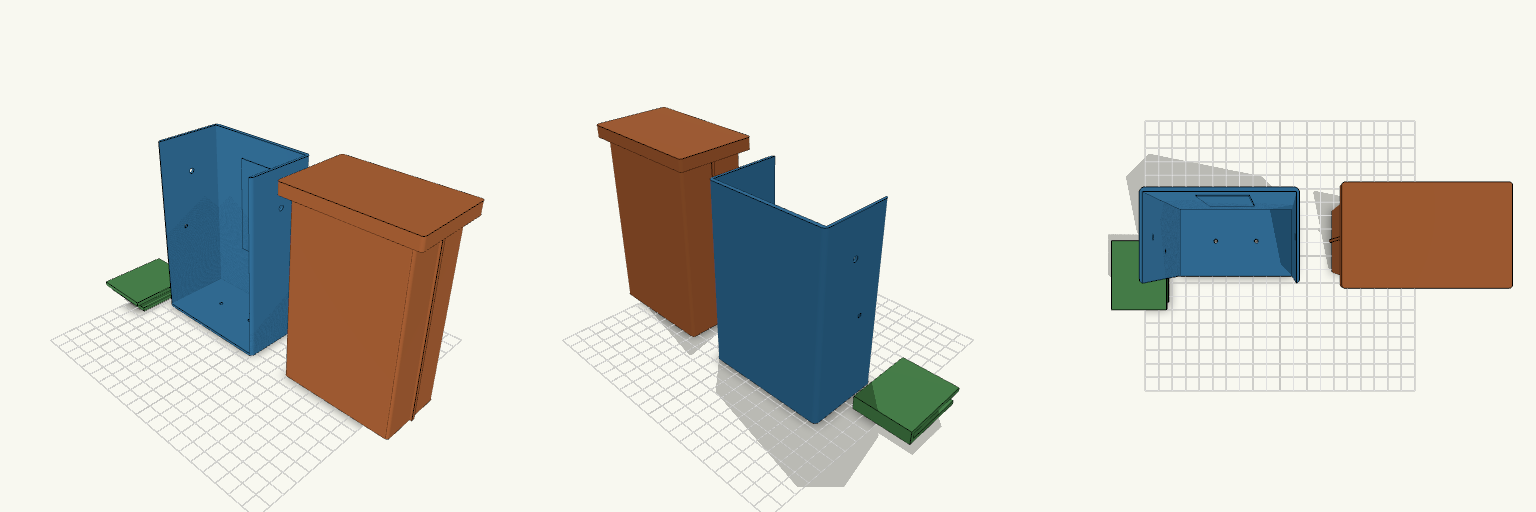
Gaveta Vertical Mini APH Pocket
Uma gaveta vertical de bolso, no espírito de um canivete suíço de primeiros socorros: o puxador largo no topo é também a tampa, e puxá-lo para cima faz a bandeja subir pelas guias, expondo os itens. Notas de projeto Corpo 86 × 52 × 127 mm, parede de 1,6 mm, dois drenos de ø 3 mm e furo de ø 4 mm para cordão. Bandeja 78 × 47 × 125 mm com tampa de 90 × 56 × 8 mm, recorte de dedo e divisórias. Clipe em J de 40 mm, 2,6 mm de espessura, impresso deitado. Pensado para PETG, sem suportes. Versão simplificada: dentes de retenção, rabo-de-andorinha, berço do oxímetro e batente liberável ainda não modelados.