Wall Mount Screwdriver Storage Rack
Created 1 months ago
Description
Loose screwdrivers rolling around on the workbench or buried in a drawer waste time every time a quick adjustment is needed. This wall-mounted screwdriver rack keeps six tools organized, visible, and instantly accessible right above the workspace.
Designed with graduated hole sizes to accommodate everything from heavy stubby drivers down to precision tools, with front drop-in slots for smaller drivers. The back features integrated keyhole slots for clean, flush mounting onto shop walls or pegboards using standard pan-head screws.
Specifications & Print Settings
- Overall Dimensions: 210 mm wide × 50 mm deep × 35 mm high
- Tool Hole Diameters: 11 mm, 10 mm, 9 mm, 8 mm, 7 mm, and 6 mm
- Mounting Interface: Dual keyhole slots spaced 140 mm apart (fits #8 / M4 pan-head screws)
- Orientation: Prints flat on its base without supports
Photos
Technical views
More like this
Explore more in Workshop & Tools →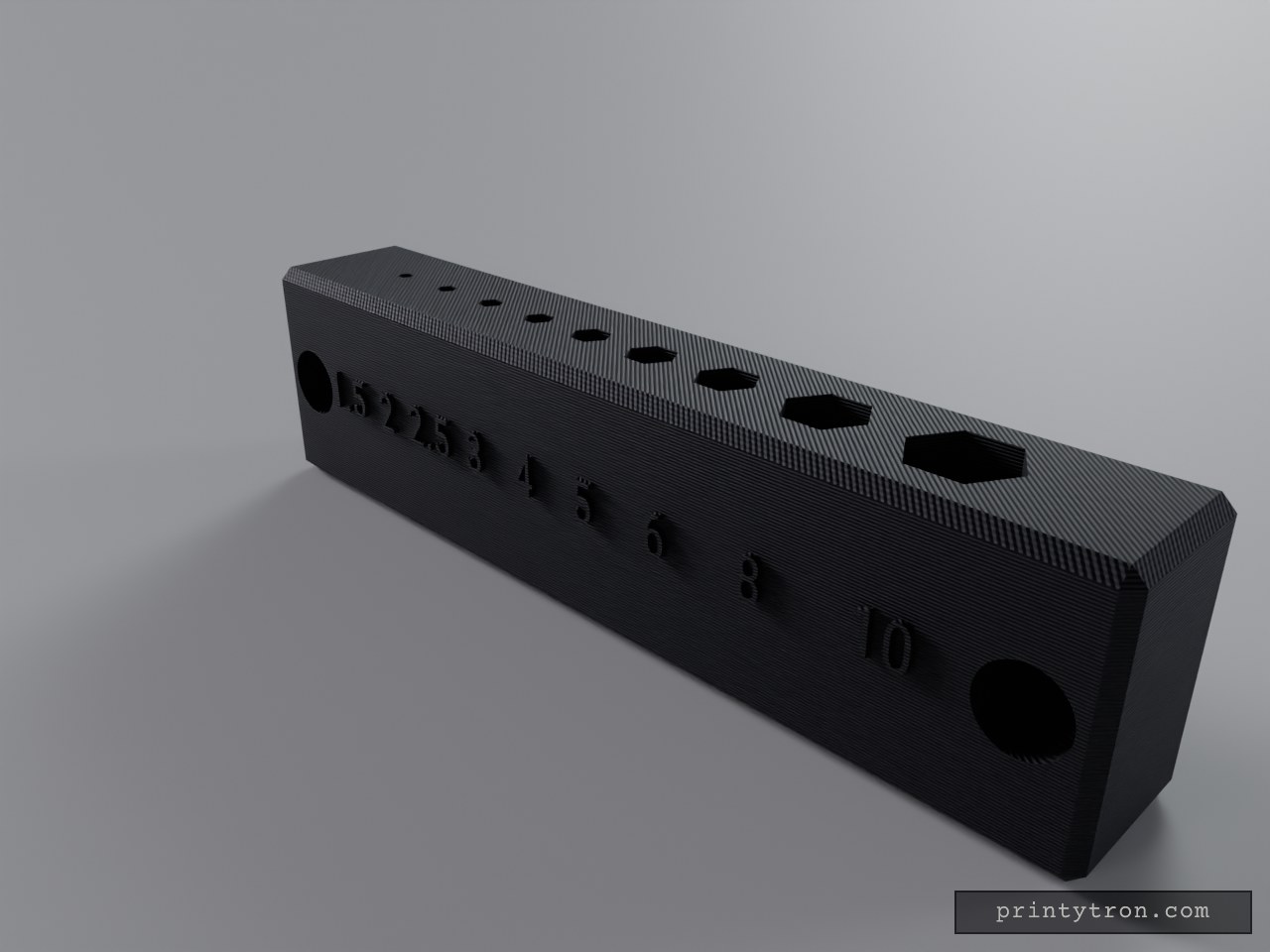
Apothecary Drawer Hex Key Rack
A row of nine upright hex pockets, like a pharmacist's labelled vial rack, scaled down for the workshop wall. Each long-arm Allen key stands in its own slot, sorted from 1.5 mm up to 10 mm, with the metric size embossed on the front face beside it so the right key is readable at a glance. Every pocket is a hex cut to its key's across-flats size plus 0.3 mm of clearance, 22 mm deep, so keys drop in and lift out without wobbling loose. Two counterbored screw holes near the ends let the rack mount flat to a wall. Design notes Fits the standard metric set: 1.5, 2, 2.5, 3, 4, 5, 6, 8 and 10 mm Overall size about 120 mm wide, 20 mm deep, 30 mm tall Embossed labels are a separate colour region for multi-colour prints or a filament swap Chamfered outer edges for a cleaner print and a softer look The 1.5 mm slot is the tightest fit, so check it on a first print Remix hooks: change pocket depth, enlarge the label text, or add more slots for imperial sizes
Flat Ground Plate 45x42x2 mm with Tabs
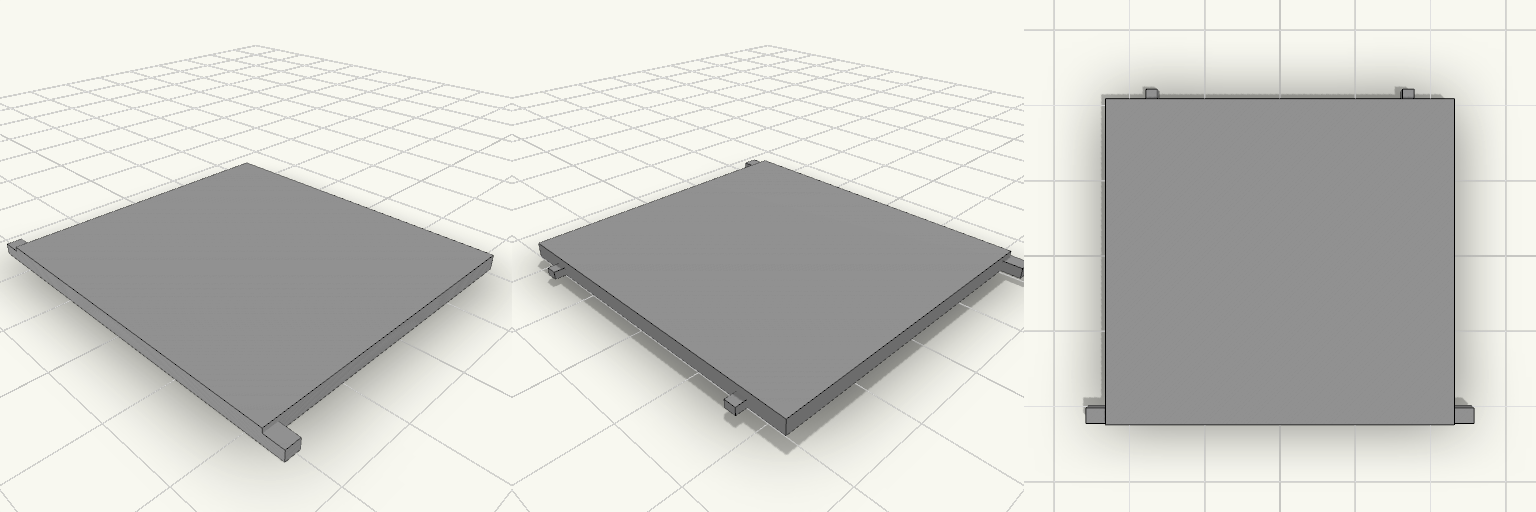
Flat 45 × 42 × 2 mm ground plate with two side tabs on the front 45 mm edge and two small blocks on the back edge. Overall width across the tabs is 50.4 mm. Plate: 45 × 42 × 2 mm, sharp edges Side tabs: 1.4 mm thick, flush with the underside, 50.4 mm overall span Back blocks: 1.5 mm wide, 1 mm thick, 1.5 mm protrusion, 5 mm from each side edge Print flat, no supports needed
サーボソケット
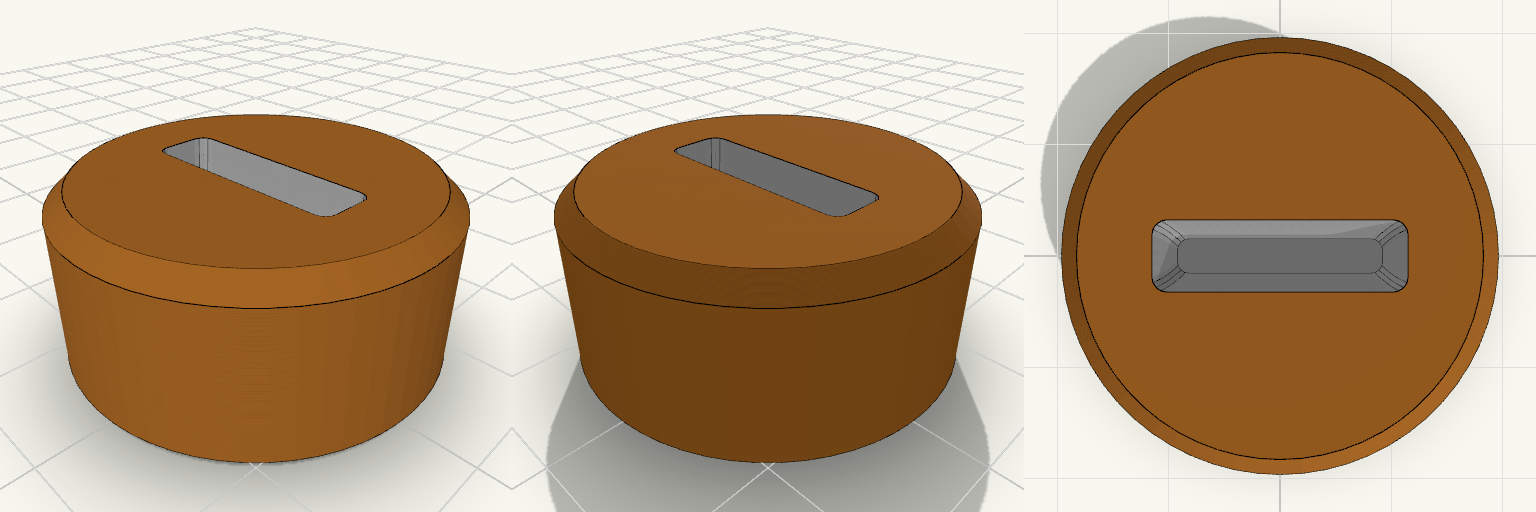
A servo can't turn a valve knob without a socket that grips it, and a loose fit slips under torque. This cylindrical socket slides onto the knob from the bottom and keeps the top face flat and closed for a future servo horn. Key numbers Body: 30 mm diameter, 14 mm tall, chamfered edges Cavity depth: 10 mm, opening only on the bottom face Opening at the bottom: 2.6 mm × 16.7 mm, widening to 4.5 mm × 16.7 mm at the inner end Clearance: 0.15 mm per side, with rounded corners and slightly bowed long walls Top wall: 4 mm solid, with no screw or mounting holes Printing: open face down on the bed, no supports needed; the wall slope is about 5° from vertical Cavity size, taper, corner radius and clearance are all adjustable parameters
Bracelet Link Fit Gauge Block
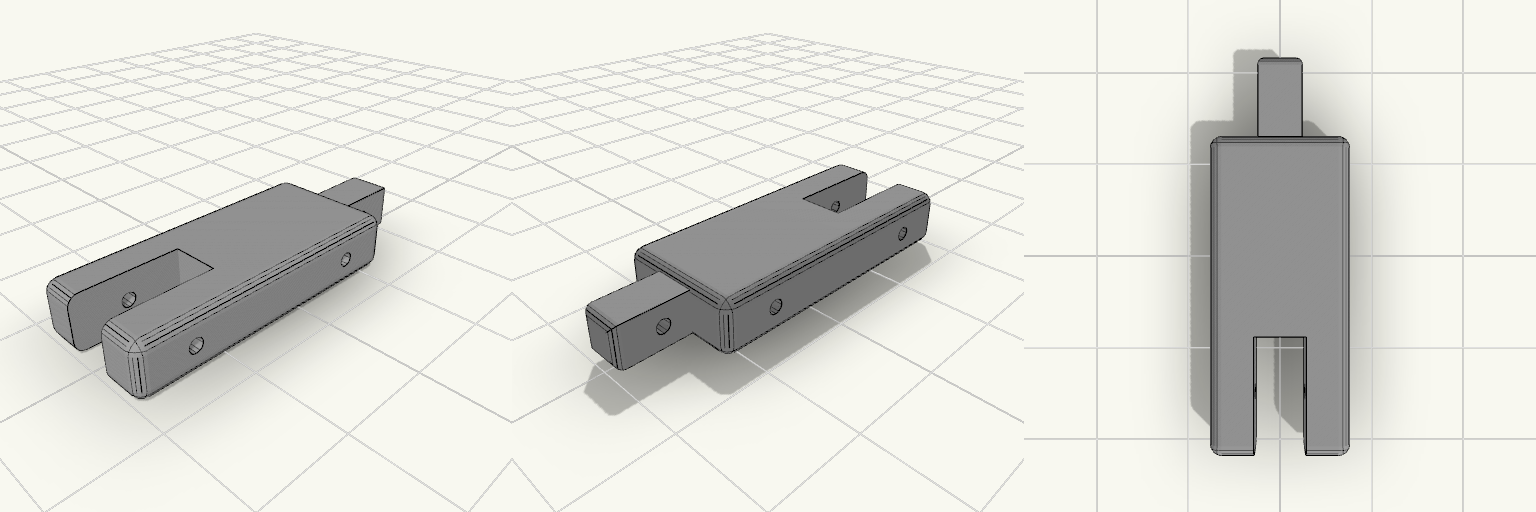
A bracelet repair print that turns out too tight or too loose wastes hours. This fit gauge block is a 15-minute test piece that checks the fork slot and pin bores before the real part gets printed. Key numbers Block: 14 x 32 x 6 mm, origin at center, 1.2 mm edge fillets Fork slot: 5.2 mm wide, 12 mm deep, open at the -Y end, flat end wall at Y = -4 Prongs: 4.4 mm wide each Bores: Ø1.6 along X at Y = -10 (through both prongs) and Y = +10 (solid section) Tongue sample: 4.4 x 4.6 mm, 8 mm long on the +Y end, 0.9 mm end fillets, Ø1.6 bore at Y = +19 (40 mm overall) Printing Flat on the bed, PLA or PETG, 0.4 mm nozzle, 0.2 mm layers 4+ walls, 100% infill, 3 mm brim, no supports, 40 mm/s or slower Ream both bores once by hand with a 1.5 mm drill bit Checks A bracelet tongue link should enter the slot with slight friction. An original pin should slide through the -Y bore.
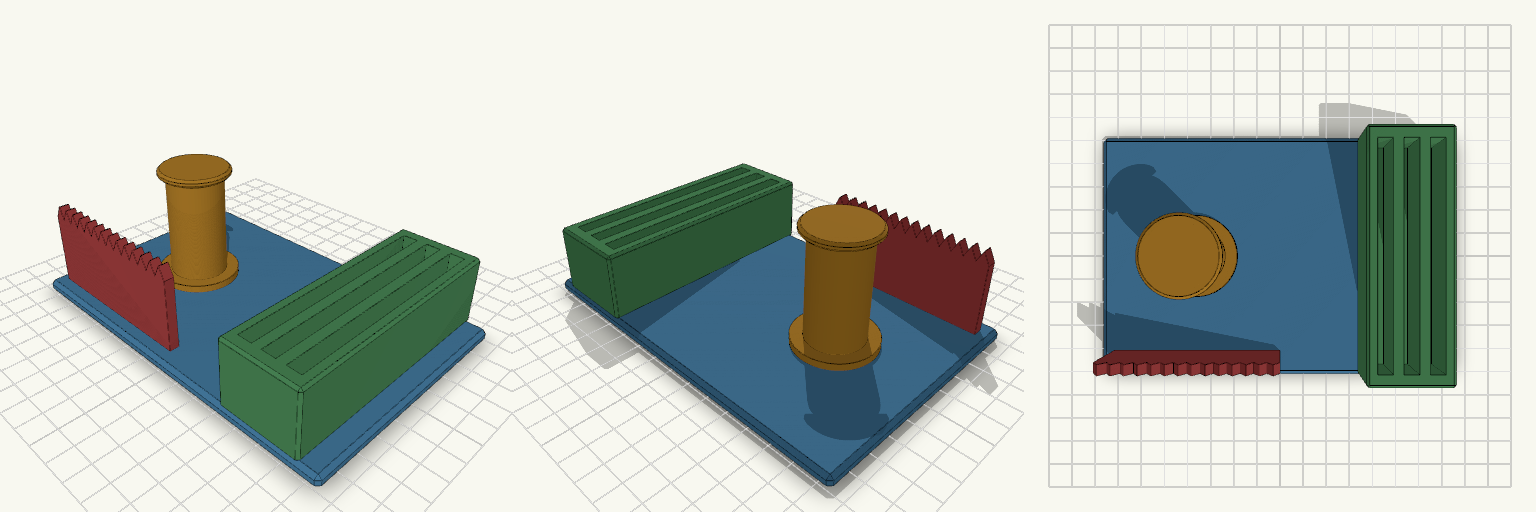
Tape Spindle and Zip Tie Bench Caddy
Bench caddy that keeps a tape roll and a bundle of zip ties in one fixed spot on the bench. A 24 mm spindle holds a roll with a 25 mm core. A serrated tear bar runs along the front edge so tape can be pulled across the teeth and torn. A block on the right has three slots for zip ties up to 90 mm long. Specs Base: 150 × 100 × 5 mm plate with 1.5 mm chamfered edges Spindle: 24 mm diameter, about 46 mm tall, with a 34 mm foot and a 30 mm top flange. Sized for a 25 mm core with 1 mm clearance. Tear bar: 70 mm long, 4 mm thick wall with 14 serrated teeth. It sits along the front (-Y) edge, beside the spindle. Tie trough: 34 × 100 mm block, 28 mm tall, with three 6 mm wide slots, each 90 mm long, in a row across X. Overall height: about 54 mm, measured at the top of the spindle flange. Material: PLA or PETG. Print flat on the base with no supports. Notes Fit has not been tested against a physical roll. If the roll is tight on the spindle, reduce the spindle diameter slightly. Slot width suits standard narrow zip ties. Wider ties need wider slots.
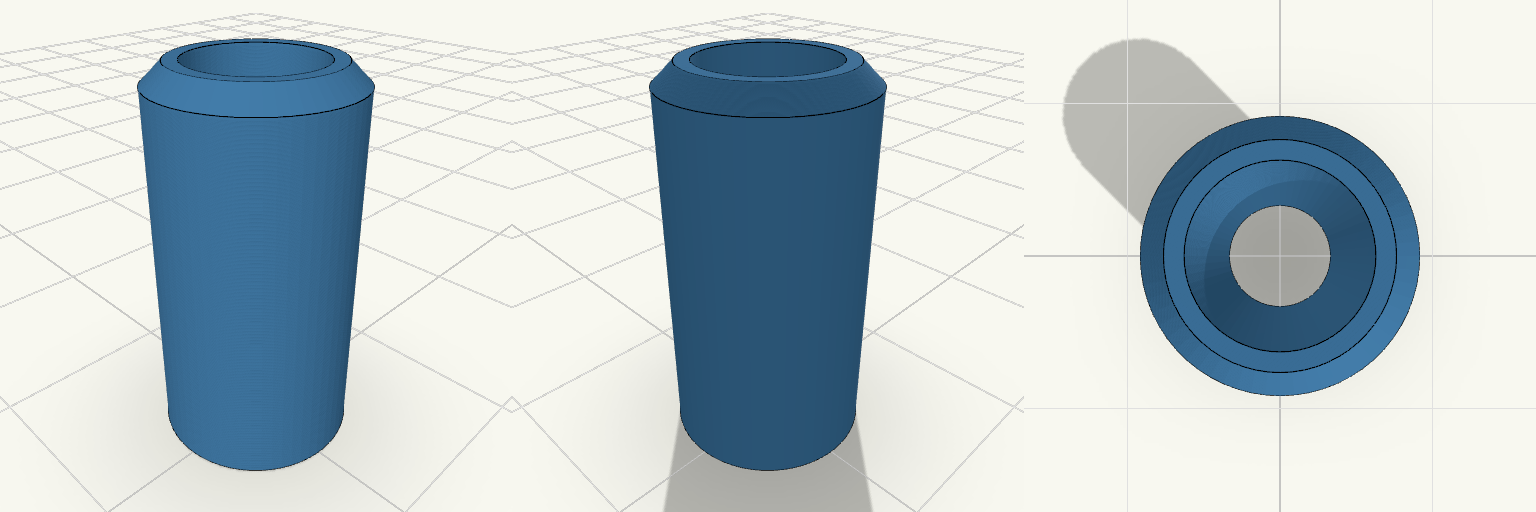
Sleeve — 0.385" OD Spacer Tube
Sleeve is a plain, precise hollow cylinder sized in inches: a straight-through bore and a clean outer wall, ready to use as a spacer, bushing or standoff. Dimensions Outer diameter: 0.385" (9.78 mm) Inner diameter: 0.26" (6.60 mm) Length: 0.75" (19.05 mm) Wall thickness: about 0.0625" (1.59 mm) Print notes Print standing on end, no supports needed. Bore may print slightly tight; ream or scale up a touch if fit matters.