3D-printable decor & display pieces
Lithophane shades, planters, trophies, wall art and display models. Browse what makers built, or describe the exact piece you want and Printy makes it.
Need one that fits your exact measurements? Start building →
Newest
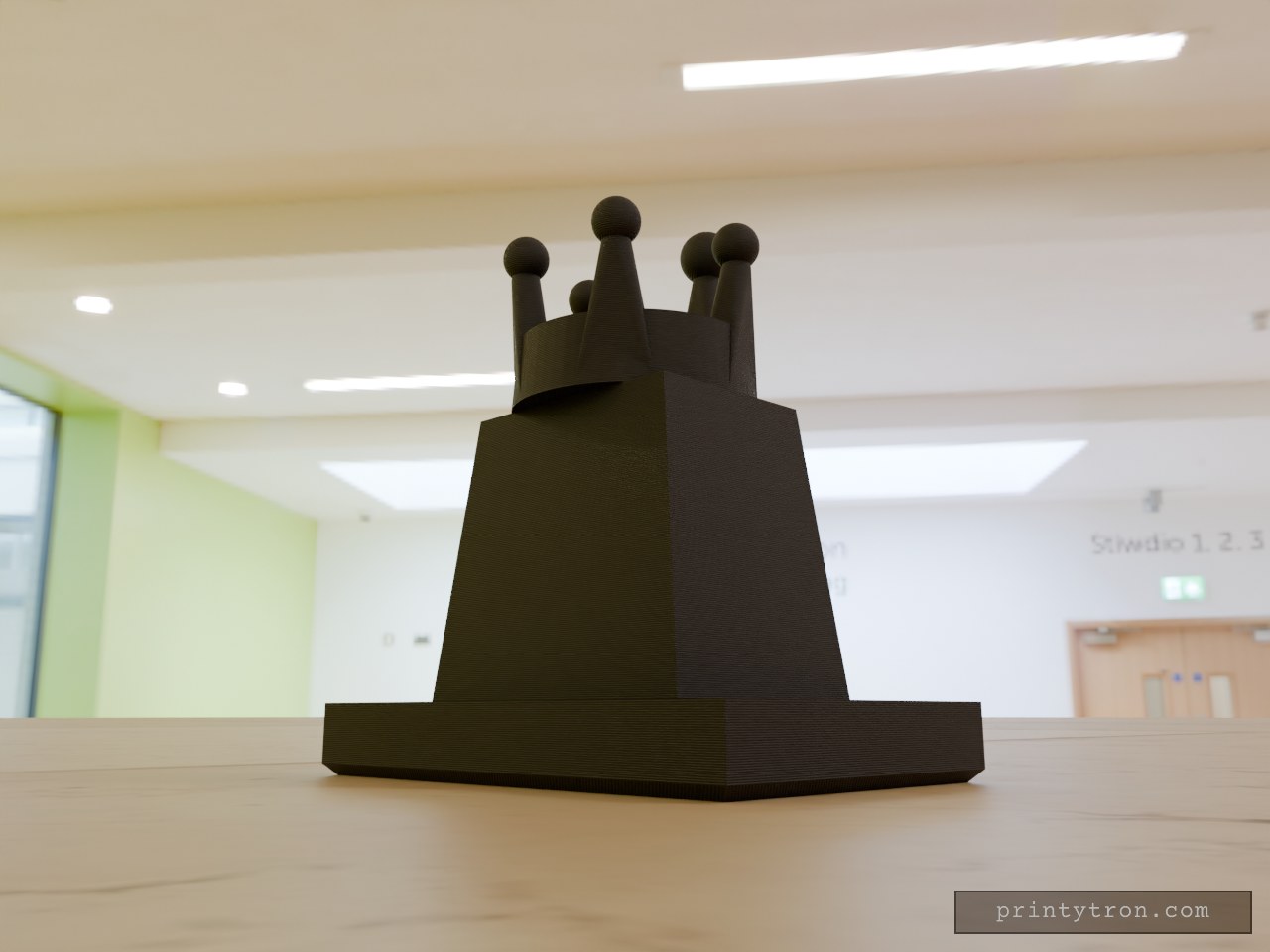
Regalia — Crown Trophy on Pedestal
Regalia is a single-piece trophy: a gold crown with five ball-tipped points and a taller centre tip, seated on a black two-tier pedestal. The tapered upper column sits on a wide flat plinth with a beveled bottom edge. Features Five points, one taller at the front centre Wide band with solid hub, no hollow gaps Tapered pedestal over a straight-sided base No text or extra decoration Print notes Flat bottom, no supports needed for the base Print in one piece; colours are for preview, so use a multicolour setup or paint
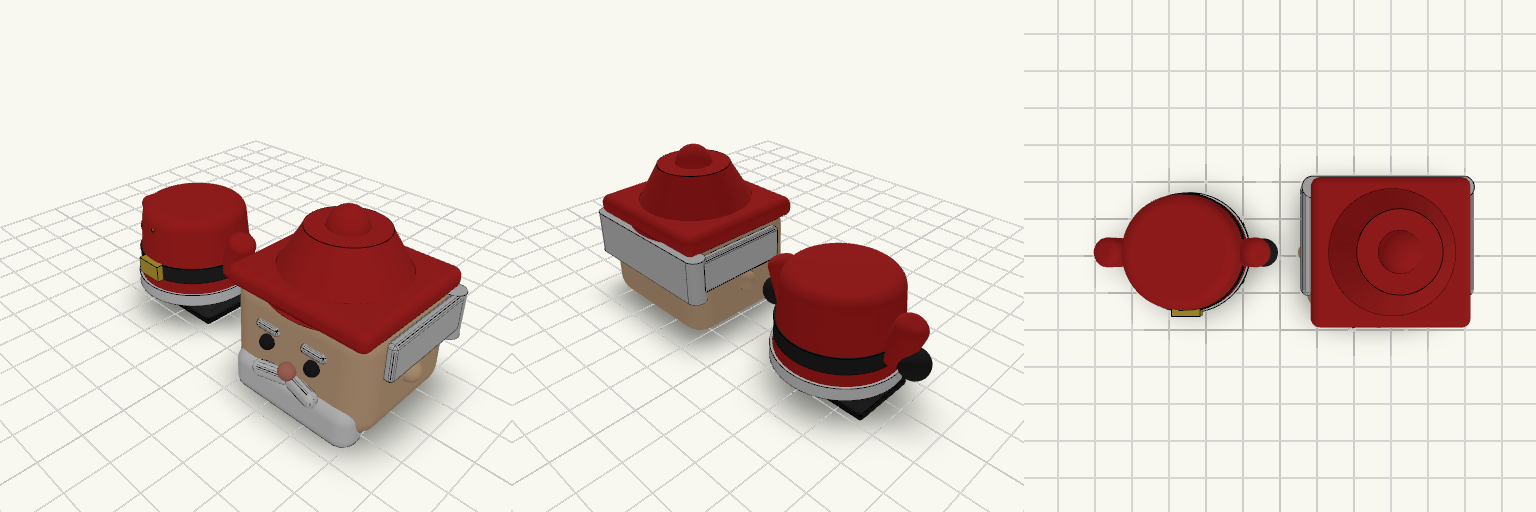
Santa
Vinyl-toy style Santa figure with an oversized square head, small round body, boots, belt, hat and beard. Built as one welded piece with colour regions for reference. Height: about 70 mm including hat pom-pom Features: coat, white trim, belt with buckle, beard, dot eyes, nose Print upright; hat and beard overhangs are small Material: PLA or PETG
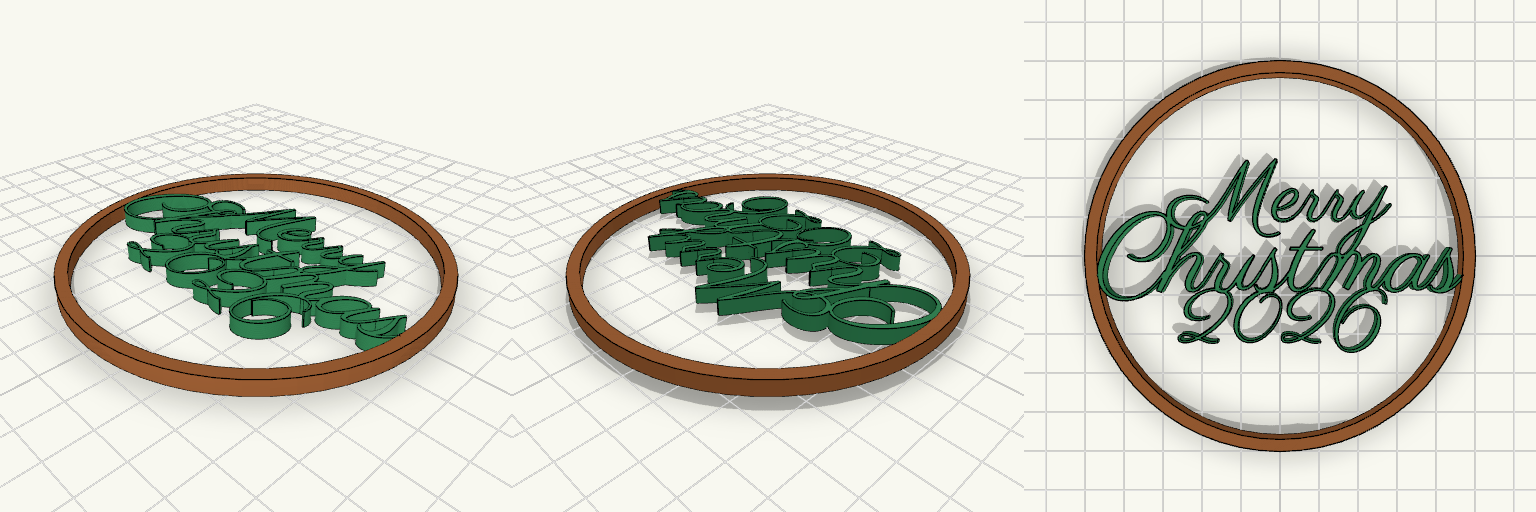
Noelring — Christmas Lettering Ring for a 97.4 mm Sphere
Noelring is a seating ring designed to sit inside a hollow sphere, with “Merry Christmas 2026” lettering held in its opening. The ring’s outer edge is cut to the sphere’s inner curve, so the seat meets a 97.4 mm internal-diameter shell across the full 3 mm ring width instead of resting on a single line. The top and bottom faces are flat, the centre is open with no background plate, and the three text lines run the full 4 mm height of the ring, flush with both faces. The lettering is set in Parisienne, a connected cursive script with a dotless “i” in “Christmas”; “Christmas” runs into the ring wall at both ends and is the only line fused to it, while “Merry” and “2026” are not tied to the ring and depend on touching “Christmas” to stay in place. Dimensions Ring: 97.4 mm outer diameter × 4 mm tall Ring width: 3 mm; inner diameter about 91.4 mm Seat: outer edge curved to a sphere with a 97.4 mm internal diameter (48.7 mm radius) Lettering block: about 91.3 × 48.2 mm, full 4 mm height Features Curved outer edge follows the sphere’s inner surface across the full ring width Flat top and bottom faces, with the seat carried on the outside edge Open centre: the lettering has no background plate behind it Three stacked lines, “Merry”, “Christmas” and “2026”, set in Parisienne, a connected cursive script “Christmas” runs into the ring wall at both ends and is anchored there “Merry” and “2026” are not joined to the ring; they rely on contact with “Christmas” The “i” in “Christmas” is dotless, so the line has no separate dot All three lines are set flush with the ring’s top and bottom faces Fit Made for a hollow shell with a 97.4 mm inner diameter; scale the ring and sphere together for any other size The 4 mm height is a design choice: a taller ring grips more wall but reaches further into the sphere The ring locates itself against the sphere’s curve rather than locking in place Print notes “Christmas” is fused to the ring at its ends; “Merry” and “2026” are held only where they touch “Christmas” — check those contact points before printing If a word does not touch “Christmas”, it will print as a loose piece No struts connect “Merry” or “2026” to the ring wall No supports should be needed for the flat ring and full-height lettering
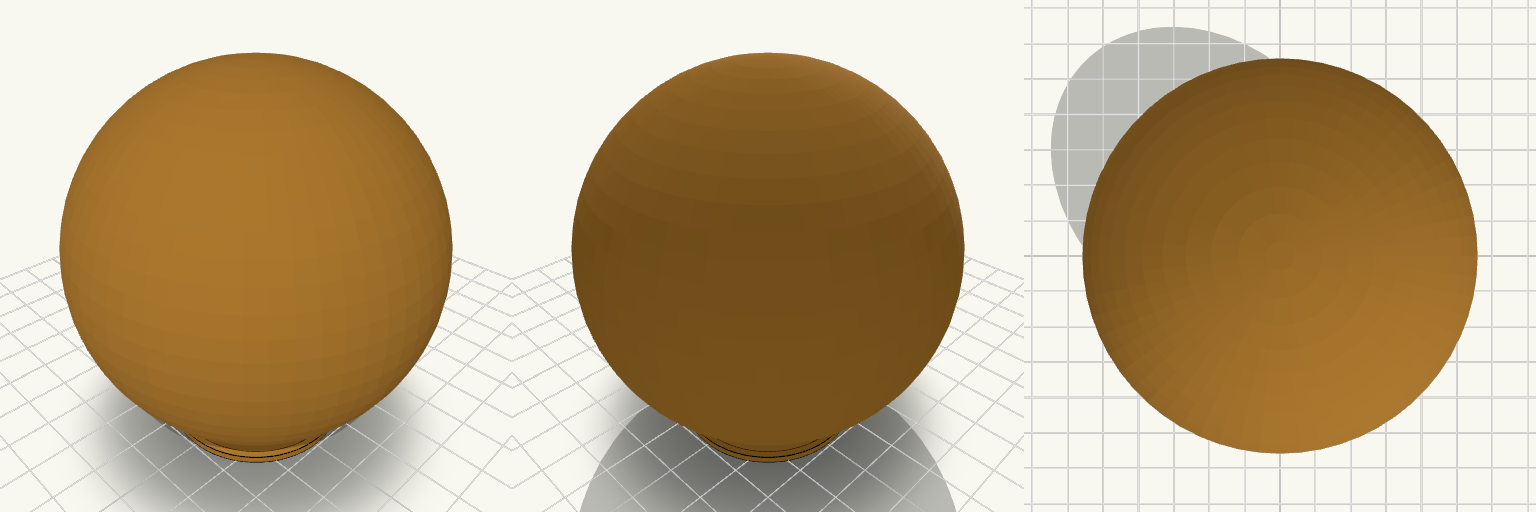
Hul stjernekugle med lukket fod
Hul kugle (Ø80 mm, 1,6 mm væg) på en kegleformet fod med en helt plan, lukket bund på Ø40 mm. Bunden giver en sammenhængende flade til dobbeltklæbende tape, så stjernen kan fastgøres på en pladespiller til radialhastighedsforsøg med ultralydssensor. Remix-muligheder R (40 mm): kuglens radius. Større giver et bedre ekko, men mere materiale. wall (1,6 mm): vægtykkelse. Tykkere giver en stærkere og tungere stjerne. footd (40 mm) og footh (3 mm): fodens størrelse. En bredere fod giver mere tapeflade og bedre stabilitet. Kombinér med: en arm eller modvægt, hvis stjernen skal placeres excentrisk på pladen. Keglen under kuglen holder overhængene under 45°, så den kan printes uden support.
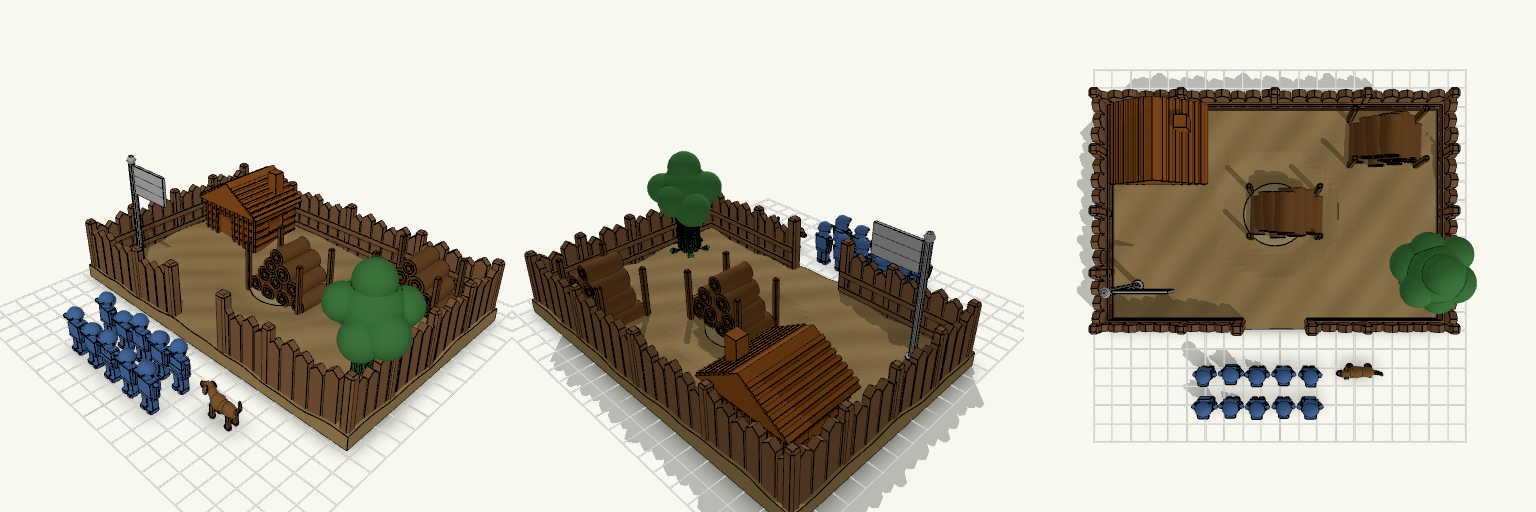
Miniatura placu broni z szopą i płotem
Miniatura placu broni ze szopą i płotem nie rozjeżdża się przy przesuwaniu, bo cała scena siedzi na jednej płycie 180 × 120 mm. Dziesięciu chłopców i pies to osobne figurki ustawione obok płyty — można ich przestawiać bez rozbierania całego placu. Płot biegnie po wszystkich czterech bokach, a na środku frontu ma wycięte wejście o szerokości około 33 mm, bez skrzydeł bramy; po bokach stoją dwa wzmocnione słupki. Sztachety mają ostre końce i różne wysokości, dwie poprzeczki oraz słupki. Szopa ma poziome deski, komin, boczne okna i wnękę drzwiową; na przedniej i tylnej ścianie są pionowe listwy, a obie połacie dachu pokrywają rzędy gontów. Kłody leżą w dwóch stosach — jeden z tyłu po prawej, drugi na środkowym okrągłym placyku. Mają różne średnice i długości, są lekko poprzesuwane i skręcone, na końcach mają wycięte słoje, a po bokach każdego stosu stoją po dwa paliki, które go trzymają. Drzewo z przodu po prawej odsunięto od płotu: gruby pień zwęża się ku górze i ma wzdłużne żebra kory o różnej długości, przy ziemi rozchodzi się pięć korzeni, wyżej odchodzą cztery gałęzie, a koronę tworzy osiem kul o różnych rozmiarach. W lewym przednim rogu stoi maszt z flagą w trzech poziomych pasach — czerwonym, białym i zielonym, jak flaga Chłopców z Placu Broni. Chłopcy mają buty, nogi, tułów z ramionami, dłonie, szyję, głowę z twarzą i uszami oraz czapkę z daszkiem; stoją w dwóch rzędach po pięciu, ale każdy jest innej wysokości i budowy, a część dostała drobne dodatki: kulę włosów, plecak, kołnierz, szeroki szalik albo nakrycie głowy. Pies ma klatkę piersiową, zad, szyję, głowę z pyskiem i nosem, oklapłe uszy, oczy, cztery łapy i ogon uniesiony oraz zagięty do tyłu; łapy są podniesione tak, żeby stał równo na stole. Ziemia jest nierówna na całej płycie: pagórki i dołki sięgają około 4 mm i dochodzą aż do płotu i szopy, więc ich podstawy są trochę zagłębione w gruncie. Płaski został tylko pas wokół środkowego placyku. Wymiary i dopasowanie Płyta — 180 × 120 mm w planie, do 9,3 mm wysokości razem z pagórkami ziemi; ten wymiar decyduje o tym, czy miniatura zmieści się na półce lub podstawce. Płot — 178,5 × 118,9 mm, wysoki na 32,7 mm; otacza plac z czterech stron, z wejściem na środku frontu (ok. 33 mm) i wzmocnionymi słupkami po bokach. Szopa — 48 × 39,6 × 41,6 mm, lewy tylny róg, z dwuspadowym dachem, pionowymi listwami i gontami. Stosy kłód — 90,2 × 63,9 mm w planie, do 30,2 mm wysokości; kłody o różnych średnicach i długościach ze słojami na końcach (ok. 0,5 mm), przytrzymane palikami; jeden stos z tyłu po prawej, drugi na środkowym placyku. Drzewo — 40,5 × 39 × 59,5 mm, przód po prawej; pień z wzdłużnymi żebrami kory (ok. 1–2 mm), korona z ośmiu kul. Maszt z flagą — 6 × 6 × 64,2 mm, lewy przedni róg; najwyższy punkt sceny. Koło — 33 mm średnicy i 0,9 mm wysokości, utwardzony środek placu. Figurki — dziesięciu chłopców w dwóch rzędach po pięciu mieści się w 67,2 × 25,8 mm w planie i ma do 26 mm wzrostu; pies — 23,6 × 6,3 × 16,1 mm, stoi osobno po prawej; wszystkie figurki leżą poza płytą i nic nie dotykają. Druk Model drukuje się w kilku częściach: płyta z placem to jedna całość, a dziesięciu chłopców i pies są osobnymi figurkami — nic nie trzeba sklejać, tylko ustawić je obok płyty. Najwyższy punkt miniatury to 64,2 mm (maszt z flagą), a korona drzewa sięga 59,5 mm; wszystkie elementy sceny wyrastają z płyty o wymiarach 180 × 120 mm, która razem z pagórkami ziemi ma do 9,3 mm grubości. Podstawa 180 × 120 mm mieści się na platformie większości popularnych drukarek, więc nie trzeba jej dzielić — wystarczy ułożyć ją płasko i pilnować przyczepności pierwszych warstw, bo sztachety płotu są cienkie i wysokie, maszt z flagą sięga najwyżej, a nogi i ręce figurek są wąskie i łatwo je urwać przy zdejmowaniu wydruku. Pagórki ziemi dochodzą do samego płotu i szopy, więc pierwsza warstwa podłoża nie jest płaska na całej powierzchni — miejsca pod sztachetami i ścianami szopy warto sprawdzić po wydruku. Pies jest najmniejszym elementem sceny, więc jego pysk, uszy i łapy zlewają się przy grubszej warstwie — drobniejsza warstwa albo nieco większy wydruk, jeśli ma być czytelny. Drobne dodatki chłopców — szalik, kołnierz czy nakrycie głowy — są jeszcze mniejsze niż figurki, więc schodzą dopiero przy cienkiej warstwie. Żebra kory na pniu mają około 1–2 mm, a słoje na czołach kłód tylko około 0,5 mm głębokości, więc przy tej skali mogą być ledwo widoczne — drobniejsza warstwa pomoże, jeśli mają być czytelne.
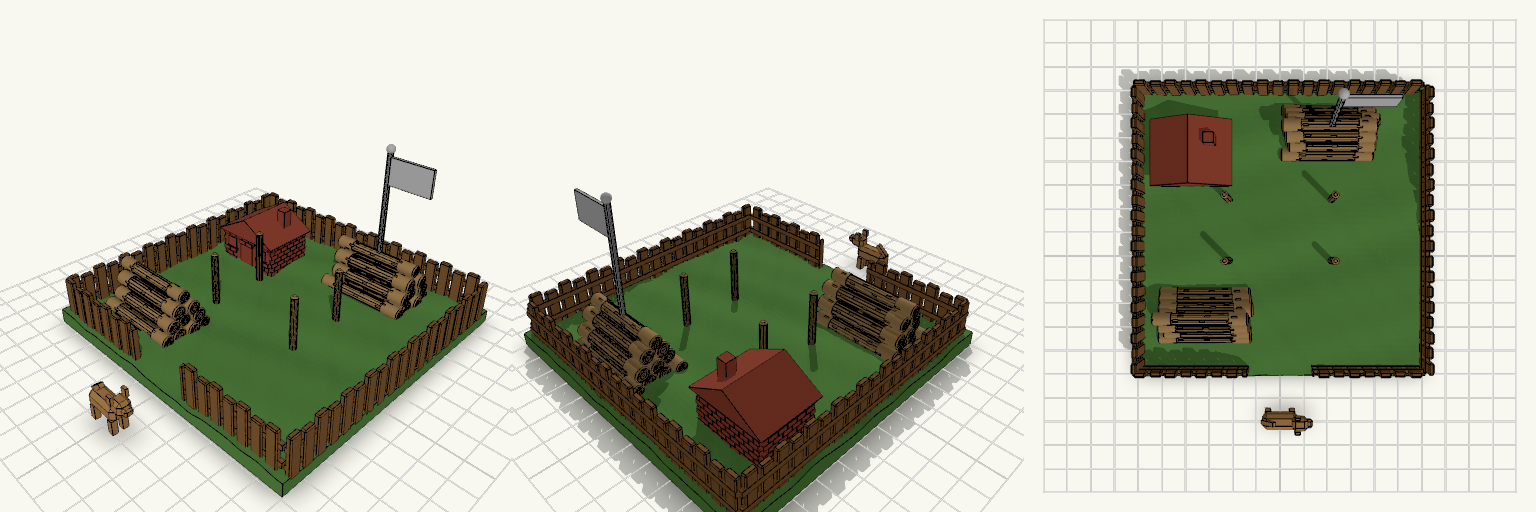
Plac Broni — diorama z płotem i szopką
Diorama scenografii z powieści: ogrodzony plac na podstawie 120 × 120 mm, z przerwą na bramę od frontu, dwoma sągami drewna i małą szopką. Teren jest nierówny w sposób ciągły — to jedna falista powierzchnia bez wydzielonych kształtów, sięgająca od około 4 do 6,9 mm wysokości. Nierówność tylko podnosi teren, więc płot, sągi i szopka stoją stabilnie. Flaga nie stoi osobno — jej maszt jest wbity w tylny prawy sąg, w najwyższy bal, więc chorągiew wyrasta prosto z drewna i góruje nad całą sceną. Pies stoi poza makietą, przed jej przednią krawędzią, około 18 mm od podstawy, na tym samym poziomie co podstawa. Nie jest połączony z placem, więc drukuje się jako osobny element. Reszta sceny mieści się na jednej kwadratowej płycie. Sągi, szopka i flaga są dopracowane w drobiazgach: kłody mają na czołach słoje i rdzeń, wzdłuż pnia biegną nierówne rowki kory z krótkimi poprzecznymi pęknięciami, a bale różnią się długością i średnicą, są lekko przesunięte względem siebie i mają sfazowane końce. Dookoła każdego sągu stoją cztery paliki. Szopka ma dwa okna i komin, a wszystkie cztery ściany pokrywają wypukłe cegły w przesuniętych rzędach; wokół drzwi i okien cegieł nie ma, a okna i drzwi mają ramki. Cegły wystają 0,6 mm, więc są widoczne, ale delikatne. Flaga jest płaska — to jeden prosty prostokąt 18 × 11 mm, bez falowania, osadzony na maszcie w prawym tylnym sągu. Co tu jest do przestawienia Wymiary poniżej to punkt wyjścia, nie ostateczna forma — każdy z nich da się zmienić bez psucia reszty układu. Podstawa 120 × 120 mm, teren do 6,9 mm — najprostszy parametr do podmiany. Kwadrat można zamienić na prostokąt, dodać miejsce na napis albo przyciąć do mniejszej podstawki pod gablotkę. Ciągłą, falistą nierówność o wysokości 4–6,9 mm da się zagęścić, spłaszczyć lub poprowadzić jako ścieżkę do bramy — byle nie obniżać terenu pod płotem i sągami. Płot 118,3 × 116,3 × 16,5 mm — szerokość przerwy na bramę to naturalny wybór: szersza robi zaproszenie do środka, węższa zamyka scenę. Sągi drewna, łącznie 89,1 × 98 × 23,9 mm — dwa sągi: jeden z tyłu po prawej (ten z flagą wbitą w najwyższy bal, maszt wchodzi w drewno od 18 mm), drugi z przodu po lewej. Liczba sągów i ich rozstaw to najlepszy kandydat na wariant — dodatkowa kupka po przeciwnej stronie, wyższy stos w narożniku, układ w jednym rzędzie albo przeniesienie flagi na inny sąg. Paliki dookoła stosów łatwo pogrubić lub pominąć. Flaga 20,7 × 3,5 × 51,7 mm — płaski prostokąt 18 × 11 mm na maszcie; to najwyższy punkt sceny, a przy tym osadzony w stosie, więc skrócenie masztu zmienia sylwetkę całości bardziej niż jakakolwiek inna zmiana. Warto zadbać, by przy niższym maszcie chorągiew nie chowała się za balami. Szopka 32 × 26 × 25 mm — proporcje 32 na 26 mm zostawiają miejsce na okna i daszek; można ją powiększyć i przesunąć w głąb placu, a komin przenieść na drugą połowę dachu. Grubość cegieł to dobry parametr do prób — grubsze niż 0,6 mm mocniej cieniują, cieńsze pozostają subtelniejsze. Pies 20,5 × 6,6 × 17 mm — stoi poza makietą, około 18 mm przed przednią krawędzią podstawy. Skala i pozycja to dwa najłatwiejsze do podmiany parametry: większy pies jako bohater pierwszego planu, mniejszy jako tło, obrócony w stronę bramy albo dostawiony bliżej wejścia na plac. Warianty i sąsiedztwo Scena prosi się o towarzystwo: kolejne dioramy z tego samego świata ustawione obok siebie na jednej półce, wersja w większej skali jako ozdoba biurka albo pomniejszona do rozmiaru podstawki pod kubek, albo ta sama scena z psem w innej skali. Zmiana skali całości jest bezpieczna, dopóki płot, sągi, szopka, flaga i pies trzymają te same proporcje względem siebie. Sam plac bez podstawy też się broni — wystarczy go osadzić we własnym terenie lub ścieżce prowadzącej do bramy.
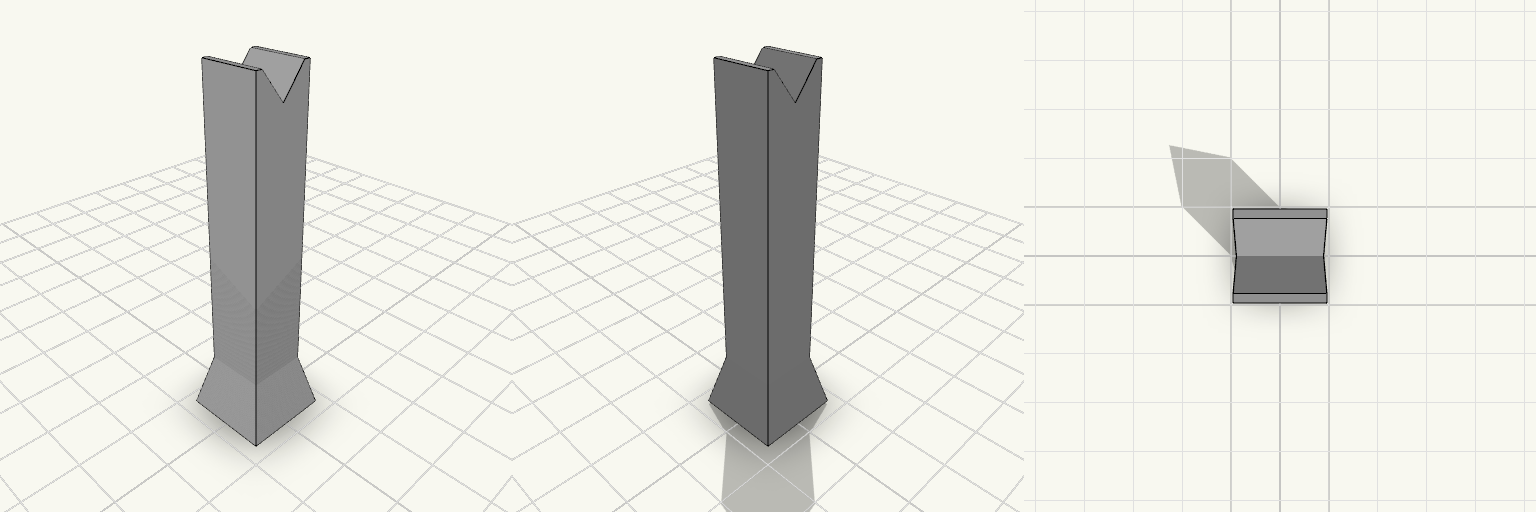
support cheap
Une colonne sobre, presque monolithique : un fût de 10 × 10 mm qui s'élance sur 60 mm et s'ouvre, sur les 10 premiers millimètres, en un pied évasé de 15 × 15 mm. Le sommet n'est plus une tablette plane mais une rainure en V de 5 mm de profondeur, taillée d'un bord à l'autre : la pièce devient un petit berceau brutaliste, prêt à caler un stylo, une tige, un tube ou n'importe quel objet rond qui vient s'y loger sans rouler. Notes de conception Fût de 10 × 10 mm, hauteur totale 60 mm : assez haut pour surélever, assez fin pour rester discret. Base évasée à 15 × 15 mm sur les 10 premiers millimètres, pour la stabilité. Rainure en V au sommet : 5 mm de profondeur, 8 mm de large en haut, et 1 mm de plat conservé de chaque côté. S'imprime debout, sans supports, la base évasée servant directement d'assise. À associer avec Un poste de travail où la rainure sert de reposoir à stylo, pinceau ou scalpel. Une étagère de collectionneurs, pour caler une bille, un tube ou un petit cylindre à la verticale du regard. Une série de plusieurs colonnes de hauteurs différentes pour un petit podium à étages. La pièce s'imprime d'un seul tenant et ne demande aucun assemblage.
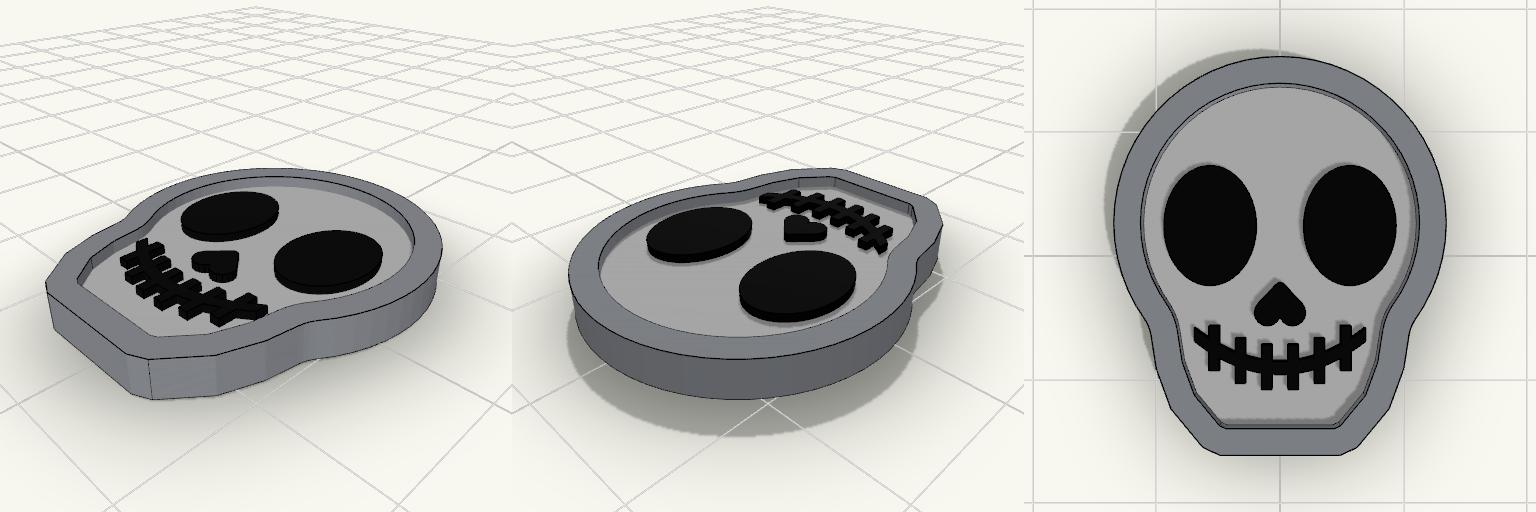
Compact Smiling Skull Enamel Pin
Para qué es Una insignia de calavera compacta con un giro gótico al estilo Tim Burton, pensada para leerse como un pin esmaltado tradicional. La cara es blanca con borde metálico plateado, frente lisa y detalles negros: dos óvalos negros lisos y grandes, una nariz de corazón invertido con los lóbulos abajo y la punta hacia arriba, y una boca sonriente con contorno negro y cinco dientes redondeados separados por ranuras negras. El cráneo conserva su anchura en la parte superior y la mandíbula tiene pómulos anchos, un ángulo marcado y una barbilla corta algo cuadrada de esquinas redondeadas; la sonrisa queda ajustada a los lados y con muy poco margen por debajo. Tres zonas de color —borde plateado, cara blanca y detalles negros— separadas para facilitar el acabado. Ojos ovalados negros lisos, más grandes, sin formas interiores; nariz de corazón invertido y frente lisa. Boca sonriente con cinco dientes individuales, dentro del área blanca y sin tocar el borde plateado; queda justa a los lados. Dorso plano con un orificio trasero centrado de 6 mm de diámetro y 1 mm de profundidad. Dimensiones Tamaño total: 25 mm de ancho × 30 mm de alto (proporción aproximada 5:6). Borde plateado: 2 mm de ancho y 3 mm de alto. Cara blanca: 21 × 26 mm, con una base de 2 mm. Detalles negros: 17,6 × 17 mm, elevados 0,7 mm sobre la cara. Ranuras entre dientes: 0,8 mm. La sonrisa deja alrededor de 0,5 mm de cara blanca a los lados. Orificio trasero: 6 mm de diámetro, 1 mm de profundidad, a 15 mm desde la base y con 1 mm de material por encima. Todas las características quedan dentro del borde exterior, sin sobresalir. Notas de impresión El dorso plano apoya directamente en la placa; los detalles negros son poco profundos. Las tres zonas se pueden imprimir en colores separados o imprimir en un solo color y pintar los detalles negros. Si imprimes con el dorso hacia abajo, revisa el orificio trasero de 6 mm en la cara inferior. Ideas de remix Cambiar el borde plateado por otro acabado metálico o llevar toda la insignia a una paleta monocroma. Reducirla para un pin de solapa o aumentarla para una pieza de exposición o un imán tipo parche. Añadirle un cierre de pin, una base magnética o un enganche de llavero para otro modo de llevarla. Llevar el estilo gótico más lejos con puntas en el borde o una sonrisa cosida.
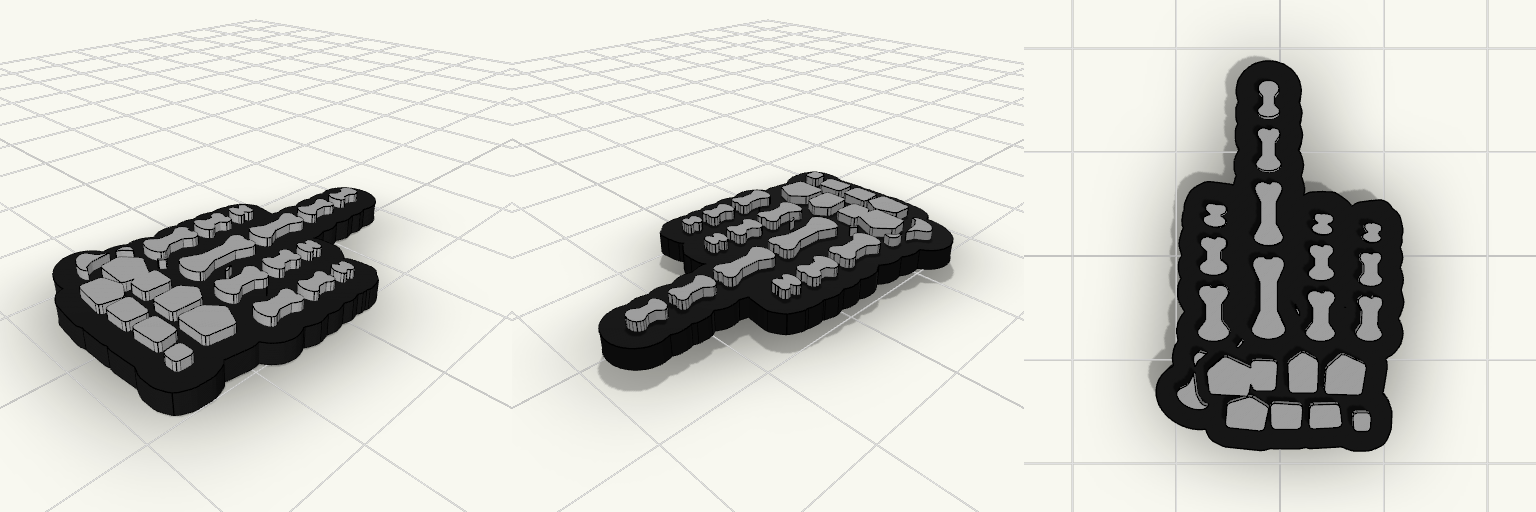
Pin de mano esquelética con dedo medio levantado
Pin con forma de mano esquelética cerrando el puño y con el dedo medio levantado. El dedo medio sube recto con sus tres falanges; el índice, el anular y el meñique quedan plegados hacia la palma. El pulgar va por detrás de los dedos plegados, así que solo asoma por el lado izquierdo y entre los huesos. Los huesos son blancos y de estilo realista: cada uno tiene una diáfisis fina y dos cóndilos redondeados en cada extremo, con una muesca central, y el extremo superior algo más pequeño. Las divisiones negras entre huesos marcan las articulaciones. En la palma hay cuatro metacarpianos y en la muñeca un grupo de huesos del carpo pequeños. En la parte trasera, centrado en la palma, hay un agujero ciego de 6 mm y 1,4 mm de profundidad. Solo atraviesa la placa negra y no toca los huesos blancos. La placa negra de 2 mm sigue la silueta de la mano y sobresale como borde. Los huesos van elevados 0,9 mm sobre ella, con la parte trasera completamente plana. La pieza mide unos 23 × 36 mm, así que queda 1 mm por encima de los 35 mm; el grosor total es de unos 2,9 mm. Si necesitas ajustarla al límite de 35 mm, reduce el borde de la placa. Placa negra plana de 2 mm; huesos blancos elevados 0,9 mm Agujero ciego de 6 mm en la parte trasera, 1,4 mm de profundidad, sin llegar a los huesos Huesos segmentados y separados por huecos negros de articulación, todos apoyados en la placa Sin piezas flotantes; se imprime como una sola pieza Sin soportes: la parte trasera es plana y los detalles se elevan desde la placa Huecos estrechos entre huesos; pensados para una boquilla de 0,4 mm
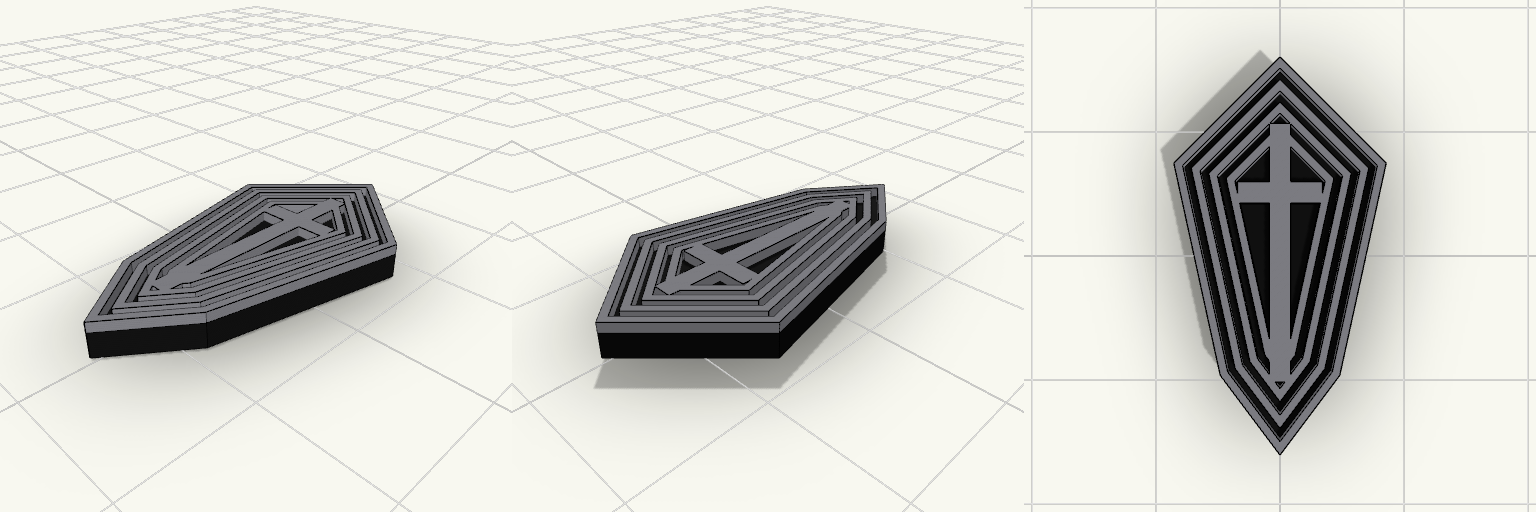
Pin de ataúd gótico con cruz central
Pin vertical con silueta de ataúd y acabado metálico plateado y negro. Mide 30 × 16 mm, con base negra de 2 mm, relieves plateados de 0,8 mm y un grosor total de 2,8 mm. En la cara trasera lleva un agujero ciego de 6 mm de diámetro, centrado y de 1,4 mm de profundidad, que no llega a atravesar la pieza: en el fondo quedan 0,6 mm de base negra. Qué es Cuatro contornos plateados concéntricos siguen la silueta exterior y quedan separados por canales negros. En el centro hay una cruz plateada con el brazo inferior alargado, que ocupa casi todo el largo del ataúd, y el travesaño en la parte alta. Todo el relieve se apoya directamente sobre la base, así que ninguna línea decorativa queda suelta. El reverso es plano salvo por el alojamiento ciego del centro, que se mantiene dentro del espesor de la base y no afecta al relieve plateado del anverso. Dimensiones Medidas: 30 mm de alto × 16 mm de ancho, 2,8 mm de grosor total. Capas: base negra de 2 mm y relieves plateados de 0,8 mm. Agujero trasero: 6 mm de diámetro, 1,4 mm de profundidad (la mitad del grosor), centrado a 15 mm de altura; quedan 0,6 mm de base negra en el fondo. Contornos: cuatro anillos plateados concéntricos con canales negros entre ellos. Centro: cruz plateada con brazo inferior alargado y travesaño alto. Ideas de remix Ajustar el diámetro del agujero trasero para alojar distintos tipos de cierre o imán. Variar la profundidad del alojamiento sin pasar de 1,4 mm, para no abrir la cara delantera. Cambiar el largo del brazo inferior de la cruz o añadir un quinto contorno si se quiere más densidad de relieve. Impresión FDM en PLA multicolor, geometría cerrada y sin piezas sueltas. La cara trasera plana sirve de apoyo; el agujero ciego no necesita soportes.
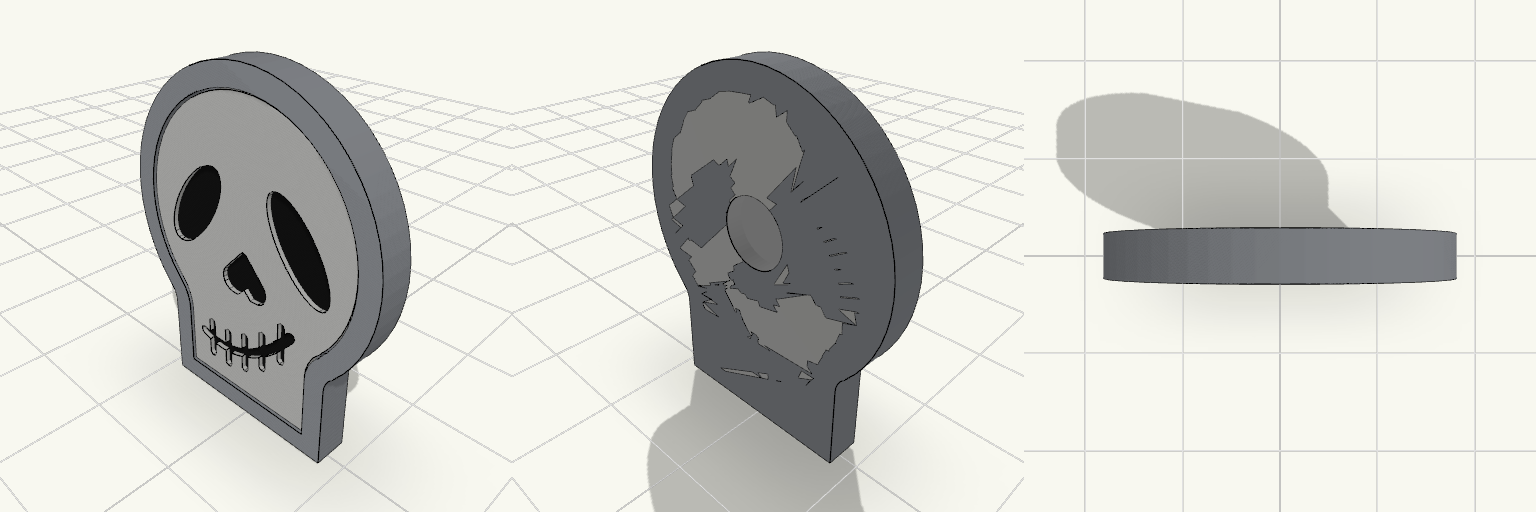
Pin de calavera estilo Tim Burton
Un pin plano de calavera de 30 × 25 mm con el aire de Tim Burton: ojos negros asimétricos —el izquierdo grande y muy inclinado, el derecho más pequeño y torcido hacia el otro lado—, nariz con la forma de la cavidad nasal de un cráneo real (un corazón invertido con la punta arriba y dos lóbulos redondeados abajo separados por una muesca) y una sonrisa cosida ondulada, una línea negra curva que sube y baja como una ola con puntadas verticales siguiendo la curva. En la frente lleva una cicatriz cosida con puntadas cortas. La cara blanca ocupa casi todo el interior y un borde plateado recorre el contorno completo, levantado sobre ella. El dorso es liso y plano, y lleva un orificio ciego de 6 mm de diámetro que entra desde la parte trasera, en el centro del cráneo, y llega a 1,5 mm de profundidad: justo la mitad de los 3 mm de grosor, así que el frente queda cerrado y sin marca. Con ese diámetro el hueco ocupa buena parte de la zona entre los ojos y deja 1,5 mm de material por delante. La pieza entera mide 3 mm de fondo. Puntos de partida para remezclar Escala: 30 mm de alto por 25 mm de ancho es el punto de partida. El contorno aguanta bien hasta unos 20 mm; por debajo, las puntadas de la sonrisa y la cicatriz empiezan a cerrarse entre sí. Grosor: base de 2 mm, cara blanca a 0,8 mm sobre ella y borde a 3 mm de fondo. Bajar la base a 1,6 mm aligera el pin para llevarlo en tela; subirla lo hace más rígido y más pesado. Orificio: 6 mm de diámetro, ciego desde el dorso y 1,5 mm de profundidad. Si se busca un hueco más discreto, bajarlo a 1,5 o 2 mm; si se mantiene en 6 mm, conviene revisar el puente que queda al imprimir con el dorso hacia abajo. Ojos: la asimetría es una elección de expresión. Menos asimetría los vuelve neutros; más inclinación y más diferencia de tamaño, más siniestros. Nariz: el corazón invertido mide unos 4,4 × 4,5 mm y es la pieza que más cambia el gesto. Un triángulo simple lo devuelve a territorio cartoon. Sonrisa y cicatriz: la línea ondulada, las puntadas verticales y la cicatriz cosida de la frente son lo que da el aire Burton. Enderezar la sonrisa la vuelve más amable; torcerla más la acerca a una costura inquietante. Montaje: el dorso plano permite pegar el pin o imantar la parte trasera sin tocar la geometría del frente. El orificio ciego de 6 mm no atraviesa la pieza, así que no sirve para pasar un imperdible de lado a lado; queda como alojamiento para un imán o un vástago corto. Los ojos, la nariz y la boca van hundidos respecto a la cara blanca, así que las zonas negras quedan separadas del blanco al imprimir con varios filamentos. Se imprime en una sola pieza, sin ensamblaje, y apoya plana sobre el dorso.
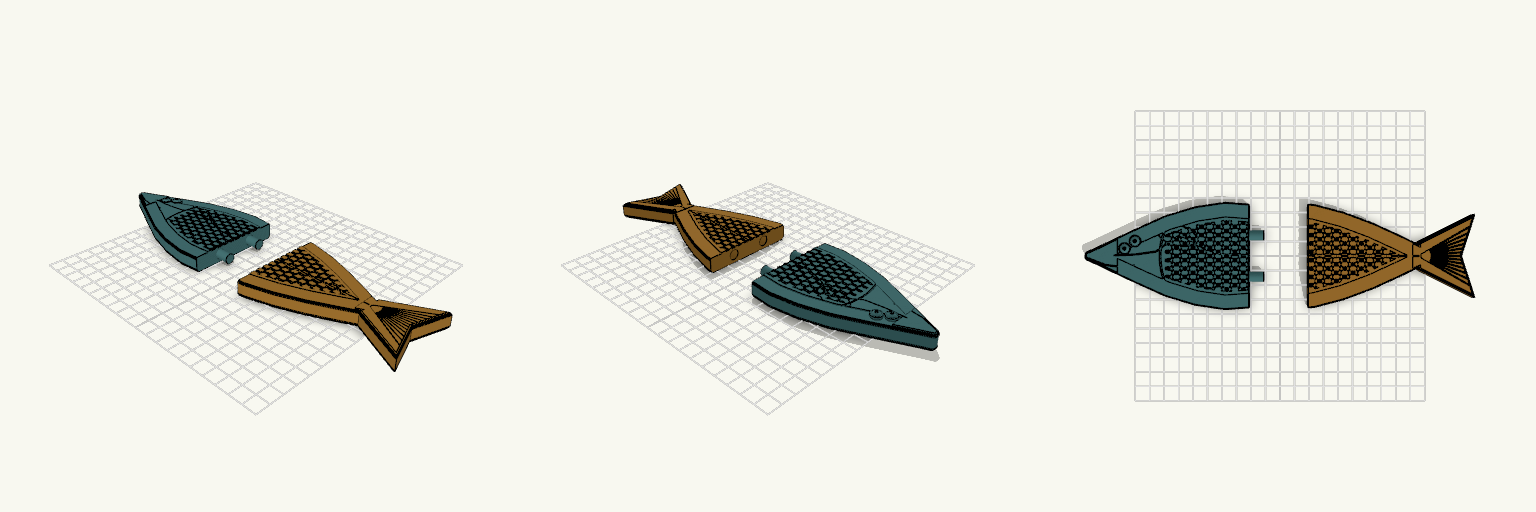
heilbutt kopf
Wofür es ist Ein zweiteiliger Heilbutt in gestreckter Rautenform mit spitzem Kopf: kleine, flache Augen dicht beieinander oben am Kopf, ein großes, bis unter die Augen gezogenes Maul und eine kleine, gerade abgeschnittene Schwanzflosse. Die Kopfhälfte trägt zwei Zapfen, die Schwanzhälfte zwei passende Bohrungen; zusammengesteckt ergibt sich wieder ein vollständiger Fisch. Beide Hälften liegen als getrennte Stücke mit deutlichem Abstand zueinander auf der Druckplatte und lassen sich einzeln drucken. Kopfhälfte mit beiden Augen oben am Kopf und zwei Zapfen Schwanzhälfte mit kleiner Schwanzflosse und zwei Aufnahmebohrungen Das Spiel zwischen Zapfen und Bohrung ist bewusst großzügig gewählt, damit die Hälften nach dem Druck leicht zusammenpassen Details Die Haut trägt ein eingraviertes Schuppenmuster aus überlappenden Bögen, das versetzt hinter den Kiemen sitzt und zum Rand hin aufhört, damit Rücken- und Afterflosse frei bleiben. Dazu kommen eine feine Seitenlinie und ein Bogen über der Brustflosse. Rücken- und Afterflosse sind mit Linien angedeutet, die Kanten sind am ganzen Umriss oben und unten mit etwa 2,4 mm Radius abgerundet. Maße Kopfhälfte: 120 × 71,9 × 13,8 mm Schwanzhälfte: 112 × 69,6 × 12 mm Zapfen: 7 mm Durchmesser; Bohrungen: 7,6 mm Beide Hälften liegen flach und lassen sich ohne Stützen drucken. Druckhinweise Das Schuppenmuster ist 0,8 mm tief graviert; eine 0,4-mm-Düse gibt die Linien sauber wieder. Die abgerundeten Kanten sind Teil des Modells und nicht nachträglich zu bearbeiten. Für die Zapfen und Bohrungen ist etwas Spiel vorgesehen; das erleichtert das Zusammenstecken nach dem Druck. Beide Hälften flach auf dem Druckbett ausrichten. Ideen für Varianten Statt der Steckzapfen ist eine Schwalbenschwanzverbindung denkbar, wenn die Verbindung formschlüssiger sein soll. Andere Gesamtgrößen oder ein anderes Seitenverhältnis sind möglich, solange Zapfen und Bohrungen zueinander passen. Eine farbige Bemalung kann die realistische Form zusätzlich betonen; eine dunkle Oberseite und helle Unterseite folgen dem echten Heilbutt.
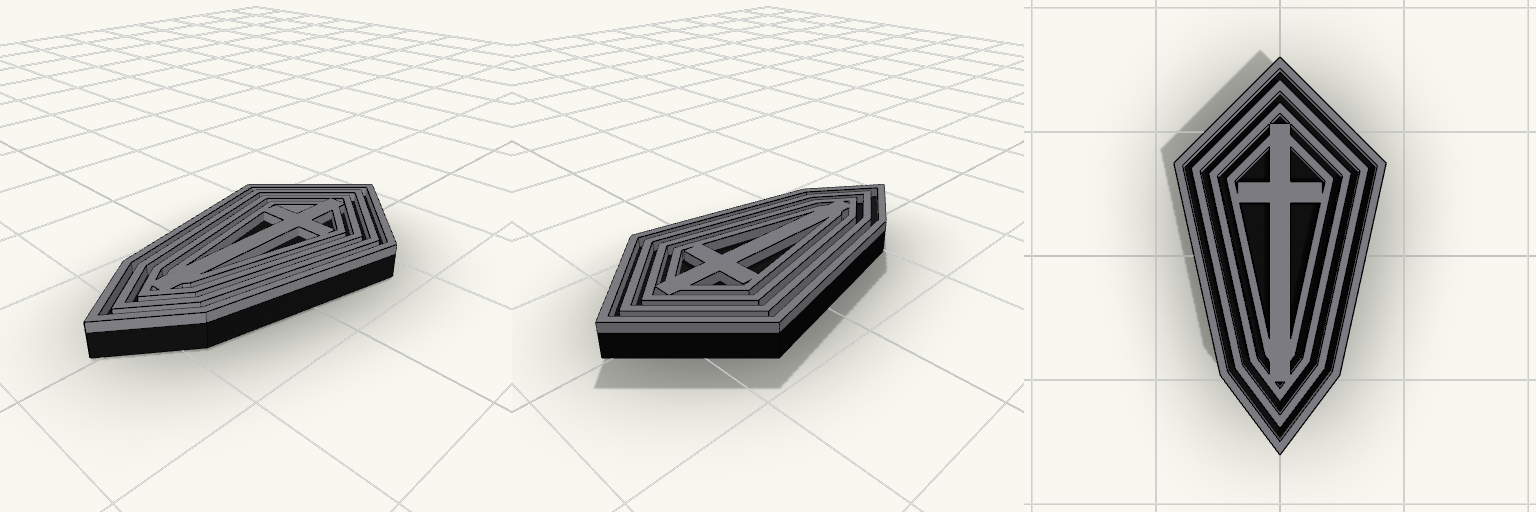
Pin de ataúd gótico con cruz central
Pin vertical con silueta de ataúd y acabado metálico plateado y negro. Mide 30 × 16 mm, con base negra de 2 mm, relieves plateados de 0,8 mm y un grosor total de 2,8 mm; la parte posterior es plana. Cuatro contornos plateados concéntricos siguen la silueta exterior y quedan separados por canales negros. En el centro hay una cruz plateada con el brazo inferior alargado, que ocupa casi todo el largo del ataúd, y el travesaño en la parte alta. Todo el relieve se apoya directamente sobre la base, así que ninguna línea decorativa queda suelta. Medidas: 30 mm de alto × 16 mm de ancho, 2,8 mm de grosor total. Capas: base negra de 2 mm y relieves plateados de 0,8 mm. Contornos: cuatro anillos plateados concéntricos con canales negros entre ellos. Centro: cruz plateada con brazo inferior alargado y travesaño alto. Acabado: fondo negro, contornos y cruz plateados, parte posterior plana. Impresión: FDM en PLA multicolor, geometría cerrada y sin piezas sueltas.
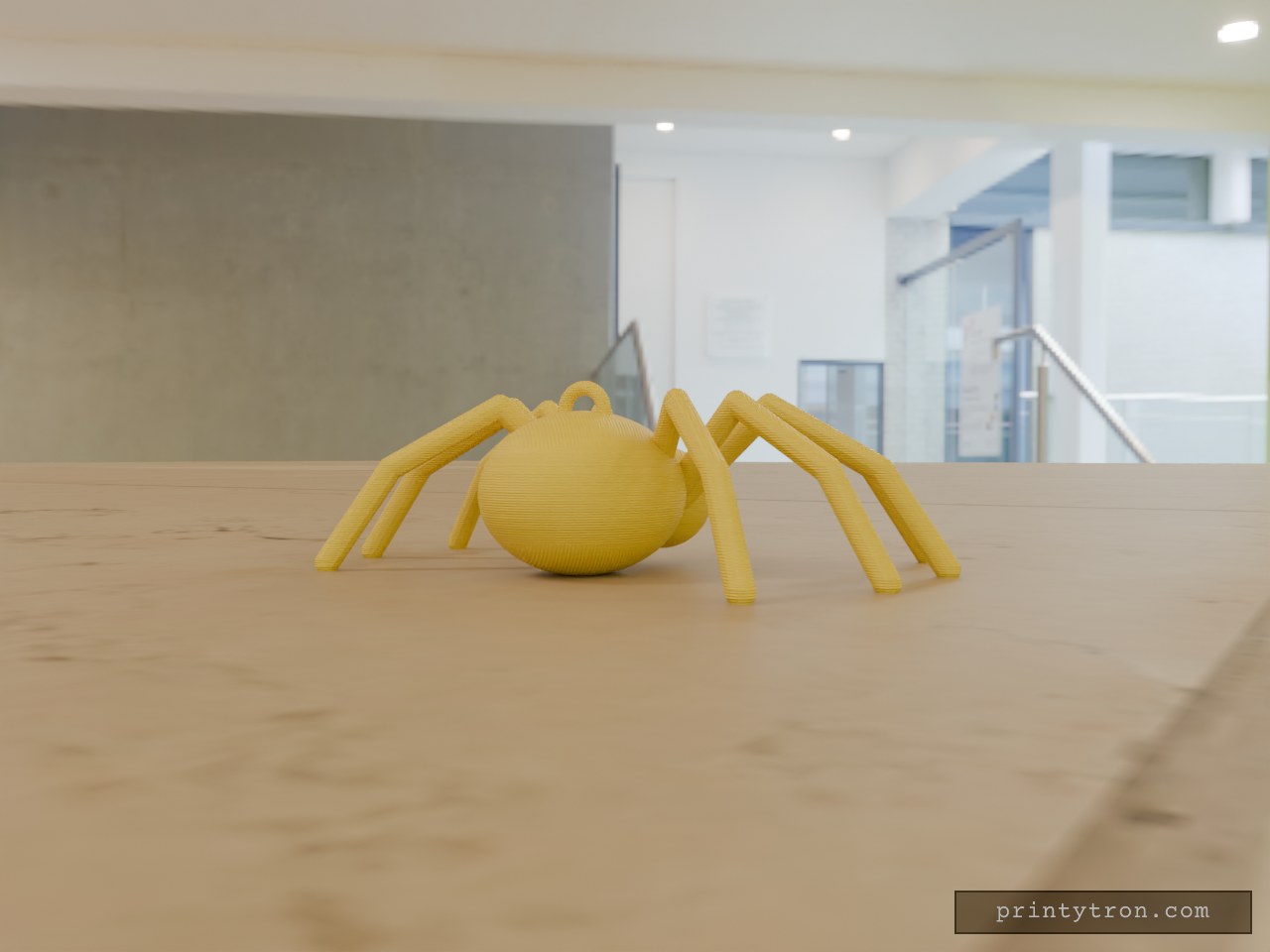
Halloween Spider Decoration for Shelves
A Halloween spider decoration that stays put on a shelf or mantel, instead of a flat cutout that falls over. Eight bent legs spread out as a stable base. Key numbers Body: about 24 mm abdomen, 14 mm head Leg span: roughly 80 mm across Print: no brim needed; supports under the legs and head may help Material: any PLA works; multicolour optional
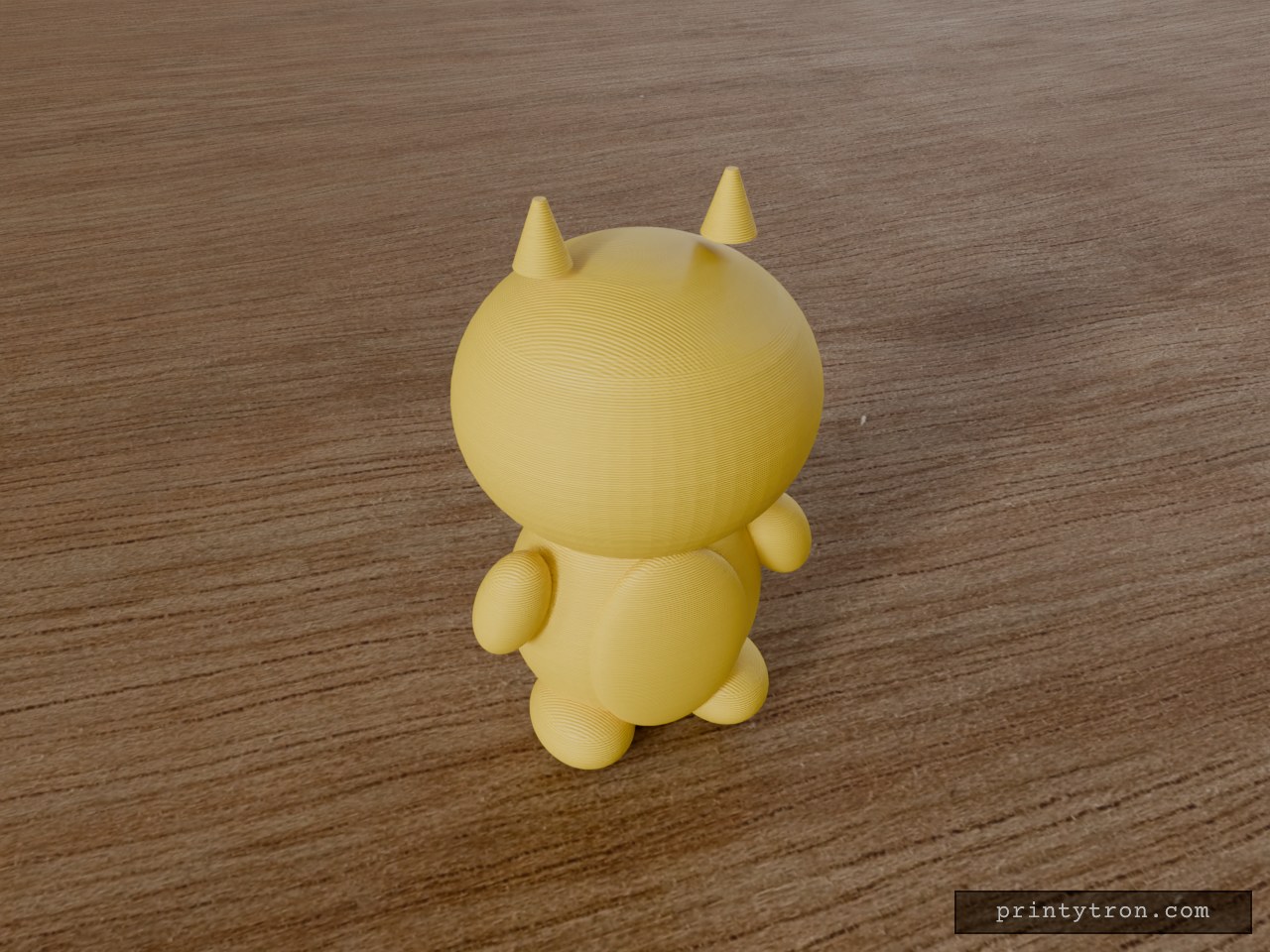
Chubby Baby Dragon Figurine
A cute chubby yellow baby dragon with a big round head, cream oval belly, green eyes, short limbs, a tiny tail and small horns. About 80 mm tall with a flat base, built as one welded body. Remix hooks Head size: the head is a 48 mm sphere; enlarge it for a more chibi look, but keep the body wide enough to support it. Eyes: 10 mm ovals; push them outward or scale them up for a different expression. Belly: a flattened ellipsoid at the front; swap its colour for multi-colour printing. Pairs with: a round display plinth, or a keychain loop on the horns. Limbs and tail: short ellipsoids, easy to lengthen if you want a more dynamic pose.
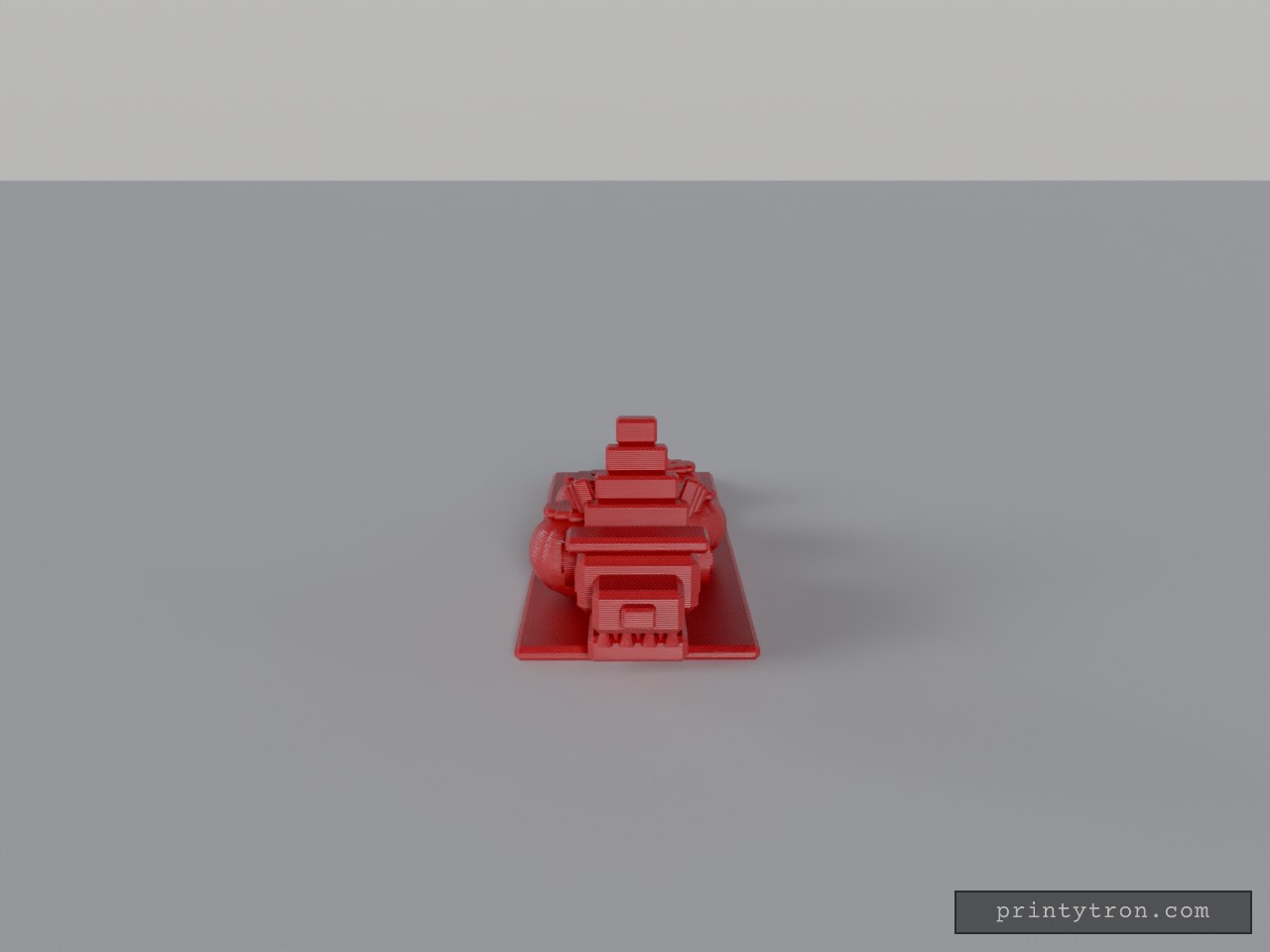
Quetzalcoatl Feathered Serpent Plaque
A stylized cosmic serpent in the spirit of Aztec Quetzalcoatl: a weaving, tapering body of stacked beads, a blocky head with fangs and a fanned feather crest, and a rattle-like tail, all resting on a flat stone-coloured plate. Flat base plate for stable printing Body tapers from head to tail Colour regions: body, head and crest, tail, base Pairs well with a shelf or desk display
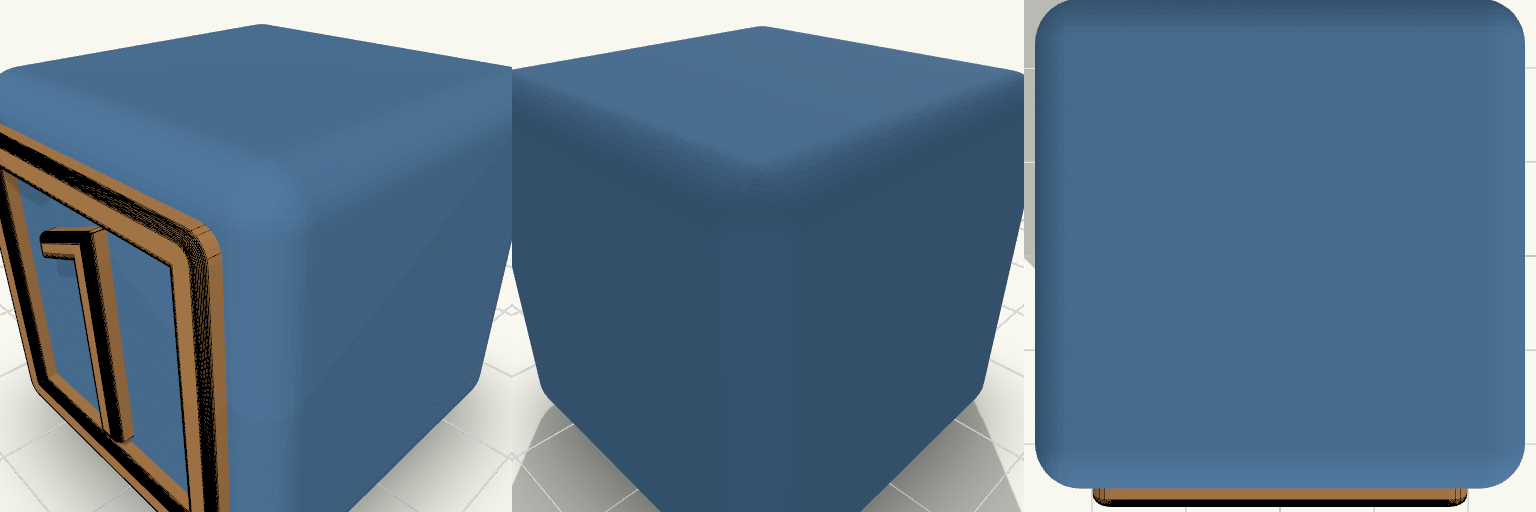
Single Faced Baby Cube with Number
Unit is a plain 30 mm cube with one decorated face: a raised border frame and a bold raised "1" centred inside it. The other five faces stay flat, so it sits and stacks cleanly. Features 30 mm cube, flat base on the build plate Raised border, 2.5 mm wide and 1.5 mm high Raised "1" centred on the front face Decoration on one side only Print notes Print with the decorated face pointing toward the side or use supports-free orientation with the face up for the crispest numeral. Two colours can be swapped in at the 30 mm layer for a contrasting border and numeral.
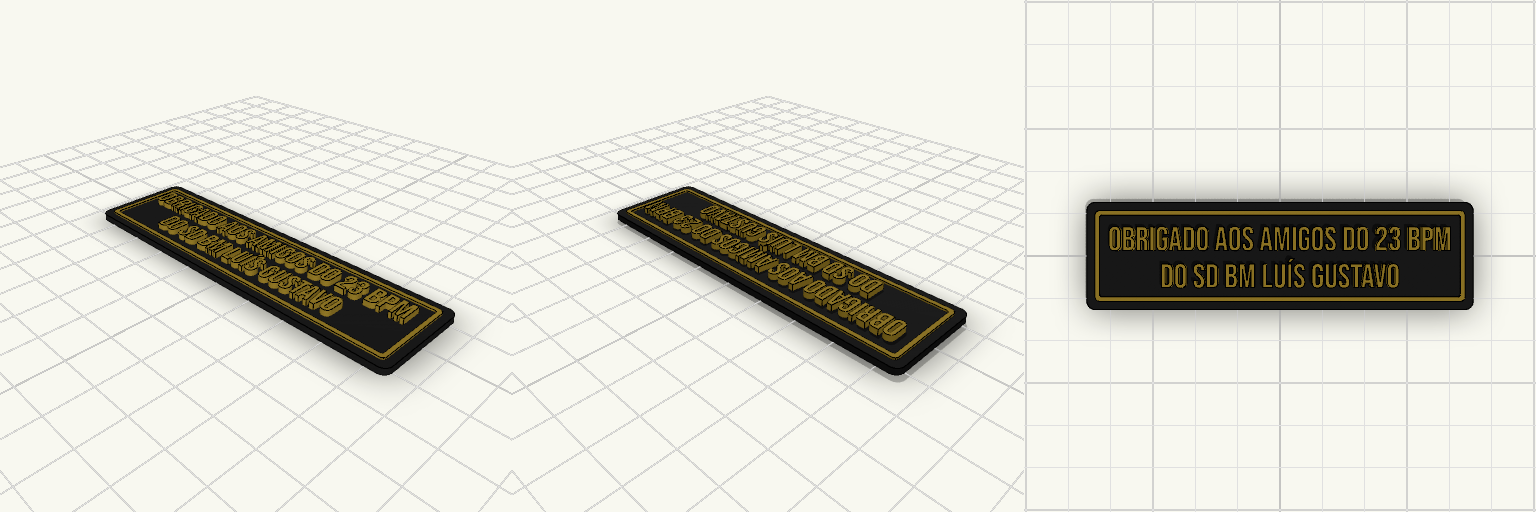
Placa 90x25 mm Preta, Letras Douradas
Placa retangular de 90 × 25 mm, com 1,5 mm de espessura na base preta, moldura dourada fina recuada 2 mm da borda e frase em relevo alto: "OBRIGADO AOS AMIGOS DO 23 BPM / DO SD BM LUÍS GUSTAVO", em Bebas Neue. Medidas Base: 90 × 25 × 1,5 mm, cantos arredondados Moldura: 1 mm de largura, 0,4 mm de relevo Letras: 1,5 mm de relevo sobre a base, espessura total de 3 mm Antes de imprimir Confira a espessura total de 3 mm no ponto das letras. Para o dourado, troque o filamento na altura de 1,5 mm. Não possui furos nem fixação; é uma placa lisa para colar ou apoiar.
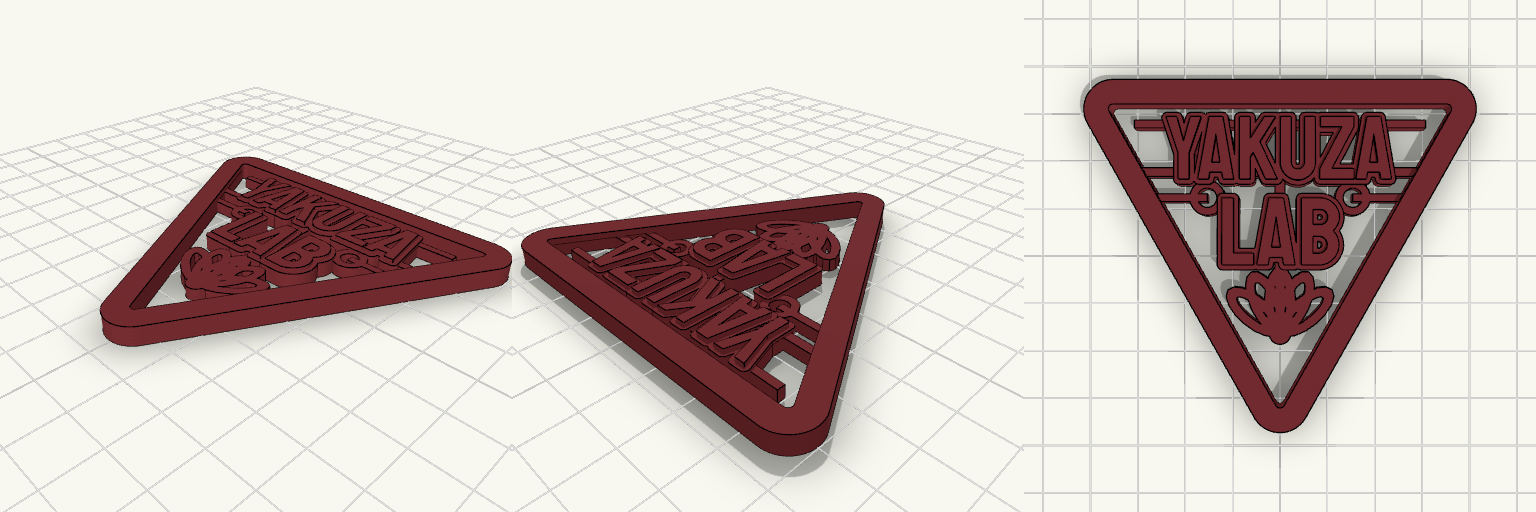
YAKUZA LAB Inverted Triangular Openwork Emblem
An inverted triangular emblem, 80 mm wide and 4 mm thick, with all three corners rounded and a 5 mm border framing the openwork. The front and back are flat, so it sits cleanly against a case, backing plate or mounting surface. The emblem is a single welded solid — frame, ornament and lettering are one continuous piece, with no separate parts to align or glue. The thickness steps across the face: the openwork panel is the thinnest layer, the raised lettering sits a little higher, and the frame and letters carry the full 4 mm, all starting from the same flat back face. Every decorative through-hole is preserved. The interior is open throughout — no solid background — with a filigree of Japanese-style motifs held to the frame: a five-petal lotus with hollow petals at the bottom point, two ring scrolls, horizontal rules and side bars. "YAKUZA" sits on the upper line with "LAB" directly beneath it, raised in a heavy blocky face and given a subtle raised outline; posts and bars tie the lettering back into the ornament so nothing floats free. Frame: 80 mm wide inverted triangle, 5 mm border, 4 mm thick Lettering: "YAKUZA" over "LAB", raised, with a raised outline Ornament: five-petal hollow lotus, ring scrolls, rules and side bars Geometry: one welded solid, open through-holes, flat front and back Build: stepped thickness, thinnest in the openwork, full depth at the frame Because the openwork leaves thin bridges between decorative elements, check the narrowest sections against your resin printer's resolution before printing, and thicken them if they come out fragile.
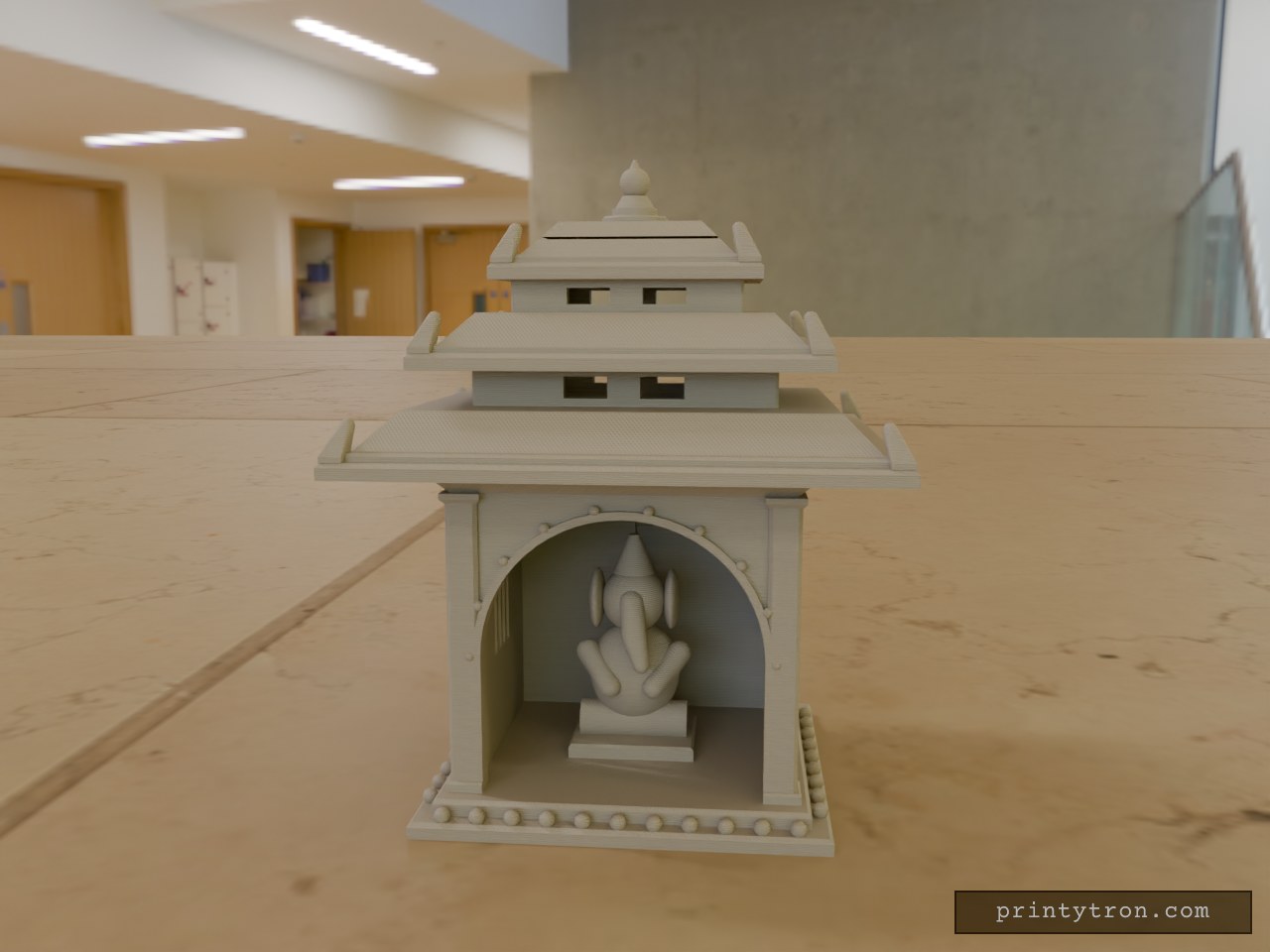
Newar Lantern — Pagoda Temple Lamp
The Newar Lantern is a miniature Newari-style Hindu pagoda temple built as a display lamp, standing 250 mm tall with a roof that overhangs a narrower temple body. The chamber inside is hollow and open at the front, with a 60 mm opening in the ceiling that drops LED light onto a separate Ganesh statue, while the cable runs in a ceiling channel, down a rear groove and out an 8 mm exit at floor level so the wiring stays out of sight. The three roof tiers lift straight off for access to the light and statue, and every piece sits on a flat bottom for stable printing. Dimensions Assembled height: 250 mm Lower roof: 200 × 180 mm; base: 155 × 145 mm Internal chamber: 112 × 92 × 115 mm with a flat floor Arched front entrance: 105 × 105 mm, open at the front Ceiling light opening: 60 mm, with a recess for the LED holder Finial spigot: 12 mm Features Three progressively smaller roof tiers with uppturned corner horns, layered eaves and a small windowed storey beneath the lower two A pointed finial seated in the top roof on a 12 mm spigot Two-step platform base with a row of 6 mm spherical ornaments Arched entrance with a framed, studded border, corner pillars, lattice side windows and a cornice LED holder: a flat plate with a collar for the module and a cable slot Separate seated Ganesh statue on a flat pedestal, about 90 mm tall and sized for the chamber Print notes Seven pieces: temple body, three roof tiers, finial, LED holder and Ganesh statue Roof tiers join on 5 mm pins and 5.6 mm sockets, so they lift off without clips Roof undersides are set at a 45° slope so each tier prints without supports The sloped roof sections are solid rather than a thin shell — print them with 3 walls and about 8% infill, since the walls carry the load Flat bottoms keep every piece stable on the build plate Walls are kept to a minimum of 2 mm for durable printing
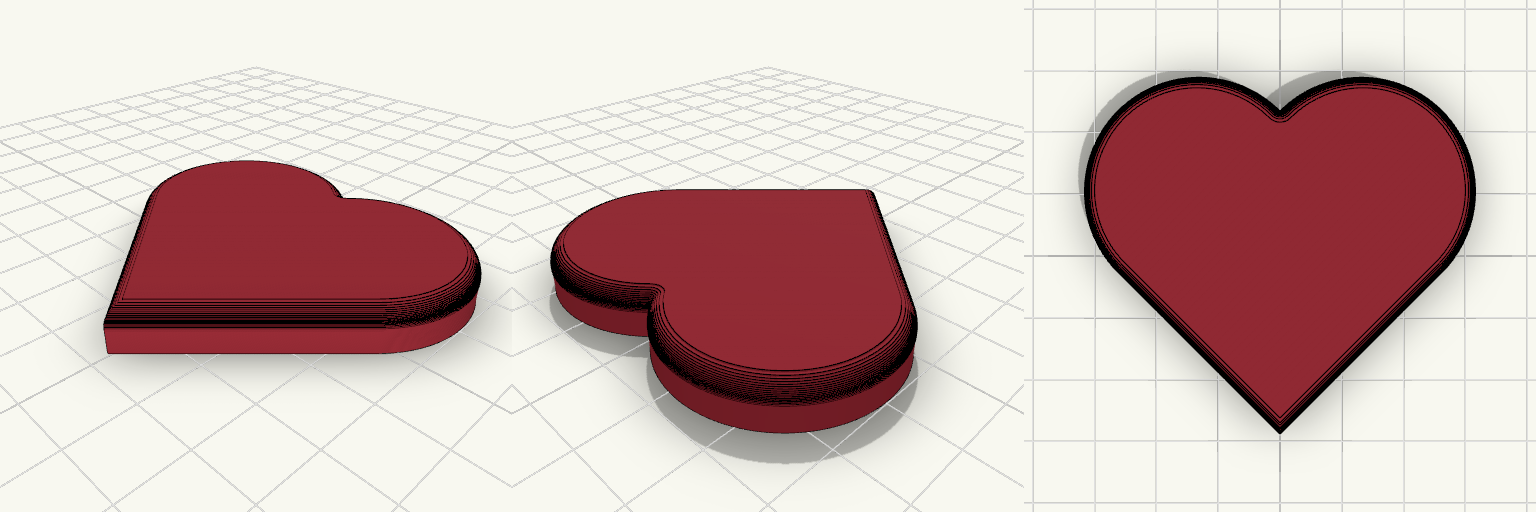
Classic Heart Shape, 7 mm Thick
What it's for A plain, symmetrical traditional Valentine's heart that prints flat on the plate as a single solid piece. Use it as a decorative shape, a gift topper, or a starting point for ornaments and hanging decorations. Classic rounded-lobe heart silhouette with a V-shaped notch at the top and a point at the bottom Each lobe is a true smooth arc, so the outline reads as a continuous curve from above with no flat facets The sides running down from the widest point to the bottom tip stay straight, as intended Front edges rounded all the way around, including both lobes Back face completely flat, with no edge rounding, giving a clean surface to glue against or to cut a mounting interface into Prints without supports Dimensions Width: 60 mm Height: about 55 mm (54.9 mm as measured on the plate) Thickness: 7 mm Edge rounding: 3 mm radius, on the front face only 60 mm is the largest direction, so the heart sits at the size limit rather than under it Print notes Lay the heart flat on the build plate so the 7 mm thickness forms the height and the flat back becomes the bed contact face. At this size it prints quickly and needs no supports or rafts. Any common filament works; a glossy or silk finish suits the smooth faces, and the rounded edge catches light along the outline. Remix ideas Add a small hole near the top lobe for hanging Emboss a name, date, or short message on the front face Cut a keyhole slot or a knob interface into the flat back for wall mounting or a stand Change the front edge radius for a puffier heart or more flat side wall
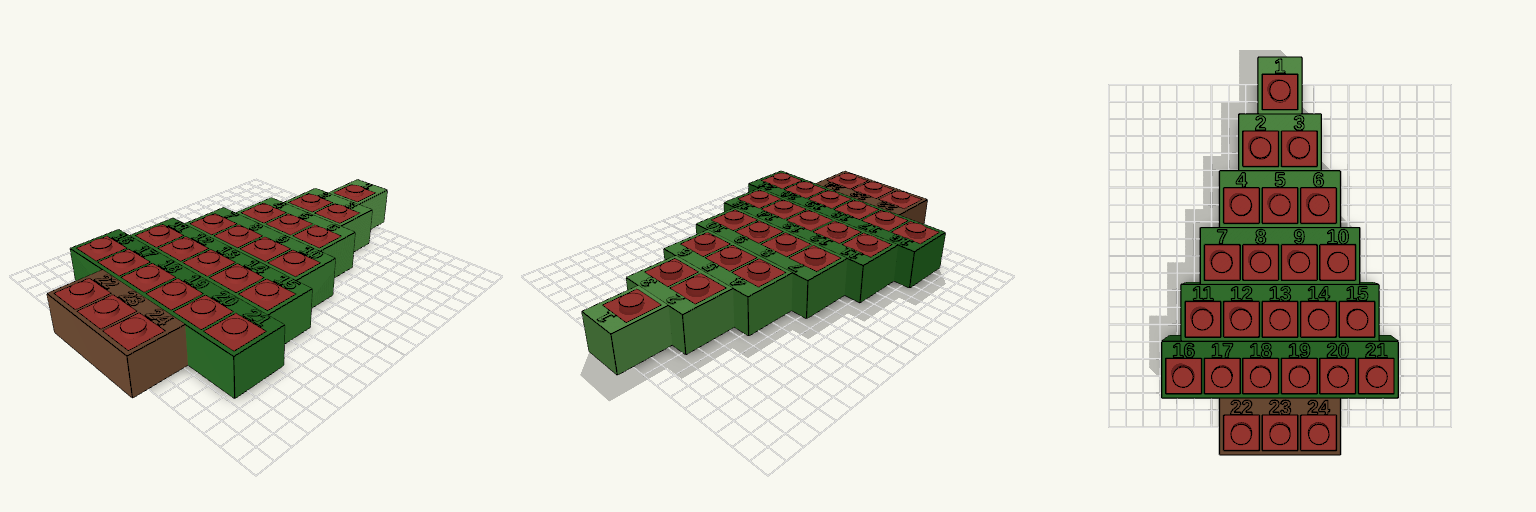
Tannenbaum — Adventskalender mit Steckdeckeln
Tannenbaum-Adventskalender mit 24 Fächern, erhabenen Zahlen 1–24 und Steckdeckeln mit Griffknopf. Der Baum hängt in der Ansicht an einer roten Wand mit Lichterkette, Kugeln, Schnee und Stern. Features 24 Fächer in Reihen 1–6 plus Stamm mit 3 Fächern Deckel mit Griffknopf und Steckzapfen, per Reibung gehalten Schlüssellöcher auf der Rückseite zum Aufhängen part = "scene" zeigt die Wanddekoration, nur zur Ansicht Print notes Zum Drucken part auf row1 bis row7 oder doors stellen Die Wanddekoration gehört nicht zum Druckteil
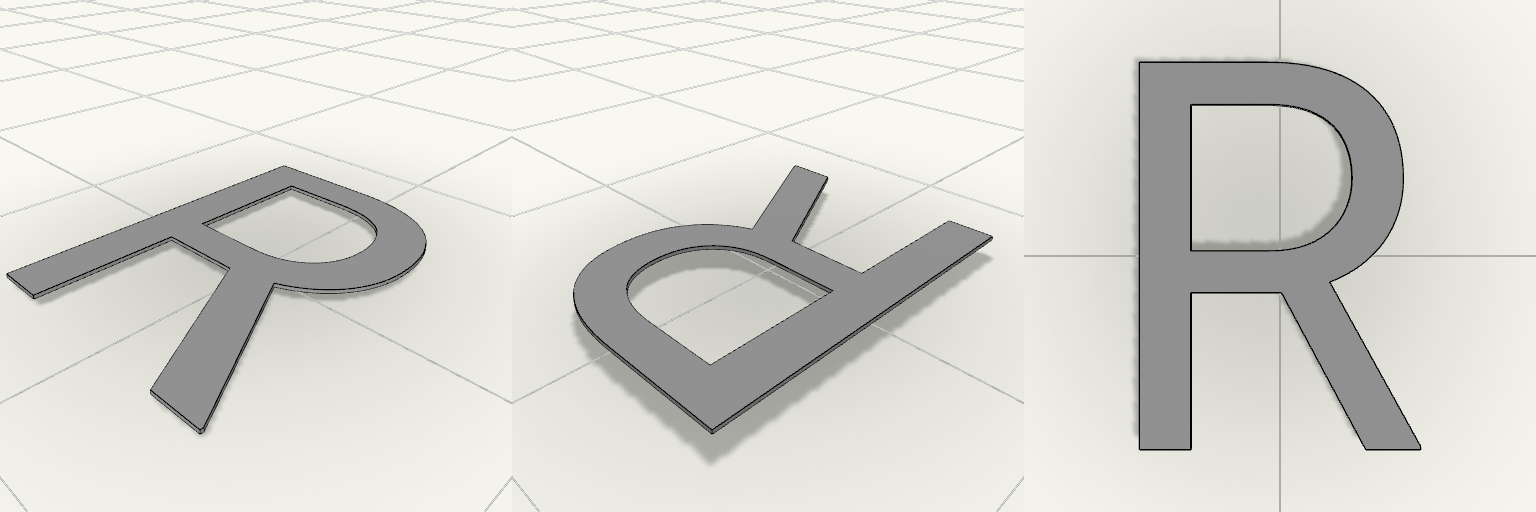
Flat Letter R, One Layer
A single capital R that is too thin for most letter stencils or tags to hold a clean edge, printed as one layer instead. It sits flat on the bed in Roboto, 13 mm text size and 0.12 mm thick. Print notes Text size: 13 mm (Roboto, capital R) Thickness: 0.12 mm, which is one layer at a 0.12 mm layer height Print slowly and lift it with a thin blade, since it has almost no stiffness No supports needed
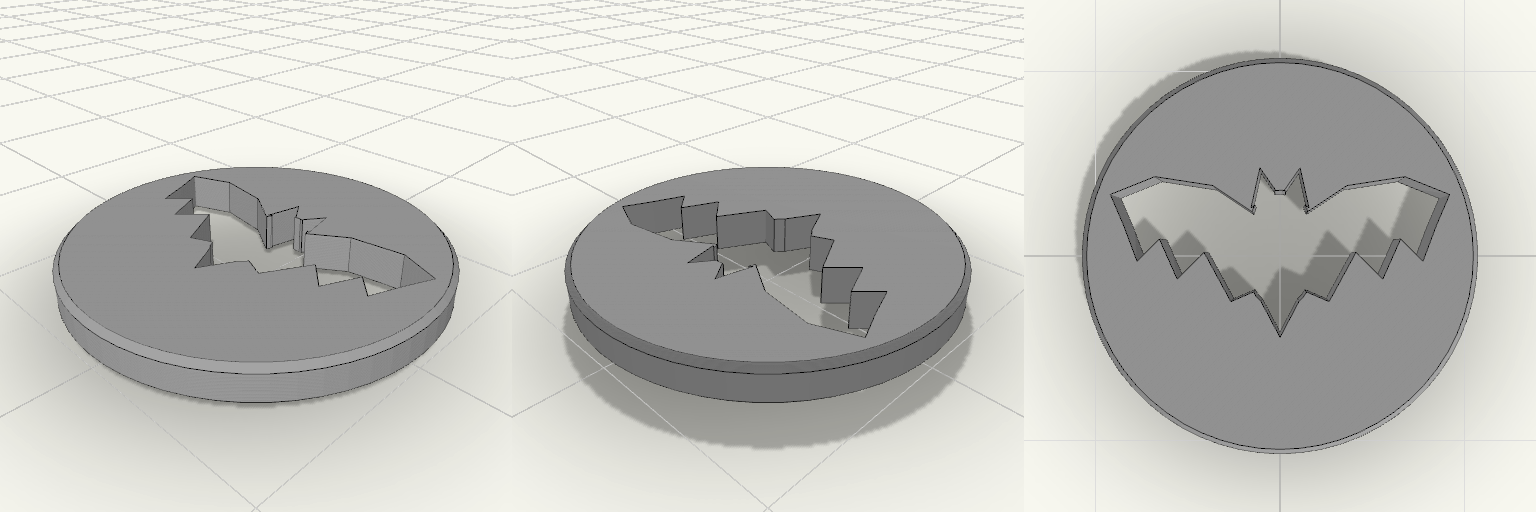
Bat Silhouette Disc, 20 mm
A 20 mm round disc, 2 mm thick, with a bat silhouette cut clean through it: spread wings, pointed ears and a small tail, the cutout now spanning roughly 17 mm of the disc's width. The outer rim is lightly chamfered, and the thin wing tips are the narrowest parts of the cut, so they are the first place to look when checking a print. Remix hooks Diameter — 20 mm. This is a choice, not a constraint. Take it up to coin or badge size and the bat gets more room to read; shrink it much below 20 mm and the wing tips start to crowd. Thickness — 2 mm. Thin enough to stay light, thick enough to hold together across the wing tips. Going thinner is where the tips become risky; going thicker makes it a chunkier pendant or token. Bat scale — about 17 mm across. This is the tight setting: the wing tips sit roughly 1 mm from the disc edge, so scaling the cutout up any further breaks through the rim. If you want a bigger bat, thin the rim first or narrow the wingspan slightly — scaling the cutout down instead gives a heavier border and a more solid-looking disc. Outline. The chamfer on the outer edge is cosmetic — swap it for a flat rim, a rounded edge, or a ring of small holes if you want a different border treatment. Pairs with A hole through the rim turns it into a hanging piece; a flat back makes it easy to stick onto a card, a lid or a magnet. Two mirrored copies back to back give a double-sided version, and the same cutout logic works on any flat blank — a square tag, a hex token, an oval. Treat it as a silhouette template rather than a finished object: any winged shape dropped into a disc of these proportions will read the same way, as long as you watch the rim margin.
Need a part that doesn't exist yet?
Start building →